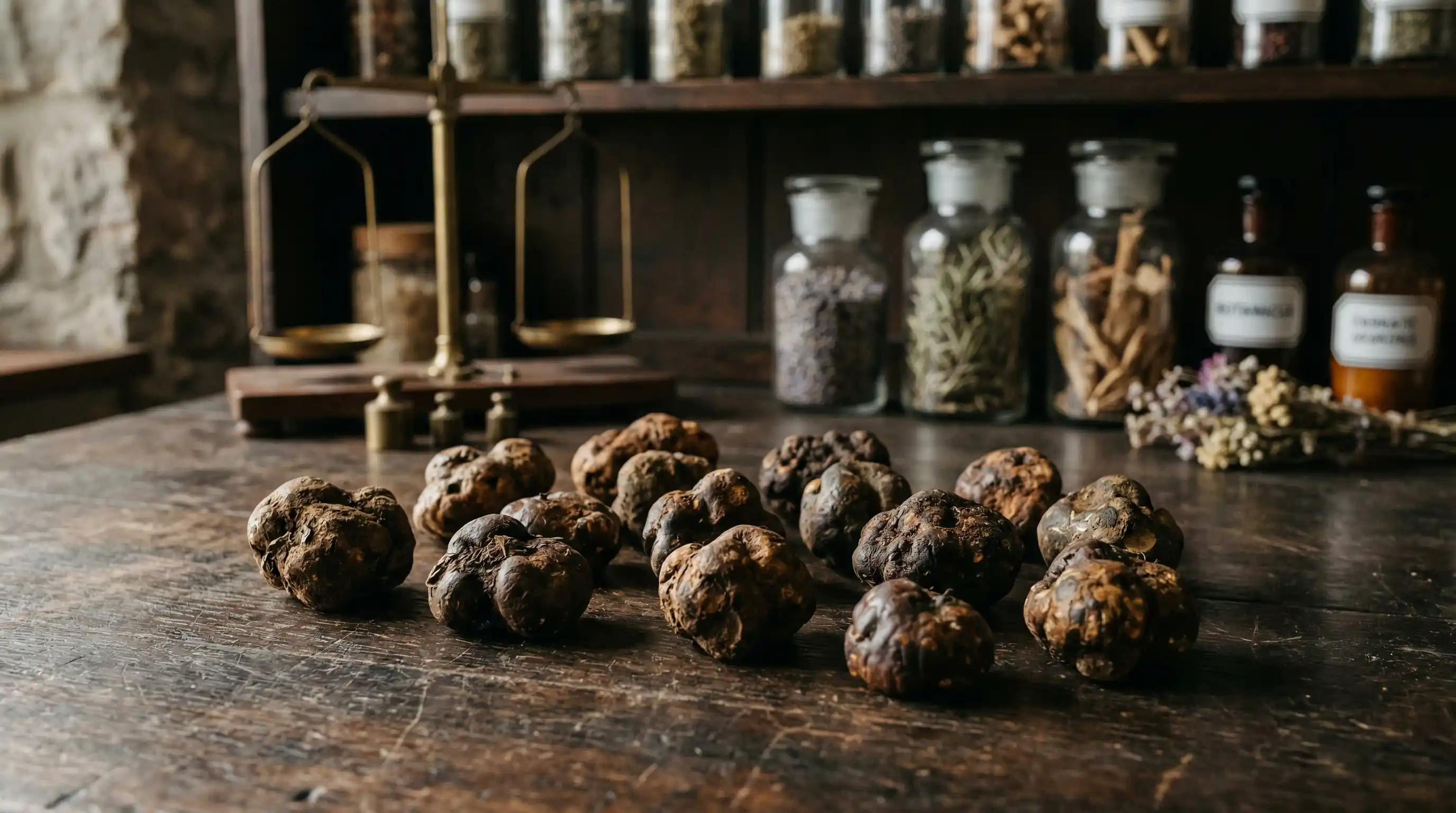
Psilocybin Truffles
Always start with a low dose and read our safety guidelines before use.
Psilocybin truffles (sclerotia) are the underground growths of psilocybin-containing mushrooms. They contain the psychoactive compounds psilocybin and psilocin, which produce altered states of consciousness, visual changes, and profound introspective experiences. In the Netherlands, truffles are legally sold in smartshops as they are not classified under the Opium Act, unlike dried mushrooms which were banned in 2008.

Overview
Psilocybin truffles, scientifically known as sclerotia, are naturally occurring psychoactive fungi that contain the compounds psilocybin and psilocin. These underground fungal masses are produced by certain species of Psilocybe mushrooms, most commonly Psilocybe tampanensis, Psilocybe mexicana, and Psilocybe atlantis. Unlike the above-ground mushroom fruiting bodies, truffles develop as hardened, compact storage organs beneath the soil surface, serving as nutrient reserves for the fungal organism during adverse conditions.
The primary psychoactive compound, psilocybin, is converted to psilocin in the human body, which then interacts with serotonin receptors in the brain to produce profound alterations in consciousness, perception, and cognition. These effects have made psilocybin truffles significant both as traditional medicines in various cultures and as subjects of contemporary scientific research into their therapeutic potential for treating depression, anxiety, PTSD, and addiction.
In the Netherlands, psilocybin truffles occupy a unique legal position. While psilocybin mushrooms were banned in 2008, truffles remain legal to purchase, possess, and consume because they are technically classified as a different part of the fungal organism. This legal distinction has made the Netherlands a hub for both research and responsible recreational use of these substances.
People use psilocybin truffles for various reasons, including spiritual exploration, personal growth, creative enhancement, therapeutic healing, and recreational experiences. The effects typically last 4-6 hours and can range from mild perceptual changes to profound mystical experiences, depending on dosage, individual sensitivity, and environmental factors. The growing body of scientific research supporting their therapeutic benefits has contributed to renewed interest in these ancient medicines, with many users reporting lasting positive changes in mood, perspective, and life satisfaction following carefully prepared experiences.
How It Works
Psilocybin truffles exert their psychoactive effects through a complex interaction with the brain's serotonin system. When consumed, the compound psilocybin is rapidly converted by the enzyme alkaline phosphatase into psilocin, the primary active metabolite responsible for the psychedelic experience. This conversion occurs primarily in the liver and intestinal tract, typically within 15-45 minutes of ingestion.
Psilocin's molecular structure closely resembles serotonin, allowing it to bind to and activate various serotonin receptors throughout the brain, particularly the 5-HT2A receptor. This receptor is densely distributed in areas of the brain responsible for perception, cognition, and consciousness, including the prefrontal cortex, visual cortex, and default mode network. The activation of 5-HT2A receptors triggers a cascade of neurochemical changes that fundamentally alter normal brain function patterns.
One of the most significant effects of psilocin is the disruption of the default mode network (DMN), a brain network active during rest and self-referential thinking. The DMN is associated with the sense of self, ego, and the narrative we construct about our identity and place in the world. When psilocin suppresses DMN activity, users often report experiences of ego dissolution, unity with their environment, and a breakdown of the normal boundaries between self and other.
Simultaneously, psilocin increases connectivity between brain regions that don't typically communicate extensively. This enhanced neural cross-talk may explain the synesthetic experiences, novel thought patterns, and creative insights commonly reported during psilocybin experiences. The visual cortex becomes hyperactive, leading to the characteristic visual distortions, patterns, and hallucinations associated with psychedelic experiences.
The compound also affects other neurotransmitter systems, including dopamine and glutamate pathways, contributing to the complex subjective effects. These neurochemical changes appear to create a state of increased neuroplasticity, potentially allowing for new neural connections to form and existing patterns to be modified, which may explain the lasting therapeutic benefits observed in clinical studies.
What It Looks Like
Psilocybin truffles have a distinctive appearance that sets them apart from other fungi and psychoactive substances. Fresh truffles typically appear as small, irregularly shaped, dense masses ranging from light tan to dark brown in color. Their texture is firm and somewhat rubbery, similar to a walnut or small potato, with a surface that may appear smooth or slightly wrinkled. The size can vary considerably, from small pea-sized specimens to larger pieces weighing several grams.
When broken open, fresh truffles reveal a marbled interior with lighter and darker areas, often displaying a pattern reminiscent of expensive culinary truffles. The flesh is typically whitish to cream-colored with darker veins or patches running through it. Fresh truffles have a distinctive earthy, mushroom-like aroma that some describe as nutty or slightly sour.
Dried truffles appear significantly different, becoming much smaller, harder, and darker in color. They may range from dark brown to nearly black and have a more pronounced, concentrated odor. The drying process causes them to shrink considerably and become quite hard, sometimes requiring grinding or extended chewing to consume effectively.
In Dutch smart shops, psilocybin truffles are typically sold in vacuum-sealed packages containing 10-15 grams of fresh product. Reputable vendors provide clear labeling indicating the species, weight, and often include information about potency and recommended dosing. The packaging usually includes storage instructions and consumption guidelines.
It's important to distinguish psilocybin truffles from other substances that might appear similar. Regular culinary truffles are much larger, more expensive, and lack psychoactive properties. Some toxic fungi or plant materials might superficially resemble dried truffles, which is why purchasing from reputable sources is crucial. Quality truffles should never appear moldy, slimy, or have an unpleasant rotting odor, which could indicate contamination or degradation.
What to Expect
The psilocybin truffle experience unfolds in distinct phases, creating a journey that typically spans 4-6 hours from ingestion to return to baseline consciousness. Understanding this progression helps users prepare mentally and practically for the experience ahead.
The onset phase begins 20-60 minutes after consumption, marked by subtle shifts in perception and mood. Users often report a feeling of anticipation or slight anxiety, accompanied by physical sensations such as mild nausea, changes in body temperature, or a tingling feeling. Visual perception may begin to shift, with colors appearing more vivid or surfaces seeming to breathe or move slightly. This phase serves as a gentle introduction to the altered state of consciousness that follows.
The come-up phase, occurring 1-2 hours after ingestion, involves a gradual intensification of effects. Thoughts may become more fluid and associative, with users experiencing enhanced creativity and novel perspectives on familiar concepts. Emotional sensitivity often increases, and many report feeling more connected to their environment and the people around them. Visual distortions become more pronounced, with geometric patterns, enhanced colors, and morphing textures becoming apparent.
The peak experience, typically lasting 2-3 hours, represents the most intense phase of the journey. At moderate doses, users may experience significant alterations in perception, including complex visual hallucinations, synesthesia (mixing of senses), and profound changes in thought patterns. Time perception often becomes distorted, with minutes feeling like hours or vice versa. Many report experiencing deep insights about themselves, their relationships, or existential questions. At higher doses, ego dissolution may occur, where the sense of individual self temporarily dissolves, leading to experiences of unity with the universe or profound spiritual encounters.
The comedown phase involves a gradual return to normal consciousness over 1-2 hours. Effects slowly diminish, though users often retain a sense of clarity and emotional openness. Many describe feeling refreshed, introspective, or emotionally cleansed during this phase. Some residual visual effects may persist, but cognitive function generally returns to baseline.
The afterglow period can last several days to weeks, characterized by improved mood, increased creativity, and lasting insights from the experience. Many users report feeling more connected to nature, more empathetic toward others, and having a renewed sense of purpose or perspective on life challenges.
Preparation & Consumption
Proper preparation for a psilocybin truffle experience is essential for maximizing benefits while minimizing risks. The concept of "set and setting," introduced by psychedelic researcher Timothy Leary, remains the cornerstone of safe psychedelic use. "Set" refers to the user's mindset, including their current emotional state, expectations, and psychological preparation, while "setting" encompasses the physical and social environment where the experience takes place.
Mental preparation should begin days or weeks before the planned experience. Users should honestly assess their current mental health, stress levels, and life circumstances. Those dealing with significant depression, anxiety, or major life stressors should consider postponing their experience or seeking professional guidance. Establishing clear intentions for the experience, whether therapeutic, spiritual, or exploratory, can help guide the journey and provide focus during challenging moments.
The physical setting should be safe, comfortable, and free from potential interruptions. Many prefer familiar environments like their home, while others choose natural settings such as forests or beaches. The space should be prepared with comfortable seating or lying areas, access to water and light snacks, and items that might provide comfort during the experience, such as blankets, music, or meaningful objects. Having a trusted, sober trip-sitter present is highly recommended, especially for inexperienced users or higher doses.
Dosage varies significantly based on individual sensitivity, body weight, and desired intensity. Fresh truffles are typically dosed as follows: microdose (0.5-2 grams), light experience (5-10 grams), moderate experience (10-15 grams), and strong experience (15-20+ grams). Beginners should always start with lower doses to assess their sensitivity. It's important to note that potency can vary between batches and species, so starting conservatively is wise.
Consumption methods include eating fresh truffles directly, though many find the taste unpalatable. Alternatives include making tea by steeping chopped truffles in hot water for 15-20 minutes, blending them into smoothies, or incorporating them into food. Some users prefer to fast for several hours before consumption to reduce nausea and potentially enhance effects, though this isn't necessary for everyone.
Timing is crucial, with most users preferring to begin their experience in the morning or early afternoon to ensure completion before evening. This allows for proper integration time and reduces the likelihood of sleep disruption.
Safety First
Psilocybin truffles have an excellent safety profile from a toxicological perspective, with no known lethal dose in humans and minimal risk of physical harm when used responsibly. However, psychological risks and contraindications require careful consideration to ensure safe use.
Individuals with personal or family histories of psychotic disorders, schizophrenia, or bipolar disorder should avoid psilocybin truffles entirely, as psychedelics can potentially trigger or exacerbate these conditions. Those with severe depression, anxiety disorders, or PTSD should consult with healthcare professionals before use, as while research shows therapeutic potential, unsupervised use during acute mental health crises can be counterproductive or harmful.
Several medications interact dangerously with psilocybin. Monoamine oxidase inhibitors (MAOIs) can significantly intensify and prolong effects, potentially leading to dangerous experiences. Selective serotonin reuptake inhibitors (SSRIs) and other antidepressants may reduce or unpredictably alter effects. Lithium, commonly prescribed for bipolar disorder, can interact dangerously with psychedelics and should never be combined with psilocybin. Users taking any psychiatric medications should consult healthcare providers before discontinuing or combining with psychedelics.
Cardiovascular considerations include avoiding use by individuals with serious heart conditions, as psilocybin can cause temporary increases in heart rate and blood pressure. While generally mild, these changes could be problematic for those with existing cardiac issues.
The psychological risks primarily involve the potential for challenging or traumatic experiences, often called "bad trips." These can involve intense fear, paranoia, confusion, or confrontation with difficult emotions or memories. While such experiences can sometimes lead to positive long-term outcomes when properly integrated, they can also cause lasting psychological distress if not handled appropriately.
Environmental safety is crucial, as altered perception and judgment can lead to accidents. Users should avoid driving, operating machinery, or engaging in potentially dangerous activities. Water safety is particularly important, as several drowning incidents have been associated with psychedelic use near bodies of water.
To minimize risks, users should never combine psilocybin truffles with alcohol or other drugs, always have a sober trip-sitter present, start with low doses, ensure a safe environment, and avoid use during periods of high stress or emotional instability. Having emergency contact information readily available and knowing when to seek medical help is essential for responsible use.
History & Cultural Context
The use of psilocybin-containing fungi spans thousands of years, with archaeological evidence suggesting their ceremonial use in various cultures across Mesoamerica, particularly among the Aztec, Maya, and other indigenous peoples of Mexico and Central America. These cultures referred to psilocybin mushrooms as "teonanácatl," meaning "flesh of the gods," highlighting their sacred status in religious and healing practices.
Spanish conquistadors documented the use of these "divine mushrooms" in the 16th century, often with horror and condemnation, viewing them as tools of devil worship that needed to be eliminated. This led to centuries of suppression and the near-extinction of traditional knowledge about these substances. However, indigenous communities in remote areas of Mexico continued to preserve and practice traditional mushroom ceremonies, maintaining this ancient wisdom through oral tradition and secretive rituals.
The modern Western rediscovery of psilocybin mushrooms began in the 1950s when ethnomycologist R. Gordon Wasson participated in a traditional Mazatec ceremony led by curandera María Sabina in Oaxaca, Mexico. His subsequent article in Life magazine, "Seeking the Magic Mushroom," introduced the Western world to these substances and sparked scientific interest in their properties and potential applications.
Swiss chemist Albert Hofmann, who had previously discovered LSD, successfully isolated and synthesized psilocybin from mushroom samples provided by Wasson in 1958. This breakthrough enabled controlled research into the compound's effects and therapeutic potential, leading to a brief period of legitimate scientific investigation before the broader backlash against psychedelics in the late 1960s.
The discovery and cultivation of psilocybin truffles specifically emerged from the work of mycologists studying the complete life cycles of Psilocybe species. Researchers found that certain species produced these underground sclerotia as survival mechanisms, and that these structures contained the same psychoactive compounds as the above-ground mushrooms. This discovery proved particularly significant in the Netherlands, where legal distinctions between different parts of the fungal organism created the unique situation where truffles remained legal while mushrooms were prohibited.
The cultural perception of psilocybin has undergone dramatic shifts, from sacred medicine to prohibited substance to emerging therapeutic tool. The current renaissance in psychedelic research, beginning in the 1990s and accelerating in recent decades, has restored scientific credibility to these substances and highlighted their potential for treating various mental health conditions.
Emergency Guidance
While serious medical emergencies from psilocybin truffles are rare, knowing how to recognize and respond to crisis situations is essential for anyone using these substances or supporting others who do. Understanding the difference between a challenging psychological experience and a true medical emergency can be lifesaving.
Signs of a psychological crisis include extreme agitation, panic attacks, paranoid behavior, complete disconnection from reality, or expressions of self-harm or suicide. In these situations, the primary goal is to provide calm, reassuring support while ensuring the person's physical safety. Speak in a gentle, non-threatening voice, remind them that they have taken a substance and that the effects will pass, and guide them to a safe, comfortable environment away from potential hazards.
Medical emergencies requiring immediate professional intervention include signs of severe dehydration, hyperthermia (overheating), persistent vomiting, chest pain, difficulty breathing, seizures, or loss of consciousness. These symptoms are extremely rare with psilocybin alone but could indicate complications from drug interactions, underlying health conditions, or contaminated substances.
When calling emergency services, be honest about substance use. Medical professionals need accurate information to provide appropriate care, and most jurisdictions have protections for those seeking emergency medical help for drug-related issues. In the Netherlands, being honest about psilocybin truffle use will not result in legal consequences when seeking medical care.
For psychological support during difficult experiences, having a prepared crisis plan is invaluable. This should include contact information for trusted friends, family members, or mental health professionals who can provide support. Some users benefit from having a written reminder of their intentions for the experience and reassurances they've prepared for themselves during challenging moments.
If supporting someone experiencing difficulties, avoid trying to "talk them down" or convince them their perceptions aren't real. Instead, provide calm presence, ensure their physical safety, and help them focus on breathing or grounding techniques. Sometimes simply holding space and offering gentle reassurance that they are safe and the experience will pass is the most helpful approach.
In cases where professional help is needed, Dutch emergency services can be reached at 112. For non-emergency support, organizations like Jellinek provide substance use counseling and support services. Having these resources identified before any psychedelic experience ensures quick access to help if needed.
Legal Status in NL
Psilocybin truffles are legal to sell and possess in the Netherlands. They are sold openly in smartshops. Dried psilocybin mushrooms are illegal since 2008.
Available in 159 shops across 61 cities. Most shops in Amsterdam (28), Rotterdam (13), Groningen (9).
Dosage Guide
Experience Timeline
Effect Profile
Positive Effects
Side Effects
Safety & Harm Reduction
Warnings
- Do not combine with MAOIs or SSRIs
- Not recommended for those with psychotic disorders
- Use in a safe, comfortable environment
- Have a sober trip sitter present
- Do not drive or operate machinery
- Start with a low dose if inexperienced
Harm Reduction Tips
- Start with a low dose (5-10g fresh) to assess individual sensitivity
- Use in a safe, comfortable environment with trusted trip sitters
- Avoid driving or operating machinery for at least 8-12 hours
- Fast for 2-4 hours before consumption to reduce nausea
- Have a trip killer like benzodiazepines available if needed
- Stay hydrated but avoid excessive water consumption
- Test your mental state beforehand - avoid use if anxious or depressed
- Plan integration time after the experience for processing insights
- Keep a journal to record thoughts and experiences
- Respect set and setting - your mindset and environment greatly influence the experience
Contraindications
- —Psychotic disorders
- —Severe anxiety disorders
- —Pregnancy
- —Heart conditions
- —SSRI/MAOI medication
Emergency Information
If experiencing a challenging trip, move to a calm, safe environment with trusted people and remember that effects are temporary. Practice grounding techniques like deep breathing and focus on the fact that you will return to baseline. Seek medical attention if there are signs of serious physical distress, persistent panic, or risk of self-harm.
Interactions
MAOIsDangerous
LithiumDangerous
TramadolDangerous
SSRIs/SNRIsCaution
AlcoholCaution
CannabisCaution
StimulantsCaution
BenzodiazepinesSafe
Experience Levels
As a beginner, your first truffle experience will likely feel profound and potentially overwhelming. Start with 5 grams of fresh truffles in a familiar, safe environment with a trusted sober friend present. You'll notice the first effects within 30-60 minutes - perhaps slight nausea, followed by enhanced colors and patterns. Your thoughts may become more fluid and introspective, and you might experience mild visual distortions like breathing walls or enhanced textures. Emotions can feel amplified, so it's normal to laugh, cry, or feel deeply moved by simple things. Time perception often changes, with minutes feeling like hours. Physical sensations include dilated pupils, possible stomach discomfort initially, and heightened sensitivity to light and sound. The peak occurs around 2-3 hours in, followed by a gradual comedown. Many beginners report feeling emotionally sensitive for hours afterward. Don't fight the experience - let it flow naturally. Keep a journal nearby to capture any insights, and remember that integration afterward is just as important as the trip itself.
Frequently Asked Questions
Are psilocybin truffles legal in the Netherlands?▾
Yes, psilocybin truffles are completely legal in the Netherlands and can be purchased from licensed smartshops. While dried psilocybin mushrooms were banned in 2008, truffles (sclerotia) remain legal as they are not specifically mentioned in the Opium Act. This makes the Netherlands one of the few countries where you can legally buy and consume psilocybin-containing products.
What's the right dosage for psilocybin truffles?▾
For fresh truffles, beginners should start with 5 grams, while 10-15 grams provides a medium experience and 20-30 grams a strong one. Always start low if you're inexperienced, as potency can vary between truffle varieties and individual batches. Your body weight, empty stomach, and previous psychedelic experience all influence the effects.
How long do psilocybin truffle effects last?▾
Effects typically begin 30-60 minutes after consumption and last 4-6 hours total. The peak experience usually occurs 2-3 hours after ingestion, followed by a gradual comedown. Plan for a full day without responsibilities, as you may feel tired or emotionally sensitive for several hours after the main effects subside.
What should I expect from a truffle experience?▾
Psilocybin truffles produce altered perception, enhanced colors, visual patterns, and introspective thoughts. You may experience emotional insights, changes in time perception, and a sense of connection to your surroundings. Physical effects can include dilated pupils, slight nausea initially, and sensitivity to light and sound. The experience is highly dependent on your mindset and environment.
Are there any dangerous drug interactions with truffles?▾
Yes, avoid combining truffles with SSRI antidepressants or MAOI medications, as this can be dangerous or reduce effects significantly. Alcohol and other depressants should also be avoided as they can increase nausea and unpredictable reactions. If you're on any prescription medications, consult with a healthcare provider before using truffles.
Where can I buy psilocybin truffles in the Netherlands?▾
Licensed smartshops throughout the Netherlands sell fresh psilocybin truffles legally. Look for reputable shops that provide proper storage, clear labeling, and dosage information. Many smartshops also offer guidance for first-time users and can recommend specific truffle varieties based on your experience level.
Can I travel with truffles outside the Netherlands?▾
No, do not attempt to travel internationally with psilocybin truffles as they are illegal in most other countries. Even within the EU, possession can result in serious legal consequences including arrest and prosecution. Consume truffles only while in the Netherlands and never attempt to cross borders with them.
What preparation is needed before taking truffles?▾
Ensure you're in a safe, comfortable environment with a trusted, sober trip sitter present. Clear your schedule for the entire day, prepare some light snacks and water, and create a calm atmosphere. Avoid truffles if you're feeling anxious, depressed, or dealing with major life stress, as this can lead to difficult experiences.
Who should avoid using psilocybin truffles?▾
People with psychotic disorders, severe anxiety, heart conditions, or those taking SSRI/MAOI medications should avoid truffles. Pregnant women and individuals under 18 should not use them. If you have a family history of mental health issues or are currently experiencing psychological distress, reconsider using psychedelics.
How do truffles compare to magic mushrooms?▾
Truffles and magic mushrooms contain the same active compounds (psilocybin and psilocin) and produce very similar effects. Truffles are generally considered slightly milder and more predictable in potency. The main difference is legal status - truffles remain legal in the Netherlands while dried mushrooms are prohibited.
What should I do if I have a bad trip on truffles?▾
Stay calm and remember that the effects are temporary and will pass. Move to a quiet, comfortable space and focus on slow, deep breathing. Having a sober trip sitter is crucial for reassurance and safety. If you feel overwhelmed, remind yourself that you're safe and the experience will end in a few hours.
How should I store psilocybin truffles?▾
Fresh truffles should be stored in the refrigerator and consumed within 1-2 weeks of purchase for optimal potency. Keep them in their original packaging or a breathable container to prevent moisture buildup. Never freeze truffles as this can damage their cellular structure and reduce effectiveness.
Can I microdose with psilocybin truffles?▾
Yes, many people use small amounts (0.2-0.5 grams) of fresh truffles for microdosing every few days. This practice aims to enhance creativity and mood without producing noticeable psychoactive effects. However, research on microdosing is still limited, and individual responses can vary significantly.
What's the best way to consume truffles?▾
Truffles can be eaten fresh, though the taste is often described as earthy and unpleasant. Many people chew them thoroughly or make tea by steeping chopped truffles in hot (not boiling) water for 15-20 minutes. Taking them on an empty stomach increases absorption but may also increase nausea initially.
How often can I safely use psilocybin truffles?▾
Tolerance develops quickly with psilocybin, so wait at least 1-2 weeks between experiences for full effects. More importantly, psychedelic experiences can be emotionally intense and require time for integration and reflection. Most experienced users recommend spacing trips several weeks or months apart for psychological well-being.
How It Compares — Psilocybin Truffles
| Dimension | Psilocybin Truffles | Salvia Divinorum | LSA (Morning Glory Seeds) | Mescaline Cacti |
|---|---|---|---|---|
| Duration | 4-6 hours | 5-30 minutes | 6-10 hours | 8-12 hours |
| Onset Time | 30-60 minutes | 30 seconds (smoked) | 1-2 hours | 1-2 hours |
| Intensity | Gradual, controllable | Extremely intense, overwhelming | — | — |
| Legal Status NL | Legal | Legal | Legal | Gray area |
| Experience Type | Introspective, visual | Dissociative, reality-breaking | — | — |
| Best For | Personal growth, therapy | Brief intense experiences | — | — |
| Risk Profile | Low with proper preparation | High due to intensity | — | — |
Where to Buy Psilocybin Truffles
Related Searches
References
- Carhart-Harris RL, Bolstridge M, Rucker J, Day CM, Erritzoe D, Kaelen M, Bloomfield M, Rickard JA, Forbes B, Feilding A, Taylor D, Pilling S, Curran VH, Nutt DJ. Psilocybin with psychological support for treatment-resistant depression: an open-label feasibility study · The Lancet Psychiatry · 2016doi:10.1016/S2215-0366(16)30065-7
- Griffiths RR, Johnson MW, Carducci MA, Umbricht A, Richards WA, Richards BD, Cosimano MP, Klinedinst MA. Psilocybin produces substantial and sustained decreases in depression and anxiety in patients with life-threatening cancer: A randomized double-blind trial · Journal of Psychopharmacology · 2016doi:10.1177/0269881116675513
- Carhart-Harris RL, Erritzoe D, Williams T, Stone JM, Reed LJ, Colasanti A, Tyacke RJ, Leech R, Malizia AL, Murphy K, Hobden P, Evans J, Feilding A, Wise RG, Nutt DJ. Neural correlates of the psychedelic state as determined by fMRI studies with psilocybin · Proceedings of the National Academy of Sciences · 2012doi:10.1073/pnas.1119598109
- Johnson MW, Garcia-Romeu A, Cosimano MP, Griffiths RR. Psilocybin therapy for cocaine addiction · Journal of Psychopharmacology · 2014doi:10.1177/0269881114548296
- Nichols DE. The therapeutic potential of psilocybin · Neuropsychopharmacology · 2016doi:10.1038/npp.2015.334
- European Monitoring Centre for Drugs and Drug Addiction. Psilocybin mushrooms fact sheet · EMCDDA Drug Profiles · 2015
- Nichols DE. Classic psychedelics: An integrative review of epidemiology, therapeutics, mystical experience, and brain network function · Pharmacology & Therapeutics · 2016doi:10.1016/j.pharmthera.2016.03.002
- Bogenschutz MP, Forcehimes AA, Pommy JA, Wilcox CE, Barbosa PC, Strassman RJ. Psilocybin-assisted treatment for alcohol dependence: a proof-of-concept study · Journal of Psychopharmacology · 2015doi:10.1177/0269881114565144
Disclaimer: This information is for educational purposes only and does not constitute medical advice. Always consult a qualified healthcare professional before using any substance. If you experience adverse effects, contact your doctor or call 112 (Netherlands emergency).