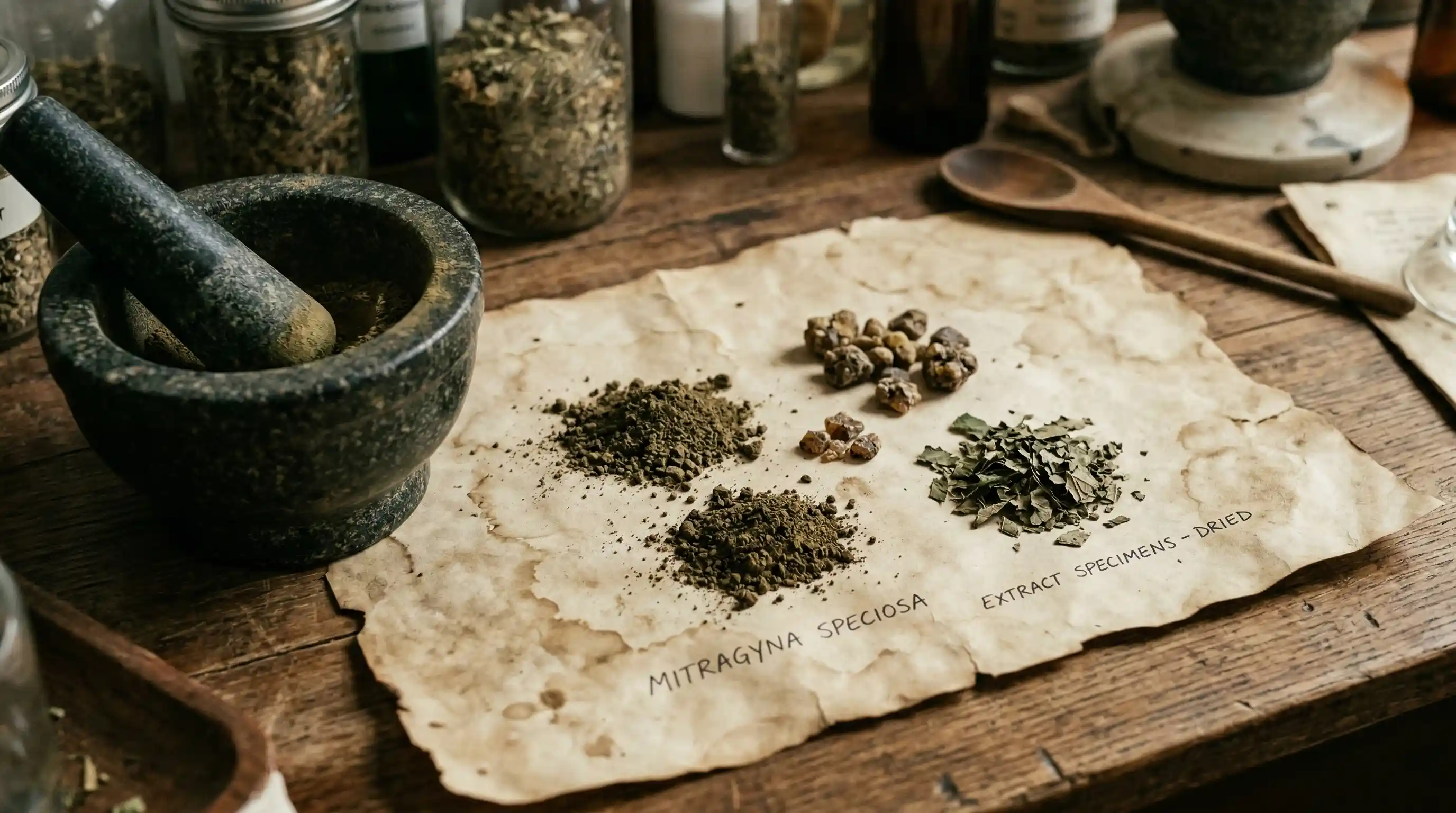
Mitragyna Speciosa Extract
Always start with a low dose and read our safety guidelines before use.
Mitragyna Speciosa (Kratom) extract is a concentrated form containing higher levels of mitragynine and 7-hydroxymitragynine. It provides enhanced pain relief, mood elevation, and energy at lower doses compared to regular kratom powder. Popular for its potency and convenience in Dutch smartshops.

Overview
Mitragyna speciosa extract, commonly known as kratom extract, is a concentrated preparation derived from the leaves of the Mitragyna speciosa tree, a tropical evergreen native to Southeast Asia. This botanical substance belongs to the coffee family (Rubiaceae) and has been used traditionally for centuries in countries like Thailand, Malaysia, and Indonesia. The extract represents a more potent form of kratom compared to traditional leaf preparations, containing concentrated levels of the plant's active alkaloids, primarily mitragynine and 7-hydroxymitragynine.
People use kratom extract for various reasons, including pain management, mood enhancement, energy stimulation, and as an aid for opioid withdrawal. The extract's appeal lies in its dual nature – at lower doses, it typically produces stimulating effects similar to caffeine, while at higher doses, it can provide sedating and analgesic effects. This unique pharmacological profile has made it popular among individuals seeking natural alternatives for managing chronic pain, fatigue, anxiety, and depression.
The extraction process concentrates the plant's alkaloids, making the extract significantly more potent than raw leaf powder. This concentration means that smaller amounts are needed to achieve desired effects, but it also increases the risk of overconsumption and adverse reactions. The extract is available in various forms, including liquid tinctures, resin-like concentrates, and standardized powders, each with different potency levels and onset characteristics.
Understanding kratom extract requires recognizing its complex legal status worldwide. While legal in the Netherlands and many other countries, it faces restrictions or bans in several jurisdictions due to concerns about dependency potential and public health impacts. This regulatory uncertainty underscores the importance of informed, responsible use and awareness of local laws.
How It Works
Mitragyna speciosa extract exerts its effects through a complex interaction with multiple neurotransmitter systems in the brain and body. The primary active compounds responsible for kratom's effects are indole alkaloids, with mitragynine comprising 60-70% of the total alkaloid content and 7-hydroxymitragynine representing a smaller but more potent fraction. These alkaloids demonstrate a unique pharmacological profile that distinguishes kratom from traditional opioids while sharing some similar mechanisms.
The most significant mechanism involves interaction with opioid receptors, particularly the mu-opioid receptor (MOR), delta-opioid receptor (DOR), and kappa-opioid receptor (KOR). Mitragynine acts as a partial agonist at mu-opioid receptors, meaning it activates these receptors but with a ceiling effect that may reduce the risk of respiratory depression compared to full opioid agonists. The 7-hydroxymitragynine metabolite shows higher potency and greater affinity for mu-opioid receptors, contributing significantly to the analgesic and euphoric effects experienced at higher doses.
Beyond opioid receptor activity, kratom alkaloids interact with several other neurotransmitter systems. They demonstrate activity at alpha-2 adrenergic receptors, which may contribute to the sedating effects observed at higher doses. The alkaloids also interact with serotonin and dopamine systems, influencing mood, motivation, and reward pathways. Some research suggests interaction with adenosine receptors, which could explain the stimulating effects seen at lower doses.
The extract's stimulating properties at low doses appear to result from antagonism of adenosine receptors and possible interaction with adrenergic systems, creating effects similar to caffeine but with additional mood-enhancing properties through dopaminergic activity. As doses increase, the opioidergic effects become more prominent, leading to the characteristic shift from stimulation to sedation and analgesia.
The pharmacokinetics of kratom extract involve rapid absorption when taken orally, with effects typically beginning within 15-30 minutes and reaching peak intensity within 1-2 hours. The duration of effects generally ranges from 4-6 hours, though this can vary based on individual metabolism, tolerance, and extract potency.
What It Looks Like
Mitragyna speciosa extract appears in several distinct forms, each with characteristic visual and physical properties that help identify authentic products. The most common form is a dark, resin-like concentrate that ranges in color from deep brown to nearly black. This extract typically has a thick, sticky consistency similar to molasses or tar, and may appear glossy or matte depending on the extraction method and storage conditions. When fresh, the resin may be pliable, but it can harden over time, requiring warming to manipulate.
Liquid kratom extracts present as dark brown to amber-colored solutions, often with a consistency ranging from thin liquid to syrup-like viscosity. These tinctures are typically packaged in small glass bottles with dropper caps or in plastic bottles with measured dispensing systems. The liquid should appear relatively clear without significant particulate matter, though some natural sediment may be present.
Powdered kratom extracts vary in color from light tan to dark brown, depending on the extraction process and concentration ratio. These powders are typically much finer than ground kratom leaf and may have a slightly different texture. Standardized extracts often come in uniform, fine powders with consistent coloration, while less refined extracts may show more variation in particle size and color.
Packaging varies significantly among vendors, ranging from simple plastic bags to sophisticated bottles with detailed labeling. Legitimate products typically include information about alkaloid content, extraction ratio, batch numbers, and expiration dates. However, the lack of standardized regulations means packaging quality and information accuracy can vary substantially.
Common adulterants or concerning additives may include synthetic opioids, caffeine, or other plant materials. Red flags include extracts that appear unusually uniform in color, have chemical odors, or produce effects that seem disproportionate to the stated potency. Authentic kratom extract should have a characteristic bitter, earthy smell and taste. Products that taste sweet, have no taste, or produce unusual sensations may contain adulterants.
What to Expect
The subjective experience of Mitragyna speciosa extract varies significantly based on dosage, individual physiology, tolerance, and the specific extract's potency. Understanding this dose-response relationship is crucial for safe and effective use, as the effects can shift dramatically across different dosage ranges.
At low doses, typically equivalent to 1-3 grams of regular kratom leaf, users commonly report stimulating effects that begin within 15-30 minutes of consumption. The initial onset may include a subtle mood lift, increased alertness, and enhanced sociability. Many users describe feeling more talkative, motivated, and energetic, with some comparing the experience to a strong cup of coffee but with additional mood-enhancing properties. Physical sensations may include slight euphoria, reduced fatigue, and increased focus. The stimulating phase typically peaks within 1-2 hours and gradually transitions to a more relaxed state.
Moderate doses, equivalent to 3-6 grams of leaf material, often produce a more balanced experience combining both stimulating and relaxing elements. Users frequently report enhanced mood, mild euphoria, and a sense of well-being. Pain relief becomes more noticeable at this level, with many users experiencing significant reduction in chronic pain symptoms. The experience may include increased empathy, reduced anxiety, and a general sense of contentment. Physical sensations might include warmth, mild tingling, and muscle relaxation.
Higher doses, equivalent to 6+ grams of leaf material, typically produce predominantly sedating and analgesic effects. Users often report strong pain relief, deep relaxation, and sometimes euphoric sensations. The experience may include drowsiness, reduced motivation for physical activity, and a dreamy, contemplative mental state. Some users describe this as similar to mild opioid effects but generally with less respiratory depression risk. However, higher doses also increase the likelihood of adverse effects such as nausea, dizziness, and constipation.
The duration of effects typically ranges from 4-6 hours, with the most intense effects occurring during the first 2-3 hours. The comedown is generally gradual, with users reporting a slow return to baseline without significant rebound effects when used occasionally. However, regular users may experience mild withdrawal symptoms between doses, including irritability, fatigue, and cravings.
Individual responses can vary significantly based on factors including body weight, metabolism, previous opioid exposure, and genetic variations in drug metabolism. First-time users often report stronger effects than expected, while regular users may require higher doses to achieve similar effects due to tolerance development.
Preparation & Consumption
Mitragyna speciosa extract can be consumed through several routes of administration, each with distinct characteristics regarding onset time, duration, and intensity of effects. Understanding proper preparation and dosing is essential for safe and effective use, particularly given the extract's increased potency compared to traditional leaf preparations.
Oral consumption represents the most common and recommended method of administration. Resin-like extracts can be dissolved in warm water or mixed with citrus juice, which may enhance alkaloid absorption due to acidic conditions. The bitter taste can be masked by mixing with flavored beverages, though this should be done carefully to ensure accurate dosing. Liquid extracts can be taken directly or diluted in water, with many users preferring to hold the liquid under the tongue for 30-60 seconds before swallowing to potentially enhance absorption through sublingual tissues.
Powdered extracts offer the most versatility in preparation methods. They can be mixed into beverages, encapsulated for easier consumption, or prepared as a tea. When making tea, the powder should be simmered in water for 10-15 minutes rather than steeped like traditional tea, as this helps extract the alkaloids more effectively. Adding lemon juice or other acidic components may improve extraction efficiency.
Dosing kratom extract requires extreme caution due to its concentrated nature. Extract potencies vary significantly, with some products being 5-50 times stronger than regular leaf powder. A typical starting dose for extract should be approximately 1/10th to 1/20th of what one might use with regular kratom leaf. For someone new to kratom entirely, starting with doses equivalent to 0.5-1 gram of regular leaf is advisable, which might translate to as little as 25-100 milligrams of concentrated extract.
Set and setting considerations are important for optimal experiences. Users should be in a comfortable, safe environment, particularly when trying kratom for the first time or experimenting with new doses. Having several hours available without responsibilities is recommended, as effects can last 4-6 hours. Avoiding alcohol and other depressants is crucial, especially at higher doses where sedating effects predominate.
Timing of consumption affects the experience significantly. Taking kratom extract on an empty stomach typically produces faster onset and stronger effects, while consuming it with food may reduce intensity but also decrease the likelihood of nausea. Many experienced users recommend waiting at least 2-3 hours after eating before consuming kratom extract.
Tolerance develops relatively quickly with regular use, often requiring dose increases to maintain effects. To minimize tolerance development, many users employ rotation schedules, taking breaks between use days, or rotating between different strains or extracts.
Safety First
Mitragyna speciosa extract use involves several important safety considerations that users must understand to minimize risks and avoid potentially dangerous situations. The concentrated nature of extracts amplifies both therapeutic effects and potential adverse reactions, making careful attention to safety protocols essential.
Contraindications include several medical conditions and circumstances where kratom extract use should be avoided entirely. Individuals with liver disease should exercise extreme caution, as kratom alkaloids are metabolized by the liver, and there have been reports of hepatotoxicity in some users, though causation remains debated. People with heart conditions, particularly those involving rhythm abnormalities, should consult healthcare providers before use, as kratom can affect cardiovascular function. Pregnant and breastfeeding women should avoid kratom extract due to unknown effects on fetal development and potential transfer through breast milk.
Drug interactions represent a significant safety concern, particularly with medications that affect the central nervous system. Combining kratom extract with benzodiazepines, alcohol, or other depressants can lead to dangerous respiratory depression and sedation. The combination with stimulants may mask warning signs of overconsumption and increase cardiovascular stress. Kratom may interact with medications metabolized by cytochrome P450 enzymes, potentially altering the effectiveness of prescription drugs including some antidepressants, blood thinners, and seizure medications.
Dependency and withdrawal risks require serious consideration. Regular kratom extract use can lead to physical dependence, with withdrawal symptoms including irritability, anxiety, muscle aches, insomnia, and cravings. These symptoms typically begin 12-24 hours after the last dose and may persist for several days to weeks. The concentrated nature of extracts may accelerate dependency development compared to traditional leaf preparations.
Overdose risks, while generally lower than with traditional opioids, still exist with kratom extract. Signs of excessive consumption include severe nausea and vomiting, dizziness, confusion, respiratory depression, and loss of consciousness. The concentrated potency of extracts makes accidental overdose more likely, particularly for inexperienced users or those switching between different extract potencies.
Quality and purity concerns are significant in the unregulated kratom market. Products may contain adulterants, contaminants, or inaccurate potency labeling. Heavy metals, pesticides, and microbial contamination have been found in some kratom products. When possible, users should seek products from vendors who provide third-party laboratory testing results showing alkaloid content and screening for contaminants.
Risk reduction strategies include starting with very low doses, avoiding daily use, maintaining detailed records of consumption and effects, and having a trusted person present during initial experiences. Users should be aware of their local emergency services and have a plan for seeking help if needed. Regular tolerance breaks can help prevent dependency development and maintain effectiveness.
History & Cultural Context
The history of Mitragyna speciosa spans centuries of traditional use in Southeast Asian cultures, where the plant has been deeply integrated into local medicine, labor practices, and social customs. Indigenous communities in Thailand, Malaysia, Indonesia, and surrounding regions have utilized kratom leaves for generations, developing sophisticated understanding of its properties and applications long before Western scientific investigation began.
Traditional use patterns varied among different cultures and regions. In Thailand, kratom was commonly used by laborers, farmers, and fishermen to combat fatigue, increase endurance, and manage pain from physically demanding work. The leaves were typically chewed fresh or dried and brewed into teas. Malaysian traditional medicine incorporated kratom for treating various ailments including diarrhea, pain, and fever. Indonesian communities developed their own preparation methods and applications, often combining kratom with other medicinal plants in traditional remedies.
The cultural significance of kratom extended beyond mere utility. In some communities, kratom use was associated with social gatherings and traditional ceremonies. Elders often served as guardians of knowledge about proper preparation, dosing, and applications. This traditional wisdom emphasized respect for the plant and careful attention to individual responses and tolerance.
Western awareness of kratom began in the 19th century when Dutch colonial botanists first documented the plant scientifically. However, significant research and interest didn't develop until the late 20th and early 21st centuries. The isolation and identification of key alkaloids, particularly mitragynine, occurred in the 1960s, but comprehensive pharmacological studies remained limited until recent decades.
The development of kratom extracts represents a relatively modern innovation, driven partly by Western preferences for standardized, concentrated preparations and partly by the practical considerations of international trade and storage. Traditional cultures primarily used whole leaves or simple preparations, while extract production typically employs modern chemical techniques to concentrate active compounds.
Legal and social perceptions of kratom have evolved dramatically over time. In Thailand, kratom was banned in 1943, partly due to concerns about its impact on opium tax revenues, though this ban was recently lifted in 2021. Western countries have shown varying approaches, with some embracing kratom as a natural supplement while others have imposed restrictions or bans due to public health concerns.
The modern kratom industry has transformed traditional use patterns significantly. What was once a locally used plant with established cultural protocols has become a global commodity with varying quality standards, potency levels, and preparation methods. This transformation has brought both opportunities for wider access to kratom's potential benefits and challenges related to quality control, appropriate use guidance, and regulatory oversight.
Emergency Guidance
Recognizing and responding appropriately to kratom extract-related emergencies requires understanding the signs of overconsumption, knowing when to seek professional help, and implementing immediate harm reduction measures. The concentrated nature of extracts can lead to more severe adverse reactions than traditional leaf preparations, making emergency preparedness particularly important.
Signs of kratom extract overconsumption include severe nausea and persistent vomiting, which can lead to dehydration and electrolyte imbalances. Users may experience extreme dizziness, confusion, or disorientation that impairs their ability to function safely. Respiratory depression, while less common than with traditional opioids, can occur, particularly when kratom is combined with other depressants. This may manifest as slow, shallow breathing, blue lips or fingernails, or difficulty staying conscious. Cardiovascular effects might include rapid or irregular heartbeat, chest pain, or significant changes in blood pressure.
Immediate response measures begin with ensuring the affected person remains conscious and responsive. If someone is vomiting, position them on their side to prevent aspiration and maintain airway clearance. Monitor breathing closely – if respiration becomes dangerously slow (fewer than 10 breaths per minute) or if the person becomes unresponsive, emergency medical services should be contacted immediately. Keep the person awake and talking if possible, but avoid giving them anything to eat or drink if they're vomiting or have altered consciousness.
When to call emergency services includes any situation involving loss of consciousness, severe breathing difficulties, chest pain, seizures, or when the person's condition continues to deteriorate despite supportive measures. In the Netherlands, emergency services can be reached by calling 112. Be prepared to provide clear information about what was consumed, including the type of kratom extract, estimated dose, timing of consumption, and any other substances that may have been used concurrently.
Supporting someone through a difficult experience involves providing reassurance and maintaining a calm environment. Kratom-related anxiety or panic can often be managed through supportive presence and breathing exercises. Encourage slow, deep breathing and provide comfort items like blankets or pillows. Dim lighting and reduced noise can help if the person is experiencing sensory sensitivity. Stay with the person throughout the experience and continue monitoring their condition.
Information to provide to medical professionals should include the specific type of kratom extract used, the estimated dose and timing of consumption, any other substances consumed, the person's medical history including current medications, and a timeline of symptoms. If possible, bring the kratom product packaging to help medical staff understand what was consumed.
Prevention strategies include having a trusted, sober person present during kratom use, especially when trying new products or doses. Establish clear communication about planned consumption and expected duration of effects. Keep emergency contact information readily available and ensure someone knows how to access it. Consider having activated charcoal available, though this should only be used under medical guidance and is most effective within the first hour after consumption.
Legal Status in NL
Legal
Available in 164 shops across 61 cities. Most shops in Amsterdam (31), Rotterdam (13), Groningen (9).
Dosage Guide
Experience Timeline
Effect Profile
Positive Effects
Side Effects
Safety & Harm Reduction
Harm Reduction Tips
- Start with very small doses as extracts are much more potent than plain leaf
- Wait at least 45-60 minutes before redosing to avoid accidental overdose
- Stay well hydrated throughout the experience
- Avoid driving or operating machinery due to sedative effects
- Don't combine with alcohol, opioids, or other depressants
- Use a scale to measure doses accurately rather than estimating
- Have a sober friend present, especially when trying for the first time
- Avoid daily use to prevent tolerance and dependence
- Keep a dosage log to track effects and avoid escalation
- Store extracts safely away from children and pets
Emergency Information
If experiencing severe nausea, vomiting, difficulty breathing, or loss of consciousness, seek immediate medical attention. For mild discomfort, stay hydrated, rest in a comfortable position, and avoid additional substances. Kratom can cause respiratory depression at high doses, especially when combined with other depressants.
Interactions
Opioids⚠️Deadly
AlcoholDangerous
BenzodiazepinesDangerous
MAOIsDangerous
TramadolDangerous
SSRIs/SNRIsCaution
StimulantsCaution
CannabisCaution
Experience Levels
As a newcomer to Mitragyna Speciosa Extract, your experience will likely be more intense than you might expect from reading about regular kratom. The concentrated alkaloids mean even tiny amounts can produce noticeable effects. You'll probably feel the onset within 15-30 minutes, starting with a subtle shift in energy or mood. Lower doses typically bring alertness, mild euphoria, and enhanced focus, while slightly higher amounts may produce relaxation and pain relief. The experience can last 4-6 hours, longer than many other legal herbs. You might experience some nausea, especially if taken on an empty stomach, which is completely normal but can be uncomfortable. Your body needs time to adjust to kratom's unique alkaloid profile. The key is patience - resist the urge to redose quickly as effects build gradually. Many beginners are surprised by kratom's dual nature: stimulating at low doses, sedating at higher ones. Keep detailed notes about your dosage and effects to find your optimal range. Remember that individual responses vary significantly, and what works for others may not work for you. Focus on finding your minimum effective dose rather than chasing stronger effects.
Frequently Asked Questions
Is Mitragyna Speciosa Extract legal in the Netherlands?▾
Yes, Mitragyna Speciosa (kratom) extract is currently legal in the Netherlands. You can purchase it from licensed smartshops and online retailers. However, always check current regulations as laws can change, and be aware that kratom is banned in some neighboring countries.
What's the difference between kratom extract and regular kratom powder?▾
Kratom extract is a concentrated form containing higher levels of active alkaloids like mitragynine and 7-hydroxymitragynine. This means you need much smaller amounts compared to regular powder to achieve similar effects. Extract is more potent, convenient, and often has a longer shelf life.
How should I dose Mitragyna Speciosa Extract as a beginner?▾
Start with the smallest possible amount, typically 0.1-0.3 grams of extract, as it's much more concentrated than regular kratom. Wait at least 45-60 minutes before considering additional dosing. Always check the concentration ratio on your specific product, as extracts can vary significantly in potency.
What effects can I expect from kratom extract?▾
At lower doses, expect increased energy, focus, and mild euphoria. Higher doses typically produce relaxation, pain relief, and sedation. Effects usually begin within 15-30 minutes and can last 3-6 hours. The concentrated nature of extract means effects may be more pronounced than regular kratom.
Are there any safety risks with kratom extract?▾
Yes, kratom extract carries risks including nausea, dizziness, constipation, and potential for dependence with regular use. The concentrated nature increases risk of overdose. Avoid mixing with alcohol, opioids, or other depressants. Start low, go slow, and take regular breaks to prevent tolerance.
Can kratom extract interact with medications?▾
Kratom can interact with various medications, particularly those affecting the liver's CYP450 enzymes, blood pressure medications, and psychiatric drugs. Consult a healthcare provider before use if you take any medications. Never combine with opioids, benzodiazepines, or alcohol due to respiratory depression risk.
Where can I buy quality kratom extract in the Netherlands?▾
Purchase from reputable Dutch smartshops, both physical stores and online retailers that provide lab testing results and clear product information. Look for vendors who specify extraction ratios and alkaloid content. Avoid unregulated sources or products without proper labeling.
Can I travel with kratom extract within Europe?▾
While legal in the Netherlands, kratom is banned in several European countries including Denmark, Finland, Latvia, Lithuania, Poland, Romania, and Sweden. Check destination laws before traveling. When legal, keep products in original packaging with clear labeling for customs.
How often can I safely use kratom extract?▾
Limit use to 2-3 times per week maximum to prevent tolerance and dependence. Take regular breaks of at least 2-3 days between uses. Daily use significantly increases risk of physical dependence and withdrawal symptoms. The concentrated nature of extract makes moderation even more important.
What should I do if I take too much kratom extract?▾
If you experience severe nausea, dizziness, or respiratory depression, seek medical attention immediately. For mild overdose symptoms, stay hydrated, rest in a safe environment, and avoid additional substances. Having a sober friend present is recommended, especially for first-time users.
How does kratom extract compare to other legal herbs in Dutch smartshops?▾
Kratom extract is significantly more potent than herbs like kanna or blue lotus. While kanna offers mild mood enhancement and blue lotus provides gentle relaxation, kratom extract can produce stronger pain relief and euphoria. However, it also carries higher risks and potential for dependence.
What's the best way to consume kratom extract?▾
Most extracts can be mixed with water, juice, or taken in capsules. Avoid hot liquids as heat may degrade alkaloids. Some prefer the 'toss and wash' method with water. Start with liquid consumption for better dose control. Always measure carefully using a precise scale.
How should I store kratom extract properly?▾
Store in a cool, dry, dark place in an airtight container away from direct sunlight and moisture. Properly stored extract can maintain potency for 1-2 years. Keep away from children and pets. Label containers clearly with contents and date of purchase.
Are there any signs I should stop using kratom extract?▾
Stop use if you experience persistent nausea, sleep problems, irritability when not using, or feel you need increasing amounts for the same effect. These may indicate developing tolerance or dependence. Seek professional help if you're unable to reduce or stop use on your own.
What should I know about kratom extract quality and testing?▾
Quality extracts should come with lab testing for alkaloid content, heavy metals, and microbials. Look for products that specify extraction ratios (like 10:1 or 15:1) and total alkaloid percentages. Reputable vendors provide certificates of analysis and clear product information.
How It Compares — Mitragyna Speciosa Extract
| Dimension | Mitragyna Speciosa Extract | Kratom | Kanna | Blue Lotus |
|---|---|---|---|---|
| Intensity | 7-8/10 | 4/10 | 4/10 | 2/10 |
| Duration | 4-6 hours | 3-5 hours | 2-4 hours | 2-3 hours |
| Onset Time | 15-30 minutes | 15-30 minutes | 15-30 minutes | 30-60 minutes |
| Legal Status NL | Legal | Legal | Legal | Legal |
| Dosage Amount | 0.1-1 gram | 2-8 grams | — | — |
| Risk Profile | Higher (concentrated) | Moderate | Lower risk profile | Very low |
| Best For | Experienced users, precise dosing | Beginners, daily use | Mood enhancement, social situations | Gentle relaxation, beginners |
Related Searches
References
- Kruegel AC, Gassaway MM, Kapoor A, Váradi A, Majumdar S, Filizola M, Javitch JA, Sames D. Mitragynine/Corynantheidine Pseudoindoxyls As Opioid Analgesics with Mu Agonism and Delta Antagonism, Which Do Not Recruit β-Arrestin-2 · Proceedings of the National Academy of Sciences · 2016doi:10.1073/pnas.1521825113
- Swogger MT, Walsh Z. The medicinal chemistry and neuropharmacology of kratom: A preliminary discussion of a promising medicinal plant and analysis of its potential for abuse · Neuropharmacology · 2018doi:10.1016/j.neuropharm.2017.10.012
- Matsumoto K, Mizowaki M, Suchitra T, Takayama H, Sakai SI, Aimi N, Watanabe H. Mitragynine, the most abundant alkaloid in Mitragyna speciosa leaves, is a partial agonist of human μ-opioid receptor · Life Sciences · 1996doi:10.1016/0024-3205(96)00430-6
- Grundmann O. Kratom (Mitragyna speciosa): User demographics, use patterns, and implications for the clinical laboratory · Clinical Laboratory Medicine · 2017doi:10.1016/j.cll.2017.07.005
- Trakulsrichai S, Sathirakul K, Auparakkitanon S, Krongvorakul J, Sueajai J, Noumjad N, Sukasem C, Wananukul W. Pharmacokinetics of mitragynine in man · Drug Design, Development and Therapy · 2015doi:10.2147/DDDT.S79658
- Obeng S, Kamble SH, Reeves ME, Restrepo LF, Patel A, Behnke M, Chear NJ, Ramanathan S, Sharma A, León F, Hiranita T, Avery BA, McMahon LR, McCurdy CR. Kratom alkaloids: interactions with enzymes, receptors, and cellular pathways · Frontiers in Pharmacology · 2020doi:10.3389/fphar.2020.00598
- Matsumoto K, Mizowaki M, Suchitra T, Murakami Y, Takayama H, Sakai SI, Aimi N, Watanabe H. Antinociceptive action of alkaloids from Mitragyna speciosa · Planta Medica · 1996doi:10.1055/s-2006-957988
- Singh D, Müller CP, Vicknasingam BK. Kratom (Mitragyna speciosa) dependence, withdrawal symptoms and craving in regular users · Drug and Alcohol Dependence · 2014doi:10.1016/j.drugalcdep.2013.10.003
Disclaimer: This information is for educational purposes only and does not constitute medical advice. Always consult a qualified healthcare professional before using any substance. If you experience adverse effects, contact your doctor or call 112 (Netherlands emergency).