Blue Lotus
Always start with a low dose and read our safety guidelines before use.
Blue Lotus (Nymphaea caerulea) is an ancient Egyptian plant known for its mild euphoric and relaxing effects. It contains aporphine alkaloids that interact with dopamine receptors, producing a gentle sense of calm and well-being. Popular in Dutch smartshops as a tea or extract.

Overview
Blue Lotus (Nymphaea caerulea), also known as Blue Water Lily or Sacred Blue Lily, is a flowering aquatic plant native to Egypt and other parts of East Africa. This ancient herb has gained renewed interest in modern times as a mild psychoactive substance used for relaxation, dream enhancement, and meditation purposes. Unlike its more potent botanical cousins, Blue Lotus offers a gentle, subtle experience that has made it popular among those seeking natural alternatives for stress relief and consciousness exploration.
The plant contains several bioactive compounds, most notably nuciferine and aporphine, which contribute to its mild sedative and euphoric properties. Users typically report feelings of calm relaxation, enhanced mood, and vivid dreams when consumed in various forms including teas, smoking blends, and extracts. The effects are generally described as subtle and pleasant, making it an attractive option for those new to herbal psychoactives or seeking a gentle alternative to stronger substances.
Blue Lotus occupies a unique position in the world of natural psychoactives due to its legal status in most countries, including the Netherlands, and its relatively benign safety profile. However, like any psychoactive substance, it requires proper understanding and respect for safe use. The herb's popularity has grown significantly in recent years, particularly among individuals interested in lucid dreaming, meditation enhancement, and natural wellness practices. Its historical significance in ancient Egyptian culture adds an additional layer of intrigue for many users, connecting them to thousands of years of traditional use. While the effects are mild compared to other psychoactive plants, Blue Lotus deserves careful consideration regarding preparation, dosing, and potential interactions with other substances or medications.
How It Works
Blue Lotus exerts its psychoactive effects through several bioactive alkaloids, with nuciferine and aporphine being the primary compounds of interest. These alkaloids interact with various neurotransmitter systems in the brain, though the exact mechanisms are not fully understood due to limited scientific research on the plant's pharmacology.
Nuciferine, the most abundant alkaloid in Blue Lotus, appears to have dopaminergic activity, potentially blocking dopamine receptors and influencing the brain's reward pathways. This interaction may contribute to the mild euphoric and relaxing effects reported by users. Additionally, nuciferine has been shown to have antispasmodic properties, which could explain the physical relaxation many people experience. Some research suggests that nuciferine may also interact with serotonin receptors, potentially influencing mood and contributing to the herb's reported antidepressant-like effects.
Aporphine, another significant alkaloid present in Blue Lotus, acts as a dopamine receptor agonist, meaning it can activate dopamine receptors rather than block them. This dual action of different alkaloids on the dopamine system creates a complex pharmacological profile that may explain the balanced, gentle nature of Blue Lotus effects. Aporphine has also been studied for its potential effects on sleep and dreaming, which aligns with traditional and contemporary uses of Blue Lotus for dream enhancement.
The plant also contains various flavonoids and other compounds that may contribute to its overall effects through antioxidant and anti-inflammatory pathways. These secondary compounds might work synergistically with the primary alkaloids to produce the herb's characteristic gentle, dreamy effects. The relatively low concentrations of active compounds in Blue Lotus compared to other psychoactive plants explains why the effects are subtle and why larger quantities are typically needed to achieve noticeable effects. The herb's influence on sleep architecture and REM sleep may be particularly important for its dream-enhancing properties, though more research is needed to fully understand these mechanisms.
What It Looks Like
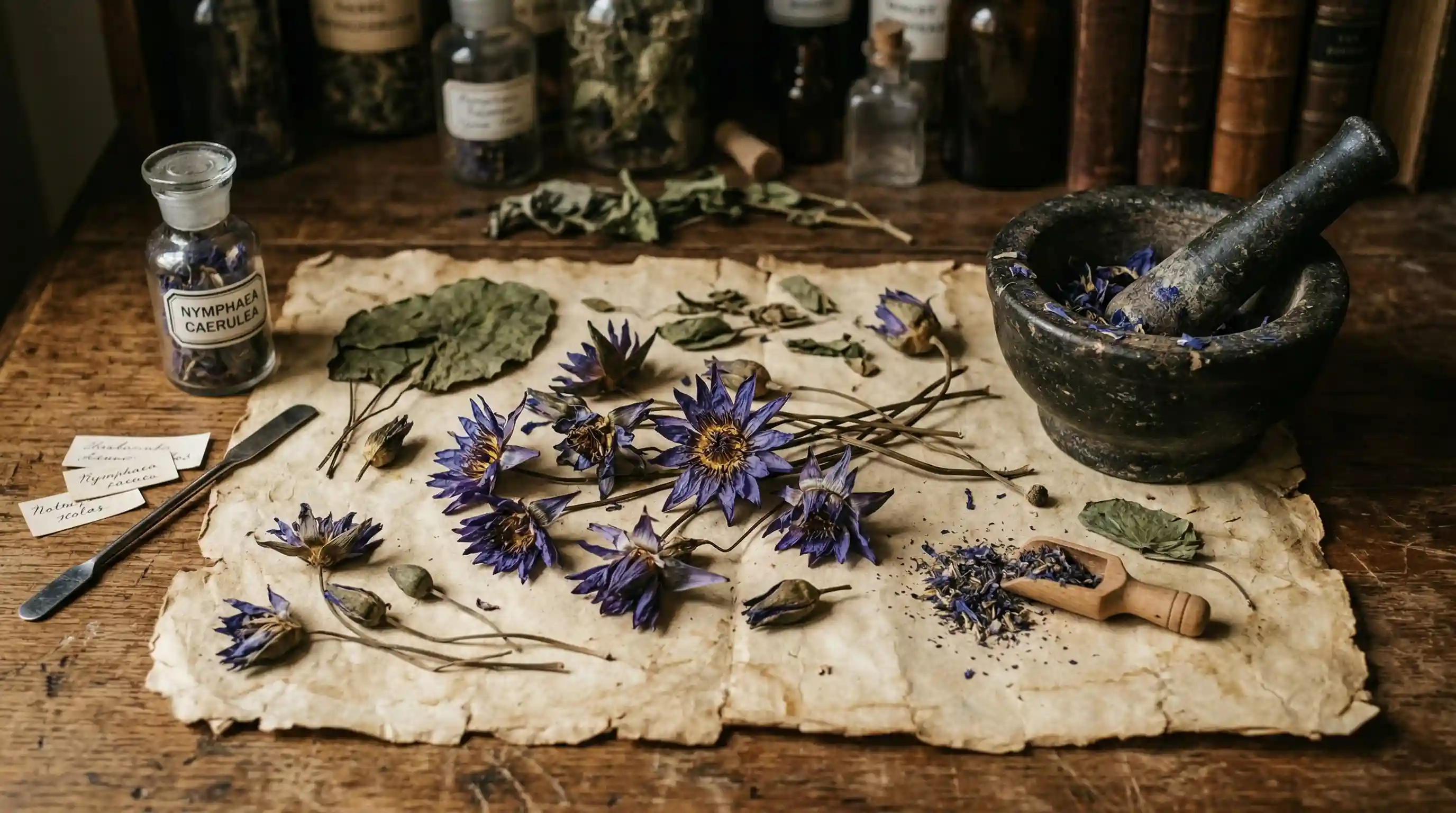
Blue Lotus flowers are distinctive and beautiful, featuring vibrant blue petals that fade to white toward the center, surrounding bright yellow stamens. Fresh flowers are typically 4-6 inches in diameter and have a delicate, sweet fragrance. However, most consumers encounter Blue Lotus in its dried form, where the flowers appear significantly different from their fresh counterparts.
Dried Blue Lotus flowers retain some of their blue coloration but appear more muted, often taking on brownish or grayish-blue hues. The petals become papery and fragile, easily crumbling when handled. High-quality dried flowers should still show distinct petal structure and maintain some of their original color. The stamens typically turn dark brown or black when dried. Properly dried Blue Lotus should have a pleasant, slightly sweet aroma with floral notes, though much more subtle than fresh flowers.
Blue Lotus is commonly sold in several forms including whole dried flowers, crushed petals, powdered form, and concentrated extracts. Whole flowers are generally considered the highest quality option, allowing consumers to verify authenticity and assess quality. Crushed or powdered forms are more convenient for tea preparation and smoking blends but make quality assessment more difficult. Extracts, often labeled with concentration ratios like 10:1 or 20:1, appear as dark, resinous substances or fine powders.
When purchasing Blue Lotus, consumers should be aware of potential adulterants or substitutions. Some unscrupulous vendors may substitute other blue flowers or mix Blue Lotus with cheaper materials. Common adulterants include cornflower petals, which are bright blue but lack psychoactive properties, or other water lily species that may have different effects or safety profiles. Quality Blue Lotus should be sourced from reputable suppliers who can provide information about origin and processing methods. The packaging should protect the material from light and moisture, as both can degrade the active compounds over time.
What to Expect
The Blue Lotus experience is characterized by its gentle, subtle nature, making it quite different from more potent psychoactive substances. Users typically describe the effects as relaxing and mildly euphoric, with a dreamy quality that enhances introspection and creativity. The onset, duration, and intensity of effects vary significantly depending on the method of consumption, dosage, and individual sensitivity.
When consumed as a tea, effects typically begin within 15-30 minutes and can last 2-4 hours. The experience often starts with a gentle sense of relaxation spreading through the body, accompanied by a subtle shift in mood toward contentment and peace. Many users report a slight enhancement in sensory perception, with colors appearing more vivid and sounds seeming more pleasant. The mental effects include mild euphoria, enhanced creativity, and a dreamy, contemplative state that many find conducive to meditation or artistic pursuits.
Physical sensations commonly include muscle relaxation, a warm, comfortable feeling throughout the body, and sometimes a slight tingling sensation. Some users experience a gentle sedative effect that makes Blue Lotus popular as an evening herb for unwinding after stressful days. The relaxation is typically described as pleasant and natural, without the heavy sedation associated with stronger substances.
One of the most notable and sought-after effects of Blue Lotus is its impact on dreams and sleep. Many users report more vivid, colorful, and memorable dreams when using Blue Lotus before bedtime. Some individuals find that it enhances their ability to achieve lucid dreams, though this effect varies greatly among users. The dream enhancement effects may persist for several nights after use, suggesting that Blue Lotus may have lasting impacts on sleep architecture.
When smoked, the effects tend to be more immediate but shorter-lasting, typically beginning within minutes and lasting 1-2 hours. Smoking often produces a more pronounced initial euphoria followed by relaxation. Some users prefer smoking for its rapid onset and ability to control dosage more precisely. The smoke is generally described as smooth and pleasant, with a mild floral taste.
Higher doses may intensify all effects but rarely produce overwhelming experiences. Even at larger doses, Blue Lotus maintains its gentle character, though some users may experience mild dizziness or nausea if they consume too much too quickly. The herb's forgiving nature makes it relatively difficult to have truly negative experiences, though individual sensitivity varies considerably.
Preparation & Consumption
Blue Lotus can be consumed through several methods, each offering different onset times, durations, and intensities of effects. The most common and traditional method is brewing it as a tea, which provides a gentle, long-lasting experience suitable for beginners and experienced users alike.
For tea preparation, use 1-3 grams of dried Blue Lotus flowers or petals per cup of water. Bring water to a rolling boil, then reduce heat and add the plant material. Simmer gently for 10-15 minutes to extract the active compounds effectively. Some users prefer to steep the flowers in hot water for 15-20 minutes without boiling to preserve more delicate compounds. The resulting tea has a mild, pleasant floral taste that can be enhanced with honey, lemon, or other natural flavors. Many users find that drinking the tea 1-2 hours before bedtime maximizes the dream enhancement effects.
Smoking Blue Lotus is another popular consumption method, often preferred for its rapid onset and shorter duration. Use 0.5-1 gram of dried flowers or petals, either alone or mixed with other smokable herbs like damiana or mullein. The plant material should be ground to a consistency suitable for smoking but not powdered, as this can make it harsh and difficult to burn evenly. Blue Lotus burns smoothly and produces mild, pleasant-tasting smoke. Some users create smoking blends combining Blue Lotus with complementary herbs for enhanced effects or improved taste.
Vaporization offers a cleaner alternative to smoking, preserving more of the active compounds while avoiding combustion byproducts. Set the vaporizer temperature between 100-125°C (212-257°F) for optimal extraction of Blue Lotus compounds. This method provides rapid onset similar to smoking but with smoother delivery and potentially enhanced effects.
Extracts and concentrated forms require careful attention to dosing, as they can be significantly more potent than whole flowers. Start with very small amounts, typically 0.1-0.3 grams of extract, and wait for effects before consuming more. Extracts can be added to teas, smoked, or consumed directly, though the concentrated nature makes them less forgiving of dosing errors.
Set and setting considerations are important even for mild substances like Blue Lotus. Choose a comfortable, safe environment where you can relax without obligations or interruptions. Evening use is often preferred due to the herb's relaxing properties and dream enhancement effects. Having water available is recommended, especially when smoking, and avoiding alcohol or other substances that might interact unpredictably with Blue Lotus is advisable.
Safety First
While Blue Lotus is generally considered safe with a low risk profile, responsible use requires understanding potential risks, contraindications, and safety precautions. The herb's legal status and mild effects can create a false sense of complete safety, but like any psychoactive substance, it deserves respect and careful consideration.
Individuals with certain medical conditions should exercise particular caution or avoid Blue Lotus entirely. Those with cardiovascular conditions should be aware that the herb may affect heart rate and blood pressure, though significant changes are uncommon. People with respiratory conditions should avoid smoking Blue Lotus and consider alternative consumption methods. Pregnant and breastfeeding women should avoid Blue Lotus due to insufficient safety data and potential effects on fetal development or infant health through breast milk.
Drug interactions represent a significant safety consideration, particularly for individuals taking prescription medications. Blue Lotus may interact with medications that affect the central nervous system, including antidepressants, anti-anxiety medications, and sleep aids. The herb's effects on dopamine and serotonin systems could potentially amplify or interfere with psychiatric medications. Anyone taking prescription medications should consult with a healthcare provider before using Blue Lotus, especially those on MAOIs, SSRIs, or other psychoactive medications.
Allergic reactions, while rare, can occur with any plant material. Individuals with known allergies to water lilies or related plants should avoid Blue Lotus. Signs of allergic reactions include skin rash, difficulty breathing, swelling, or digestive upset. Discontinue use immediately if any allergic symptoms appear and seek medical attention if symptoms are severe.
Quality and purity concerns are particularly important given the limited regulation of herbal products. Purchase Blue Lotus only from reputable suppliers who can provide information about sourcing, processing, and testing. Contamination with pesticides, heavy metals, or other harmful substances is possible with poorly sourced plant materials. Some products may be adulterated with synthetic compounds or other plants, potentially creating unexpected effects or safety risks.
Dosage-related risks are generally minimal with Blue Lotus due to its mild nature, but consuming excessive amounts can lead to nausea, dizziness, or digestive upset. Start with small amounts and increase gradually to find the minimum effective dose. Avoid combining Blue Lotus with alcohol or other depressants, as this combination may enhance sedative effects unpredictably.
Long-term use considerations include the potential for psychological dependence, though physical dependence is not reported with Blue Lotus. Some users may develop a habit of relying on the herb for sleep or relaxation, which could interfere with developing natural coping mechanisms. Regular users should occasionally take breaks to assess their relationship with the substance and ensure it remains beneficial rather than habitual.
History & Cultural Context
Blue Lotus holds a revered place in ancient Egyptian civilization, where it was considered sacred and played significant roles in religious, cultural, and possibly medicinal practices. Archaeological evidence suggests that Nymphaea caerulea was cultivated and used by Egyptians as early as 3000 BCE, making it one of humanity's oldest documented psychoactive plants.
In ancient Egyptian art and hieroglyphs, Blue Lotus appears frequently in religious and funerary contexts. The flower is depicted in tomb paintings, papyri, and temple decorations, often associated with rebirth, the afterlife, and divine consciousness. Egyptian gods and goddesses are frequently shown holding or adorned with Blue Lotus flowers, and the plant appears in creation myths as a symbol of the sun emerging from primordial waters. The famous golden shrine of Tutankhamun features intricate Blue Lotus motifs, demonstrating the flower's importance in royal and religious contexts.
Archaeological discoveries have revealed Blue Lotus flowers, petals, and buds in Egyptian tombs, including those of pharaohs and nobles. These findings suggest that the plant was considered essential for the journey to the afterlife. Some scholars theorize that Blue Lotus was used in religious ceremonies to induce altered states of consciousness, facilitating communication with deities or accessing spiritual realms. The plant's association with the sun god Ra and its daily cycle of opening and closing with the sun reinforced its symbolic connection to death and rebirth.
Historical texts and medical papyri from ancient Egypt reference Blue Lotus in various contexts, though the exact nature of its use remains partially mysterious due to the symbolic and metaphorical language of ancient writings. Some interpretations suggest it was used medicinally for pain relief, as an aphrodisiac, or as a general wellness tonic. The plant appears in recipes and formulations alongside other herbs, indicating sophisticated understanding of herbal combinations.
The decline of Blue Lotus use coincided with the fall of ancient Egyptian civilization and the rise of other cultural influences in the region. For centuries, knowledge of the plant's psychoactive properties remained largely forgotten outside of academic circles studying ancient Egypt. The modern rediscovery of Blue Lotus began in the 20th century as interest in ethnobotany and ancient psychoactive plants grew among researchers and alternative culture enthusiasts.
Contemporary use of Blue Lotus has been influenced by the broader movement toward natural health, consciousness exploration, and interest in ancient wisdom traditions. The plant has found new audiences among individuals interested in lucid dreaming, meditation, and natural alternatives to pharmaceutical sleep aids. Online communities and modern herbalists have contributed to renewed interest in Blue Lotus, though sometimes with romanticized or inaccurate claims about its effects or historical use.
Emergency Guidance
While Blue Lotus is generally well-tolerated and serious adverse reactions are rare, it's important to recognize signs of distress and know how to respond appropriately. Most negative experiences with Blue Lotus involve mild discomfort rather than medical emergencies, but proper preparation and response can prevent minor issues from escalating.
Signs that someone may be having a difficult experience with Blue Lotus include excessive nausea or vomiting, severe dizziness, panic or anxiety, allergic reactions such as skin rash or difficulty breathing, or unusual confusion or disorientation. While these symptoms are uncommon with Blue Lotus, they require appropriate attention and care.
If someone is experiencing nausea or digestive upset, encourage them to sit or lie down in a comfortable position and provide water in small sips. Fresh air and cool temperatures often help with nausea. Avoid giving additional substances or medications unless specifically advised by medical professionals. Most digestive issues with Blue Lotus resolve within a few hours as the herb is metabolized.
For individuals experiencing anxiety or panic, provide calm, reassuring presence and remind them that the effects are temporary and will pass. Encourage slow, deep breathing and help them focus on their immediate environment. Moving to a quiet, comfortable space away from stimulation can be helpful. Avoid leaving someone alone if they're experiencing significant distress, but also avoid overwhelming them with too much attention or multiple people trying to help simultaneously.
Allergic reactions require immediate attention and may necessitate emergency medical care. Signs of serious allergic reactions include difficulty breathing, swelling of the face, lips, or throat, severe skin reactions, or rapid pulse. If any of these symptoms appear, call emergency services immediately. For mild allergic reactions like localized skin rash, discontinue use of Blue Lotus and monitor symptoms closely.
If someone becomes severely confused, disoriented, or exhibits symptoms that seem inconsistent with typical Blue Lotus effects, consider the possibility of adulterated products, interactions with other substances, or underlying medical conditions. When in doubt, contact medical professionals for guidance. In the Netherlands, emergency services can be reached by calling 112.
Keep important information readily available, including the exact product used, amount consumed, time of consumption, and any other substances or medications the person has taken. This information is crucial for medical professionals if emergency care becomes necessary. Having the product packaging or remaining material available can help identify potential adulterants or contamination.
Prevention remains the best approach to avoiding emergencies. Use Blue Lotus from reputable sources, start with small amounts, avoid combining with other substances, and ensure someone trustworthy is aware of your use. Create a safe, comfortable environment for use and have a plan for seeking help if needed. Remember that while Blue Lotus is generally safe, individual reactions can vary, and being prepared for unexpected responses demonstrates responsible use.
Legal Status in NL
Legal
Available in 164 shops across 61 cities. Most shops in Amsterdam (31), Rotterdam (13), Groningen (9).
Dosage Guide
Experience Timeline
Effect Profile
Positive Effects
Side Effects
Safety & Harm Reduction
Harm Reduction Tips
- Start with small amounts (0.5-1g) to assess individual sensitivity
- Use high-quality, properly identified blue lotus from reputable sources
- Avoid driving or operating machinery due to mild sedative effects
- Stay hydrated, especially when smoking the herb
- Don't use if pregnant or breastfeeding due to lack of safety data
- Be aware that effects are subtle and may not be immediately noticeable
- Keep a dream journal if using for lucid dreaming purposes
- Avoid daily use to prevent potential tolerance to mild effects
- Test for allergies by using a very small amount initially
- Store properly in a cool, dry place to maintain potency
Emergency Information
Blue lotus is generally considered very safe with minimal risk of serious adverse effects. If experiencing unexpected anxiety or discomfort, move to a calm environment and practice deep breathing. Seek medical attention if severe allergic reactions occur, though this is extremely rare.
Interactions
alcoholCaution
MAOIsCaution
benzodiazepinesCaution
opioidsCaution
cannabisSafe
SSRIs/SNRIsSafe
stimulantsSafe
Experience Levels
As a Blue Lotus beginner, expect a gentle, subtle experience that's quite different from stronger psychoactive substances. Your first session will likely produce mild euphoria, a sense of calm, and slight drowsiness. The effects build gradually over 30-60 minutes, creating a dreamy, peaceful state perfect for relaxation. Many newcomers describe feeling 'floaty' or slightly detached in a pleasant way. You might notice enhanced appreciation for music, art, or nature, though changes are subtle. Some beginners worry they're not feeling anything, but Blue Lotus works gently - look for increased relaxation, slight mood elevation, and a general sense of well-being. Physical sensations may include mild tingling, warmth, or heaviness in the limbs. The experience is forgiving and unlikely to cause anxiety or overwhelming effects. Use this time for quiet activities like reading, gentle music, or meditation. Many beginners find Blue Lotus perfect for evening use, as it naturally transitions into restful sleep with vivid, memorable dreams. Don't chase stronger effects by taking more - appreciate the subtle beauty of this ancient herb.
Frequently Asked Questions
Is Blue Lotus legal in the Netherlands?▾
Yes, Blue Lotus (Nymphaea caerulea) is completely legal in the Netherlands. It's sold openly in smartshops and online retailers throughout the country. There are no restrictions on possession, purchase, or consumption of Blue Lotus in any form.
What dosage should I start with for Blue Lotus?▾
For beginners, start with 1-2 grams of dried petals for tea or 0.5-1 gram of extract. You can gradually increase to 3-5 grams of dried material or 1-2 grams of extract for stronger effects. Always start low and wait at least 30-60 minutes before taking more to assess your response.
How long do Blue Lotus effects last?▾
Blue Lotus effects typically last 2-4 hours when consumed as tea or smoked. The onset is usually within 15-30 minutes for smoking and 30-60 minutes for tea. Effects are generally mild and fade gradually without a harsh comedown.
What does a Blue Lotus experience feel like?▾
Users report mild euphoria, relaxation, and a dreamy, peaceful state. Many describe enhanced mood, slight sedation, and vivid dreams when used before sleep. The effects are subtle and gentle, making it suitable for relaxation and meditation rather than intense experiences.
Are there any safety risks with Blue Lotus?▾
Blue Lotus is generally considered safe with a low risk profile. However, some people may experience mild nausea or dizziness, especially with higher doses. Pregnant or nursing women should avoid use, and those with heart conditions should consult a healthcare provider first.
Can Blue Lotus interact with medications?▾
Blue Lotus may interact with certain medications, particularly those affecting dopamine or serotonin systems. If you're taking antidepressants, antipsychotics, or other psychiatric medications, consult your doctor before use. Always inform your healthcare provider about herbal supplements you're taking.
Where can I buy Blue Lotus in the Netherlands?▾
Blue Lotus is available at most Dutch smartshops, both physical stores and online retailers. Look for reputable vendors who provide quality information about their products. Many shops offer both dried petals and concentrated extracts.
Can I travel with Blue Lotus from the Netherlands?▾
While legal in the Netherlands, Blue Lotus legality varies by country. Check destination country laws before traveling with it. For EU travel, it's generally acceptable, but some countries may have restrictions. Always declare herbal products at customs when required.
How should I prepare Blue Lotus tea?▾
Steep 1-3 grams of dried Blue Lotus petals in hot (not boiling) water for 10-15 minutes. You can add honey or lemon for taste. Some users prefer to simmer gently for 20 minutes for stronger extraction. Strain before drinking.
Can I smoke Blue Lotus?▾
Yes, Blue Lotus can be smoked alone or mixed with other legal herbs. Use only dried petals, not extracts. Start with small amounts as smoking provides faster onset. Be aware that smoking any plant material carries respiratory risks.
How does Blue Lotus compare to cannabis?▾
Blue Lotus is much milder than cannabis with no psychoactive THC content. It provides gentle relaxation without impairment or intoxication. Unlike cannabis, Blue Lotus is fully legal in the Netherlands and doesn't show up on drug tests.
Is Blue Lotus addictive?▾
Blue Lotus has no known addictive properties and is not considered habit-forming. Its mild effects and lack of tolerance buildup make it suitable for occasional use. However, as with any substance, moderation is always recommended.
What's the difference between Blue Lotus petals and extract?▾
Extracts are concentrated forms that are 5-20 times stronger than dried petals. They're more potent and require smaller doses. Petals are milder and better for beginners, while extracts offer more pronounced effects for experienced users.
Can I combine Blue Lotus with other herbs?▾
Blue Lotus combines well with other relaxing herbs like chamomile, lavender, or passionflower. Many users enjoy it with damiana or mugwort for enhanced dream effects. Start with single herbs first to understand individual effects before combining.
Will Blue Lotus show up on a drug test?▾
No, Blue Lotus will not show up on standard drug tests. It contains no controlled substances and its alkaloids are not screened for in typical workplace or legal drug testing. However, always inform testing authorities about any herbal supplements if asked.
How It Compares — Blue Lotus
| Dimension | Blue Lotus | Kratom | Kanna |
|---|---|---|---|
| Intensity | 2/10 (Very mild) | 4/10 (Moderate) | 4/10 (Moderate) |
| Duration | 2-4 hours | 3-5 hours | 2-4 hours |
| Onset Time | 15-60 minutes | 15-30 minutes | 15-30 minutes |
| Legal Status NL | Legal | Legal | Legal |
| Risk Profile | Very low | Low-moderate | Low |
| Best For | Relaxation, dreams | Pain relief, energy | Mood enhancement |
| Availability | Common in smartshops | Specialized vendors | Common in smartshops |
Related Searches
References
- Emboden WA. Phytochemical and pharmacological review of Nymphaea caerulea (Blue lotus): A traditional medicinal plant · Journal of Ethnopharmacology · 1981
- Ono Y, Hattori E, Fukaya Y, Imai S, Ohizumi Y. Nuciferine: a potential new anti-obesity compound from Nelumbo nucifera leaves · Journal of Natural Products · 2006doi:10.1021/np0601474
- Schultes RE, Hofmann A. Aporphine alkaloids from Nymphaea caerulea · Lloydia · 1980
- Guinaudeau H, Leboeuf M, Cave A. Pharmacological activities of aporphine alkaloids · Journal of Natural Products · 1994doi:10.1021/np50108a001
- Raghavendra HL, Yogesh HS, Gopalakrishna B, Chandrashekhar VM, Kumar BP, Kekuda PT. Chemical constituents and biological activities of Nymphaea species: A review · International Journal of Research in Pharmaceutical and Biomedical Sciences · 2013
- Menachery MD, Lavanier G, Wetherly ML. Dopamine receptor binding and functional assays of aporphine alkaloids · Journal of Medicinal Chemistry · 1986doi:10.1021/jm00161a015
- Voogelbreinder S. Traditional uses and phytochemistry of Nymphaea caerulea: An ethnobotanical perspective · Journal of Ethnobotany Research and Applications · 2009
- Sugimoto Y, Furutani S, Nishimura K, Itoh A, Tanahashi T, Nakajima H, Oshiro H, Sun S, Yamada J. Sedative and anxiolytic effects of nuciferine in animal models · Biological and Pharmaceutical Bulletin · 2010doi:10.1248/bpb.33.1908
Disclaimer: This information is for educational purposes only and does not constitute medical advice. Always consult a qualified healthcare professional before using any substance. If you experience adverse effects, contact your doctor or call 112 (Netherlands emergency).