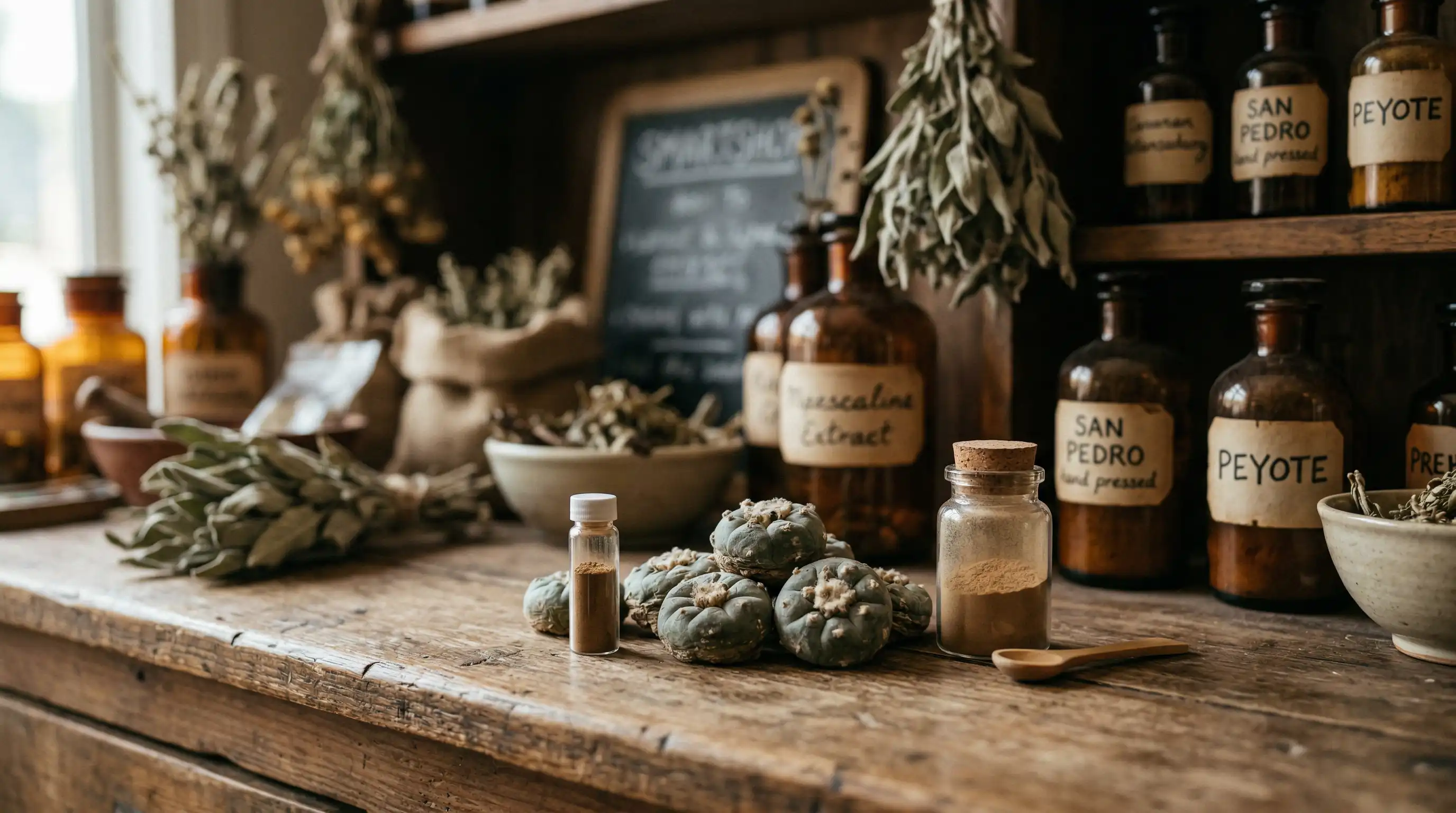
Mescaline

Definition
A naturally occurring psychedelic alkaloid found in various cacti, including peyote and San Pedro cactus. While the pure compound is controlled under the Opium Act, certain cacti containing mescaline are legally sold in Dutch smartshops as ornamental plants. The compound produces visual hallucinations and altered consciousness similar to LSD or psilocybin.
In Depth
Mescaline is a naturally occurring psychedelic alkaloid belonging to the phenethylamine class of compounds, primarily found in various species of cacti including the peyote cactus (Lophophora williamsii), San Pedro cactus (Echinopsis pachanoi), and Peruvian torch cactus (Echinopsis peruviana). This powerful psychoactive compound has been used for thousands of years in traditional indigenous ceremonies, particularly among Native American tribes in Mexico and the southwestern United States, where it holds deep spiritual and cultural significance. The substance produces profound alterations in consciousness, characterized by vivid visual hallucinations, enhanced sensory perception, and introspective experiences that can last between 8 to 12 hours. In the Netherlands, the legal landscape surrounding mescaline is nuanced and reflects the country's pragmatic approach to drug policy. While pure mescaline is classified as a controlled substance under the Dutch Opium Act, the cacti that contain this compound exist in a legal grey area. Many Dutch smartshops legally sell mescaline-containing cacti as ornamental plants, capitalizing on the fact that these cacti are not explicitly prohibited when sold for decorative purposes. This creates an interesting dynamic where the plants themselves are accessible, though any processing or consumption for psychoactive effects technically falls outside legal boundaries. The mescaline experience is often described as more grounded and earthy compared to other classical psychedelics like LSD or psilocybin, with users reporting a strong connection to nature and enhanced emotional awareness. The onset is typically slower than other psychedelics, often taking 1-3 hours to fully manifest, and the experience tends to have a more gradual, wave-like progression rather than distinct peaks. In the context of Dutch smartshop culture, mescaline cacti represent an important bridge between traditional plant medicine practices and modern psychedelic exploration. These establishments often provide educational resources about the cultural history and traditional uses of these sacred plants, emphasizing respect for indigenous traditions and responsible use practices. The availability of these cacti in smartshops also serves harm reduction purposes, as customers can access information about proper identification, cultivation, and safety considerations from knowledgeable staff members who understand both the botanical and cultural aspects of these remarkable plants.
Etymology
The term 'mescaline' derives from the Nahuatl word 'mexcalli,' referring to the peyote cactus, which was later adapted into Spanish as 'mezcal.' The alkaloid was first isolated and named by German pharmacologist Arthur Heffter in 1897.
Examples
“The smartshop displayed various San Pedro cacti containing mescaline alongside educational materials about their traditional ceremonial use.”
“While mescaline itself is controlled under Dutch law, the cacti that produce this compound are legally sold as ornamental plants in many smartshops.”
“Experienced psychonauts often describe mescaline as providing a more grounded and nature-connected experience compared to synthetic psychedelics.”
“The mescaline content in cacti varies significantly depending on the species, growing conditions, and age of the plant.”
“Traditional indigenous cultures have used mescaline-containing cacti for spiritual and healing purposes for over 3,000 years.”
Common Misconceptions
All cacti contain mescaline - only specific species like peyote, San Pedro, and Peruvian torch contain significant amounts
Mescaline cacti are completely legal to consume in the Netherlands - while the plants can be sold legally, consumption for psychoactive effects exists in a legal grey area
Mescaline and MDMA are the same because they're both phenethylamines - they have completely different effects and mechanisms of action
Fresh cactus is always more potent than dried - potency depends on many factors including species, preparation method, and individual plant alkaloid content
Practical Tips
When purchasing mescaline cacti from smartshops, ask about the species and age of the plant, as these factors significantly affect alkaloid content.
Research the legal status and cultural significance of these plants before making any decisions about use or cultivation.
Store purchased cacti in appropriate conditions if keeping them as ornamental plants - they require specific light and watering requirements.
Seek educational resources about traditional uses and respect indigenous cultures that have stewarded these plants for millennia.
Understand that preparation and consumption of these plants for psychoactive purposes carries both legal and health risks that should be carefully considered.
Frequently Asked Questions
Is mescaline legal in the Netherlands?▾
Pure mescaline is controlled under the Dutch Opium Act, but the cacti containing mescaline can be legally sold as ornamental plants. However, processing or consuming these plants for psychoactive effects exists in a legal grey area.
What's the difference between mescaline and psilocybin?▾
Mescaline is a phenethylamine found in cacti that produces 8-12 hour experiences with earthy, visual effects. Psilocybin is a tryptamine found in mushrooms with shorter 4-6 hour experiences and different subjective effects.
Which cacti contain mescaline?▾
The primary mescaline-containing cacti are peyote (Lophophora williamsii), San Pedro (Echinopsis pachanoi), and Peruvian torch (Echinopsis peruviana). San Pedro is most commonly found in Dutch smartshops.
How long does mescaline last?▾
Mescaline experiences typically last 8-12 hours, with onset occurring 1-3 hours after consumption. The effects have a gradual, wave-like progression rather than distinct peaks.
Can you grow mescaline cacti at home in the Netherlands?▾
Yes, these cacti can be legally cultivated as ornamental plants. They require specific growing conditions including proper drainage, adequate light, and careful watering schedules.
What should I know about traditional mescaline use?▾
Mescaline has been used ceremonially by indigenous cultures for over 3,000 years, particularly in Mexico and the southwestern US. It's important to approach these plants with respect for their cultural significance and traditional contexts.
Are there risks associated with mescaline cacti?▾
Like all psychoactive substances, mescaline carries potential risks including psychological distress, interactions with medications, and legal considerations. Proper research and harm reduction practices are essential.