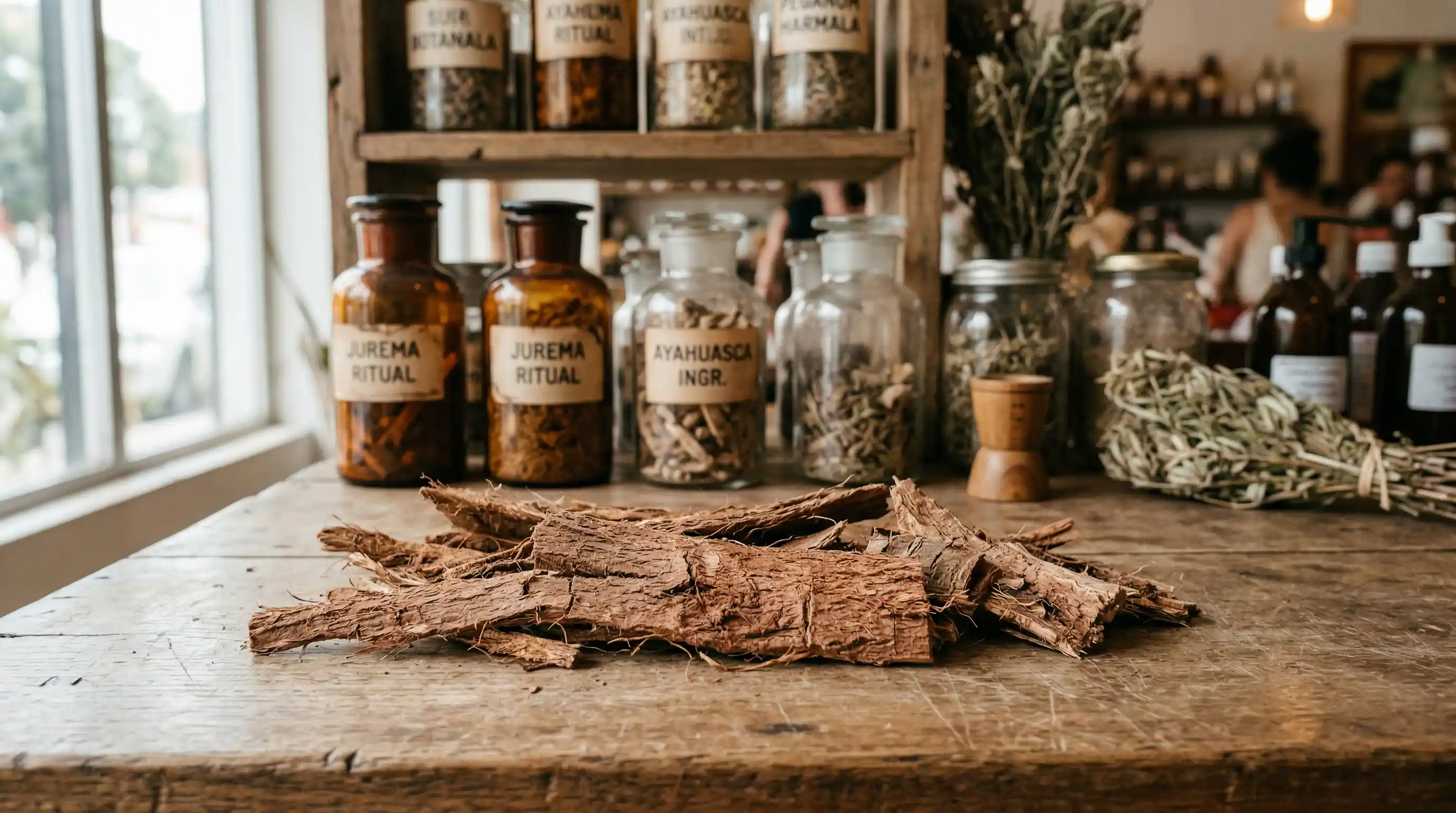
Mimosa Hostilis

Definition
A tree bark containing high concentrations of DMT, commonly sold in Dutch smartshops as root bark powder. Often used as a source material for extraction or in traditional ayahuasca-style preparations. Popular among psychonaut communities for its potent psychoactive alkaloid content.
In Depth
Mimosa Hostilis, scientifically known as Mimosa tenuiflora, is a perennial tree native to northeastern Brazil and southern Mexico, renowned in the psychonaut community for its root bark's exceptionally high concentration of N,N-Dimethyltryptamine (DMT). In Dutch smartshops, this botanical material is typically sold as finely powdered root bark, representing one of the most potent natural sources of DMT available legally in the Netherlands. The inner root bark contains between 0.5% to 2% DMT by dry weight, making it significantly more concentrated than most other plant sources of this powerful psychedelic compound. Within the Dutch smartshop ecosystem, Mimosa Hostilis occupies a unique position as both a traditional ethnobotanical specimen and a modern extraction material. The tree has been used for centuries by indigenous peoples of South America for its healing properties, particularly in traditional medicine and spiritual practices. However, its contemporary significance lies primarily in its role as source material for DMT extraction, a practice that has gained considerable attention in psychonaut circles worldwide. Dutch smartshops typically market Mimosa Hostilis root bark powder as a botanical specimen or dye material, carefully navigating the legal landscape surrounding DMT-containing plants. While the plant material itself remains legal to purchase and possess in the Netherlands, the extraction of DMT from it falls into a legal grey area that requires careful consideration. The bark's natural purple dye properties provide legitimate commercial applications beyond its psychoactive potential, historically used by indigenous communities for textile dyeing and traditional crafts. In the context of Dutch harm reduction culture, Mimosa Hostilis represents both opportunity and responsibility. Smartshops that carry this product typically provide extensive educational materials about safe handling, proper storage, and the legal implications of various uses. The product appeals to several distinct customer segments: ethnobotany enthusiasts interested in traditional plant medicines, researchers studying natural alkaloids, crafters seeking natural dyes, and experienced psychonauts familiar with extraction techniques. Quality considerations are paramount when purchasing Mimosa Hostilis, as the DMT content can vary significantly based on harvesting methods, storage conditions, and processing techniques. Reputable Dutch smartshops source their material from established suppliers who can provide certificates of analysis and ensure sustainable harvesting practices. The bark should appear as a fine, purple-brown powder with a characteristic earthy aroma, free from adulterants or excessive moisture that could indicate poor storage conditions. The cultural impact of Mimosa Hostilis extends beyond its chemical properties, representing a bridge between ancient shamanic traditions and modern consciousness exploration. Its availability in Dutch smartshops reflects the Netherlands' progressive approach to psychoactive substances and commitment to harm reduction principles, allowing adults to access these materials while providing appropriate education and safety information.
Etymology
The name 'Mimosa' derives from the Greek word 'mimos' meaning 'mimic,' referring to the plant's sensitive leaves that fold when touched. 'Hostilis' is Latin meaning 'hostile' or 'unfriendly,' likely referring to the tree's thorny branches and defensive characteristics.
Examples
“The smartshop's ethnobotanical section featured high-quality Mimosa Hostilis root bark powder sourced from sustainable Brazilian suppliers.”
“Many experienced psychonauts consider Mimosa Hostilis to be the gold standard for natural DMT content among legally available plant materials.”
“Before purchasing Mimosa Hostilis, she carefully researched the legal implications and proper storage methods for the botanical specimen.”
“The workshop on natural dyes demonstrated how Mimosa Hostilis bark has been used for centuries to create vibrant purple textiles.”
“Dutch smartshops typically provide detailed information sheets with Mimosa Hostilis purchases, emphasizing responsible use and legal compliance.”
Common Misconceptions
That Mimosa Hostilis and DMT are the same thing - the plant contains DMT but is not pure DMT itself.
That all Mimosa Hostilis products have identical potency - DMT content varies significantly between batches and suppliers.
That purchasing Mimosa Hostilis automatically makes DMT extraction legal - extraction may violate drug laws even when the plant material is legal.
That Mimosa Hostilis can be consumed directly for psychoactive effects - the DMT is not orally active without MAO inhibitors.
Practical Tips
Always verify the botanical authenticity and quality certificates when purchasing Mimosa Hostilis from Dutch smartshops.
Store Mimosa Hostilis root bark in airtight containers away from light and moisture to preserve alkaloid content.
Research local and international laws thoroughly before traveling with Mimosa Hostilis, as regulations vary significantly between countries.
Start with small quantities to assess quality and potency before making larger purchases from new suppliers.
Keep detailed records of purchase dates and sources, as this information may be important for legal or quality tracking purposes.
Frequently Asked Questions
Is Mimosa Hostilis legal to buy in Dutch smartshops?▾
Yes, Mimosa Hostilis root bark is legal to purchase and possess in the Netherlands as a botanical specimen. However, extracting DMT from it may violate drug laws, so buyers should understand the legal distinctions between possessing the plant material and processing it.
How much DMT does Mimosa Hostilis contain?▾
High-quality Mimosa Hostilis root bark typically contains between 0.5% to 2% DMT by dry weight, with some exceptional batches reaching higher concentrations. The exact content varies based on harvesting conditions, processing methods, and storage quality.
What's the difference between inner and outer root bark?▾
The inner root bark (MHRB) contains the highest concentration of DMT and is what's typically sold in smartshops. The outer bark has minimal alkaloid content and is usually removed during processing to concentrate the active compounds.
Can you consume Mimosa Hostilis directly for psychoactive effects?▾
No, consuming Mimosa Hostilis root bark directly will not produce psychoactive effects because DMT is not orally active on its own. It requires combination with MAO inhibitors (as in ayahuasca) or extraction and vaporization to be psychoactive.
How should Mimosa Hostilis be stored after purchase?▾
Store Mimosa Hostilis in airtight containers in a cool, dark, and dry place to preserve alkaloid content. Proper storage can maintain potency for several years, while exposure to light, heat, or moisture will degrade the active compounds.
What are the traditional uses of Mimosa Hostilis?▾
Indigenous communities have used Mimosa Hostilis for centuries as a natural dye, wound healing agent, and in traditional medicine. The bark's antimicrobial and anti-inflammatory properties made it valuable for treating skin conditions and injuries.
How can you verify the quality of Mimosa Hostilis?▾
Quality Mimosa Hostilis should be finely powdered, purple-brown in color, and have a characteristic earthy aroma. Reputable suppliers provide certificates of analysis showing alkaloid content and purity testing.
Is Mimosa Hostilis sustainable to harvest?▾
Sustainable harvesting practices are crucial as demand has increased. Responsible suppliers work with local communities to ensure regenerative harvesting that doesn't damage the trees, and some smartshops specifically source from certified sustainable operations.