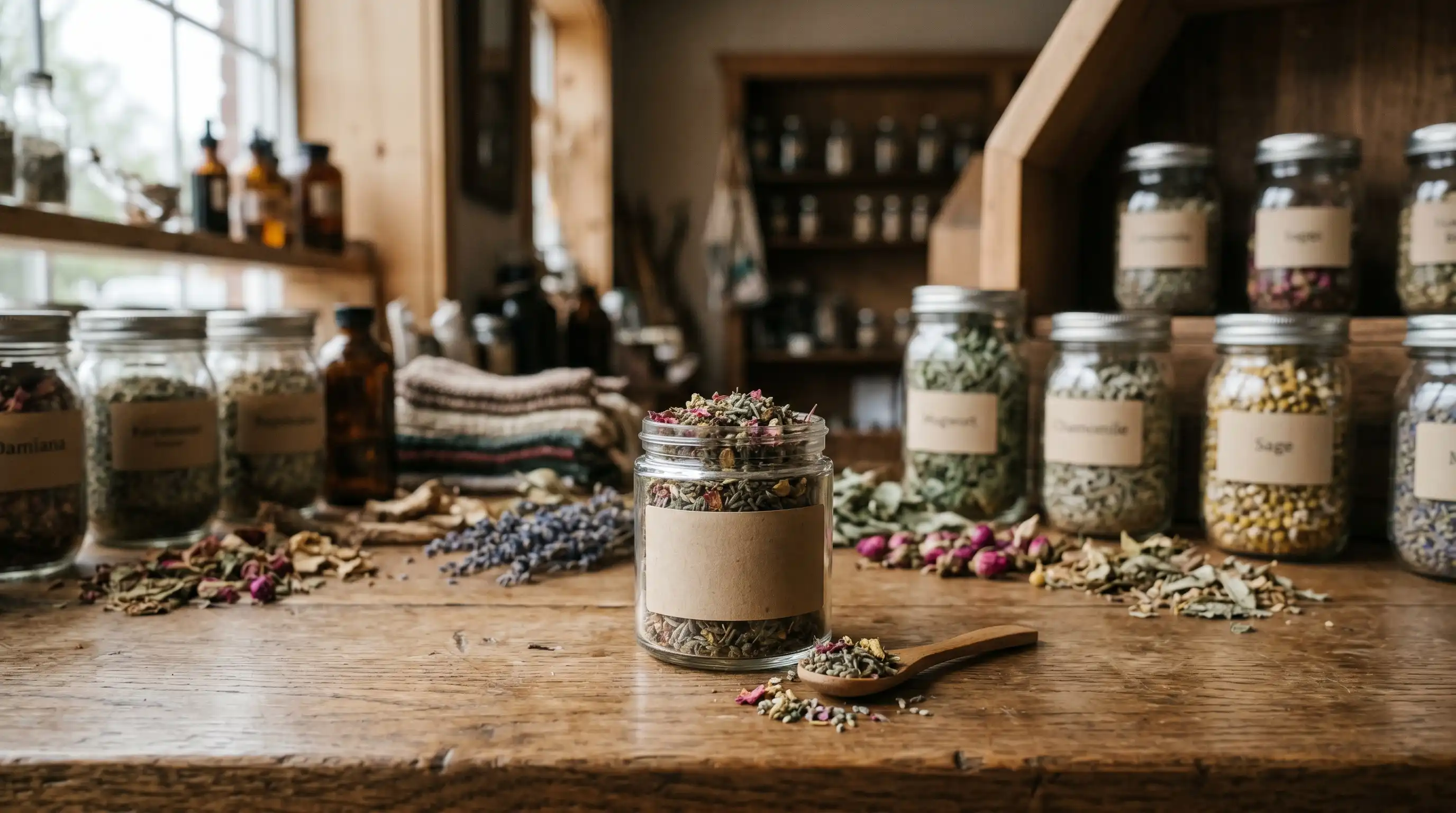
Herbal Smoking Blend

Definition
Pre-mixed combinations of legal herbs designed for smoking or vaporizing, commonly sold in Dutch smartshops. These blends often contain plants like damiana, mullein, and other aromatic herbs that provide mild relaxing effects. They serve as tobacco alternatives and are popular among customers seeking natural smoking experiences.
In Depth
Herbal smoking blends represent a diverse category of pre-mixed botanical combinations specifically formulated for smoking or vaporizing, serving as natural alternatives to tobacco and synthetic substances. These carefully curated mixtures typically combine various legal herbs, each selected for their unique aromatic properties, burning characteristics, and potential mild effects. Common ingredients include damiana (Turnera diffusa), known for its smooth smoke and subtle relaxing properties; mullein (Verbascum thapsus), prized for its ability to create a mild, lung-friendly base; and marshmallow leaf (Althaea officinalis), which provides a smooth smoking experience. Other frequently included botanicals are raspberry leaf, rose petals, lavender, chamomile, and various mints, each contributing distinct flavors and aromatherapeutic qualities. In the Dutch smartshop context, herbal smoking blends occupy a significant niche market, appealing to customers seeking natural smoking experiences without the health concerns associated with tobacco or the legal complexities of cannabis. These products are particularly popular among individuals exploring plant-based wellness practices, those looking to reduce or eliminate tobacco consumption, and customers interested in aromatherapy through inhalation. Dutch smartshops typically offer these blends in various formulations, ranging from mild, floral combinations suitable for beginners to more potent blends incorporating herbs with stronger effects. The preparation of quality herbal smoking blends requires expertise in botanical knowledge, understanding of combustion properties, and awareness of flavor profiles. Reputable smartshops source their herbs from trusted suppliers and often provide detailed ingredient lists, allowing customers to make informed choices based on their preferences and any potential allergies. The smoking blend market in the Netherlands benefits from the country's progressive approach to natural health products and its well-established smartshop culture, which emphasizes education, quality, and responsible use. These products are typically consumed using traditional smoking methods, vaporizers, or water pipes, with vaporization often preferred for its efficiency and reduced combustion byproducts. The effects of herbal smoking blends are generally mild and vary depending on the specific herbs included, ranging from subtle relaxation and mood enhancement to aromatic enjoyment and ritual satisfaction. While these blends are legal and widely available, responsible vendors emphasize the importance of understanding individual herb properties, starting with small amounts, and being aware of any personal sensitivities or medical conditions that might contraindicate use.
Etymology
The term combines 'herbal,' derived from the Latin 'herbalis' meaning 'of or relating to herbs,' with 'smoking blend,' referring to the practice of mixing various plant materials for combustion and inhalation. This terminology emerged in the late 20th century as alternative smoking products gained popularity in Western wellness culture.
Examples
“The smartshop offered over twenty different herbal smoking blends, each with unique flavor profiles and aromatic properties.”
“After switching from tobacco to herbal smoking blends, Maria found she enjoyed the natural lavender and chamomile combination for evening relaxation.”
“The budtender explained that their most popular herbal smoking blend contained damiana, mullein, and rose petals for a smooth, floral smoking experience.”
“Many customers use herbal smoking blends in vaporizers to enjoy the botanical flavors without combustion.”
“The artisanal herbal smoking blend featured locally sourced Dutch herbs mixed with traditional relaxing botanicals.”
Common Misconceptions
All herbal smoking blends produce psychoactive effects similar to cannabis or other controlled substances.
Herbal smoking blends are completely harmless because they're natural and don't contain tobacco.
Any combination of dried herbs can be safely smoked without considering individual plant properties or interactions.
Herbal smoking blends are just flavored tobacco alternatives with no distinct characteristics or benefits.
Practical Tips
Start with small amounts when trying a new herbal smoking blend to assess your tolerance and reaction to the specific herb combination.
Consider using a vaporizer instead of combustion to experience the full flavor profile while reducing harmful byproducts.
Read ingredient lists carefully and research individual herbs if you have allergies or are taking medications that might interact.
Store herbal smoking blends in airtight containers away from light and moisture to preserve freshness and potency.
Ask smartshop staff about the specific effects and characteristics of different blends to find one that matches your preferences.
Frequently Asked Questions
Are herbal smoking blends legal in the Netherlands?▾
Yes, herbal smoking blends containing only legal botanical ingredients are completely legal to purchase and use in the Netherlands. Dutch smartshops openly sell these products as they contain no controlled substances.
Do herbal smoking blends contain nicotine?▾
Most herbal smoking blends are specifically formulated to be tobacco-free and therefore contain no nicotine. However, always check the ingredient list to confirm, as some specialty blends might include tobacco leaf.
Can herbal smoking blends help quit tobacco smoking?▾
Many people use herbal smoking blends as part of their tobacco cessation strategy, as they provide the ritual and hand-to-mouth action of smoking without nicotine. However, they should be viewed as a harm reduction tool rather than a guaranteed quit method.
What's the difference between smoking and vaporizing herbal blends?▾
Vaporizing heats the herbs to release their active compounds without combustion, resulting in smoother inhalation and better flavor preservation. Smoking involves combustion, which can create harsher smoke but provides a more traditional experience.
How do I choose the right herbal smoking blend?▾
Consider your desired effects (relaxation, energy, flavor), any allergies or sensitivities, and your experience level. Start with milder blends containing familiar herbs like chamomile or lavender before trying more complex formulations.
Are there any side effects from herbal smoking blends?▾
While generally mild, some people may experience allergic reactions to specific herbs, throat irritation from smoke, or unexpected reactions to unfamiliar botanicals. Always research ingredients and start with small amounts.
Can I make my own herbal smoking blend?▾
Yes, you can create custom blends using dried herbs, but it requires knowledge of each plant's properties, burning characteristics, and safety considerations. Many prefer purchasing professionally formulated blends for consistency and safety.
How long do herbal smoking blends stay fresh?▾
Properly stored herbal smoking blends typically maintain their potency and flavor for 1-2 years. Keep them in airtight containers away from light, heat, and moisture for optimal preservation.