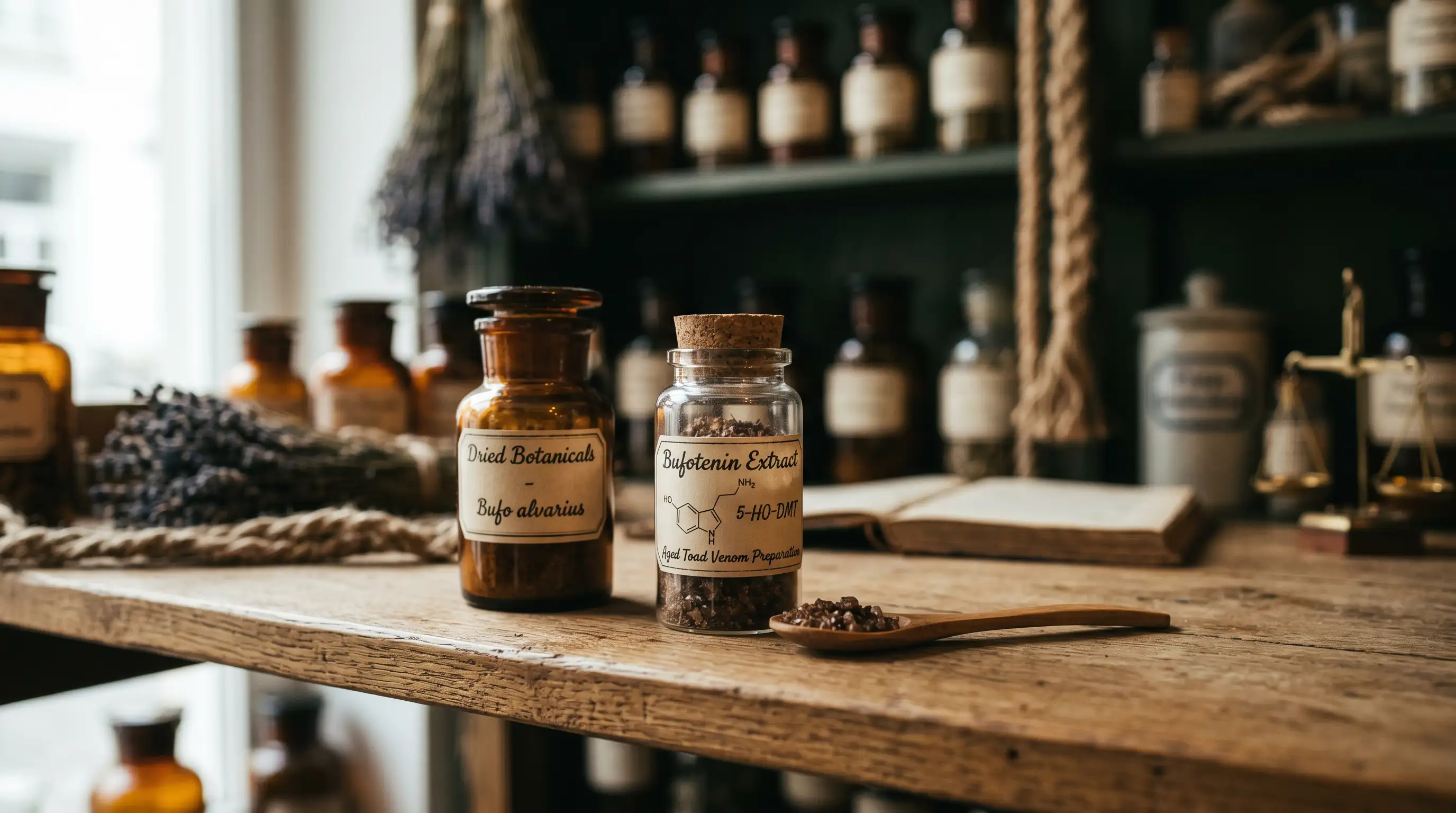
Bufotenin

Definition
A psychoactive tryptamine alkaloid found in certain plants and toad secretions, structurally similar to psilocin and serotonin. While not commonly sold in Dutch smartshops due to legal restrictions, it's often discussed in psychedelic communities for its intense but short-lived effects. The compound is found in plants like Anadenanthera peregrina seeds, which may appear in ethnobotanical collections.
In Depth
Bufotenin is a naturally occurring psychoactive tryptamine alkaloid with the chemical formula C12H16N2O, structurally related to both serotonin and psilocin. This compound derives its name from its presence in the skin glands of certain toads (genus Bufo), though it's more commonly encountered in various plant species used in traditional shamanic practices. The molecule shares significant structural similarities with other well-known psychedelics, featuring the characteristic indole ring system that defines the tryptamine family of compounds. In the context of Dutch smartshops and ethnobotanical collections, bufotenin is primarily discussed in relation to Anadenanthera peregrina seeds, also known as yopo or cohoba seeds, which have been used ceremonially by indigenous South American cultures for centuries. These seeds contain bufotenin alongside other psychoactive compounds like N,N-DMT and 5-MeO-DMT. While bufotenin itself is not typically sold as an isolated compound in Dutch smartshops due to legal restrictions under the Opium Act, the plants containing it may appear in ethnobotanical collections for educational or horticultural purposes. The compound is known for producing intense but relatively short-lived psychoactive effects when consumed, typically lasting 30-60 minutes. Users report visual distortions, altered perception of time and space, and sometimes uncomfortable physical sensations including nausea and increased heart rate. The pharmacological action of bufotenin involves interaction with serotonin receptors, particularly the 5-HT2A receptor, which is the primary target for most classical psychedelics. However, bufotenin also shows activity at other receptor sites, contributing to its unique effect profile that differs from more commonly known psychedelics like psilocybin or LSD. In traditional preparation methods, Anadenanthera seeds are typically ground into a powder and consumed as a snuff, often mixed with alkaline substances to enhance absorption. The Dutch smartshop scene approaches bufotenin-containing materials with considerable caution, emphasizing education about traditional uses, botanical identification, and harm reduction practices. Many shops that carry ethnobotanical specimens focus on their historical and cultural significance rather than their psychoactive properties. The legal status of bufotenin in the Netherlands places it in a controlled category, making its sale and possession subject to legal restrictions. This regulatory framework reflects broader European approaches to novel psychoactive substances and traditional plant medicines. For those interested in psychedelic research or ethnobotany, understanding bufotenin's role in traditional practices provides valuable insight into the diversity of naturally occurring psychoactive compounds and their cultural applications across different societies.
Etymology
The name 'bufotenin' derives from the Latin 'bufo' meaning toad, combined with the suffix '-tenin' indicating its chemical relationship to serotonin. The compound was first isolated from toad skin secretions in the early 20th century, leading to this toad-referencing nomenclature.
Examples
“The ethnobotanical collection included Anadenanthera peregrina seeds, which naturally contain bufotenin alongside other tryptamine compounds.”
“Researchers studying traditional South American shamanic practices often encounter bufotenin as a key component in ceremonial snuff preparations.”
“Unlike psilocybin, bufotenin produces effects that are typically much shorter in duration but can be more physically intense.”
“The smartshop owner explained that while they couldn't sell bufotenin directly, they offered educational materials about plants that contain this compound.”
“Traditional preparation of bufotenin-containing seeds involves careful grinding and often mixing with lime or other alkaline substances.”
Common Misconceptions
Bufotenin can be safely extracted from any toad species - only specific toads contain it, and toad-derived bufotenin is extremely dangerous to extract or consume.
Bufotenin and 5-MeO-DMT are the same compound - they are distinct molecules with different effects and safety profiles.
All Anadenanthera seeds are legal to purchase everywhere - legal status varies significantly by country and jurisdiction.
Bufotenin produces the same effects as psilocybin - the experience is typically shorter, more intense, and often includes more uncomfortable physical sensations.
Practical Tips
Always verify the legal status of bufotenin-containing plants in your specific location before purchasing or possessing them.
If interested in ethnobotany, focus on reputable sources that provide accurate botanical identification and cultural context.
Never attempt to extract or concentrate bufotenin from plant materials without proper knowledge of chemistry and safety protocols.
Research traditional preparation methods and cultural contexts to better understand the historical significance of bufotenin-containing plants.
Consult with experienced ethnobotanists or researchers if you're studying these materials for academic or educational purposes.
Frequently Asked Questions
Is bufotenin legal in the Netherlands?▾
Bufotenin is controlled under the Dutch Opium Act, making its isolated form illegal to sell or possess. However, some plants containing bufotenin may be available for botanical or educational purposes, though their legal status can be complex and subject to interpretation.
What plants contain bufotenin naturally?▾
Bufotenin is found in several plant species, most notably Anadenanthera peregrina (yopo) and Anadenanthera colubrina (vilca) seeds. It's also present in some Amanita mushroom species and various other plants used in traditional medicine.
How does bufotenin differ from other psychedelics?▾
Bufotenin typically produces shorter-lasting effects (30-60 minutes) compared to substances like psilocybin or LSD. The experience is often described as more physically intense and sometimes uncomfortable, with pronounced visual effects but potentially challenging body sensations.
Can you buy bufotenin in Dutch smartshops?▾
Pure bufotenin is not legally sold in Dutch smartshops due to its controlled status. Some shops may carry ethnobotanical specimens containing bufotenin for educational purposes, but these are not sold for consumption and come with clear disclaimers about their legal status.
What are the risks of using bufotenin?▾
Bufotenin can cause significant physical discomfort including nausea, increased heart rate, and blood pressure changes. The intense but short duration can be psychologically challenging, and improper preparation or dosing of plant materials can lead to unpredictable effects.
How was bufotenin used traditionally?▾
Indigenous South American cultures have used bufotenin-containing seeds in ceremonial contexts for thousands of years, typically preparing them as snuff powders mixed with alkaline substances. These practices were integral to shamanic rituals and spiritual ceremonies.
Is bufotenin the same as toad venom?▾
While bufotenin is found in some toad secretions, toad venom contains many other compounds that can be extremely toxic or deadly. Attempting to extract or use toad-derived bufotenin is extremely dangerous and potentially fatal.
What should I know before researching bufotenin?▾
Always prioritize safety and legality when researching bufotenin. Focus on academic sources, understand the legal implications in your area, and never attempt extraction or consumption without proper expertise. Consider the cultural significance and approach the topic with appropriate respect for traditional practices.