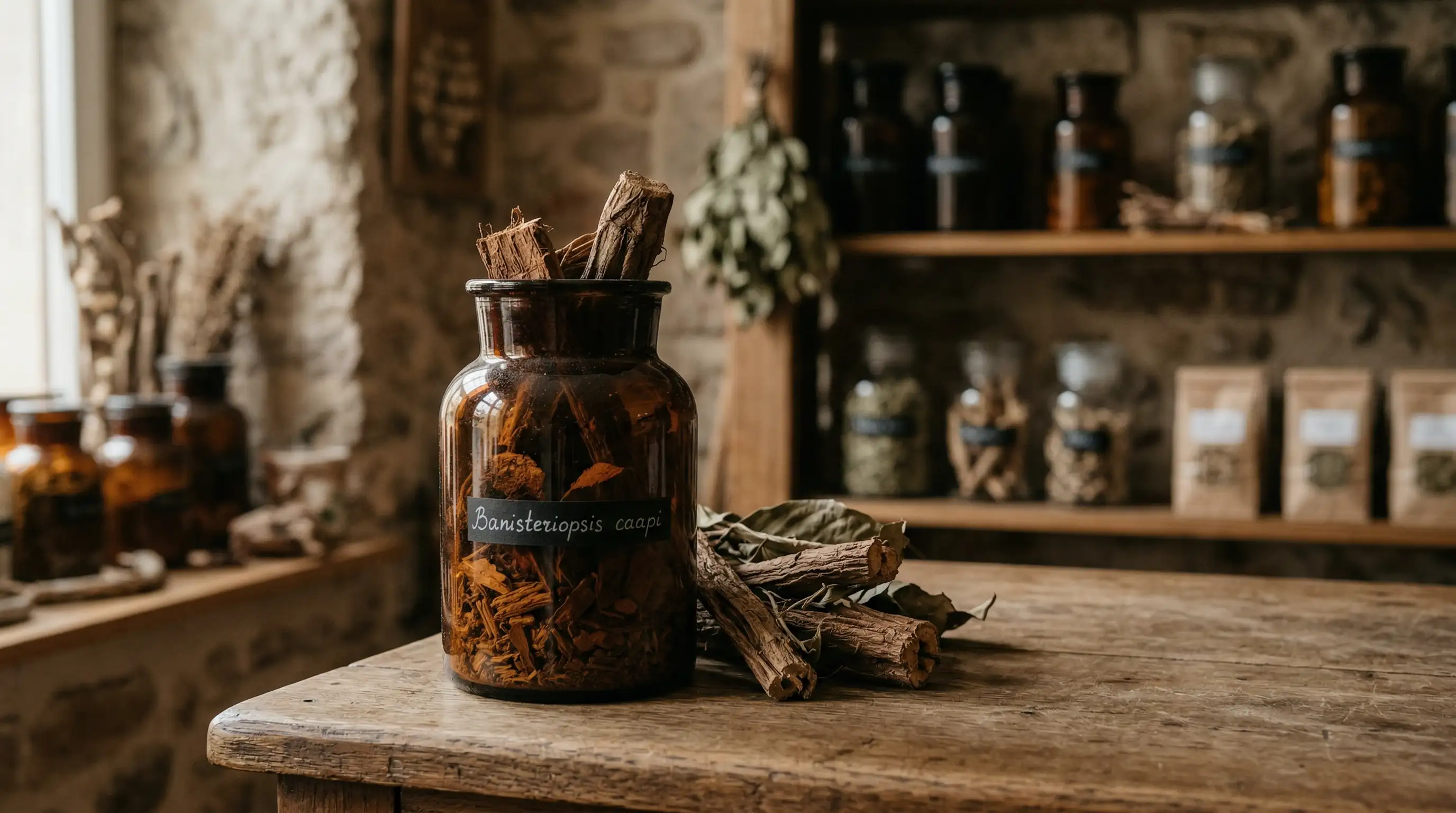
Ayahuasca

Definition
A traditional Amazonian brew containing DMT and MAO inhibitors, typically made from Banisteriopsis caapi vine and Psychotria viridis leaves. While the prepared brew is illegal in the Netherlands, the individual plant components are often sold separately in Dutch smartshops. The combination creates a powerful psychedelic experience lasting several hours.
In Depth
Ayahuasca is a traditional psychoactive brew originating from the Amazon rainforest, created by combining plants containing DMT (N,N-Dimethyltryptamine) with plants containing MAO inhibitors. The classic preparation involves the Banisteriopsis caapi vine, which provides harmala alkaloids that act as monoamine oxidase inhibitors, and Psychotria viridis leaves, which contain DMT. This combination creates a synergistic effect where the MAO inhibitors allow the orally inactive DMT to become psychoactive when consumed, resulting in profound visionary experiences that can last 4-8 hours. In the context of Dutch smartshops, ayahuasca presents a unique legal situation. While the prepared brew itself is classified as illegal due to its DMT content, the individual plant components are often available for purchase separately. This legal distinction allows smartshops to sell Banisteriopsis caapi vine and other MAO-inhibiting plants, as well as various DMT-containing botanicals, without explicitly promoting their combination for ayahuasca preparation. The brew has been used for centuries by indigenous Amazonian peoples for spiritual, medicinal, and ceremonial purposes, and has gained significant attention in Western contexts for its potential therapeutic applications and consciousness-expanding properties. Modern research has explored ayahuasca's potential in treating depression, PTSD, and addiction, leading to increased interest from both researchers and individuals seeking alternative healing modalities. The experience typically involves intense visual and auditory hallucinations, emotional processing, and often profound spiritual or mystical insights. Users frequently report encounters with entities, life reviews, and deep introspective journeys that can lead to lasting psychological changes. The brew's effects are highly dependent on set and setting, the specific plant preparations used, and individual sensitivity. In Dutch smartshop culture, there's often educational content about the traditional uses and cultural significance of these plants, emphasizing respect for indigenous traditions and the importance of proper preparation and safety considerations. Many smartshops also provide information about harm reduction practices and may recommend seeking experienced guidance when working with these powerful plant medicines.
Etymology
The word 'ayahuasca' comes from the Quechua language, combining 'aya' meaning 'spirit' or 'soul' and 'huasca' meaning 'vine' or 'rope.' It literally translates to 'vine of the soul' or 'rope of the dead,' reflecting its traditional use as a spiritual medicine for communicating with the spirit world.
Examples
“Many Dutch smartshops sell Banisteriopsis caapi vine separately, as the individual components of ayahuasca remain legal while the prepared brew does not.”
“Traditional ayahuasca ceremonies involve careful preparation and experienced guidance to ensure safe navigation of the intense psychedelic experience.”
“Research into ayahuasca's therapeutic potential has led to increased interest in its constituent plants available through European smartshops.”
“The ayahuasca experience typically lasts much longer than other psychedelics, often requiring 6-8 hours for the full journey to complete.”
“Indigenous Amazonian cultures have used ayahuasca for generations as a sacred medicine for healing and spiritual guidance.”
Common Misconceptions
That ayahuasca and DMT are the same thing - ayahuasca is a complex brew containing multiple active compounds working synergistically.
That buying the individual plant components from smartshops is the same as purchasing prepared ayahuasca brew.
That ayahuasca is always safe because it's 'natural' - it can have serious interactions with medications and health conditions.
That all ayahuasca experiences are the same - effects vary greatly based on preparation, dosage, set, setting, and individual factors.
Practical Tips
Research the legal status thoroughly before purchasing any ayahuasca-related botanicals, as laws vary significantly between countries.
If considering working with these plants, seek guidance from experienced practitioners who understand proper preparation and safety protocols.
Be aware of potential drug interactions, especially with antidepressants and other medications that affect serotonin.
Start by learning about the traditional cultural context and indigenous uses before exploring these powerful plant medicines.
Consider attending educational workshops or lectures offered by some smartshops to better understand harm reduction practices.
Frequently Asked Questions
Is ayahuasca legal in the Netherlands?▾
The prepared ayahuasca brew is illegal in the Netherlands due to its DMT content. However, the individual plant components like Banisteriopsis caapi vine are often legally available in smartshops. The legal status can be complex and subject to change, so it's important to verify current regulations.
What's the difference between ayahuasca and DMT?▾
DMT is a single psychoactive compound, while ayahuasca is a complex brew containing DMT plus MAO inhibitors and other plant compounds. The MAO inhibitors in ayahuasca allow DMT to be orally active and extend the experience duration significantly compared to pure DMT.
How long does an ayahuasca experience last?▾
A typical ayahuasca experience lasts 4-8 hours, with effects usually beginning 30-60 minutes after consumption. The duration is much longer than most other psychedelics due to the MAO inhibitors that prevent the breakdown of DMT in the digestive system.
Can I buy ayahuasca ingredients in Dutch smartshops?▾
Many Dutch smartshops sell the individual plant components used in traditional ayahuasca preparation, such as Banisteriopsis caapi vine and various DMT-containing plants. However, they typically don't provide instructions for combining them into the traditional brew.
What are the risks of ayahuasca?▾
Ayahuasca can have serious interactions with many medications, particularly antidepressants, and can be dangerous for people with certain heart conditions or mental health issues. The intense psychological effects can also be overwhelming without proper preparation and guidance.
Do I need a shaman to use ayahuasca?▾
While not legally required, traditional practice emphasizes the importance of experienced guidance. Many practitioners strongly recommend working with knowledgeable facilitators who understand the plants, proper preparation methods, and how to provide support during intense experiences.
What should I know before trying ayahuasca?▾
Research thoroughly, understand the legal implications, check for medication interactions, prepare mentally and physically, and consider seeking experienced guidance. Many traditions also emphasize dietary preparations and setting clear intentions before the experience.
How is ayahuasca different from psilocybin mushrooms?▾
Ayahuasca typically produces longer-lasting experiences (4-8 hours vs 4-6 hours), often involves more intense purging effects, and has a different phenomenological character. The DMT in ayahuasca tends to produce more vivid visual experiences compared to psilocybin's more introspective effects.