San Pedro Cactus: Legal Psychedelic in NL
Key Takeaways
- ✓San Pedro cactus is completely legal to buy, possess, and cultivate in the Netherlands as an ornamental plant, making it one of the most accessible psychedelic plants in Dutch smartshops.
- ✓The cactus contains mescaline (0.11-2.3% by dry weight), which produces 10-12 hour psychedelic experiences, but processing for consumption exists in a legal gray area.
- ✓Dutch smartshops primarily sell live cuttings (20-50cm) and seeds, focusing on ornamental and cultivation aspects rather than consumption to maintain legal compliance.
- ✓San Pedro has over 3,000 years of traditional use in Andean shamanic practices and continues to hold deep cultural significance in Peru and Ecuador.
- ✓Home cultivation is straightforward, requiring well-draining soil, bright light, minimal water, and temperatures above freezing, with propagation typically done through cuttings.
- ✓Safety considerations include unpredictable mescaline concentrations, long duration effects, potential medication interactions, and the need for proper mental health screening before any use.
Introduction
The San Pedro cactus (Echinopsis pachanoi) stands as one of the most fascinating and legally accessible psychedelic plants available in Dutch smartshops today. This remarkable columnar cactus, native to the Andes mountains of Peru and Ecuador, has been used for over 3,000 years in traditional shamanic practices and continues to attract modern seekers interested in consciousness exploration.
Unlike many other psychedelic substances, San Pedro cactus remains completely legal to purchase, possess, and cultivate in the Netherlands. This legal status makes it an attractive option for those interested in exploring altered states of consciousness within the bounds of Dutch law. However, it's crucial to understand that while the cactus itself is legal, extracting or concentrating its active compounds for consumption enters a legal gray area that requires careful consideration.
The Sacred History of San Pedro
The San Pedro cactus holds a revered place in South American indigenous culture, particularly among the peoples of Peru and Ecuador. Archaeological evidence suggests that this sacred plant has been used in religious and healing ceremonies for over three millennia. The Chavín culture, which flourished between 900-200 BCE, left behind stone carvings and pottery depicting the distinctive columnar shape of the San Pedro cactus, indicating its central role in their spiritual practices.
Traditional curanderos (healers) in Peru continue to use San Pedro in healing ceremonies called "mesas," where participants consume the cactus preparation to gain insights, heal emotional trauma, and connect with spiritual realms. The cactus is often referred to as "Huachuma" in its native regions, a name that reflects its sacred status and deep cultural significance.
The Spanish colonizers named it "San Pedro" (Saint Peter) because they believed the cactus could open the gates to heaven, much like Saint Peter holds the keys to paradise in Christian tradition. This name stuck and is now the most commonly used term for Echinopsis pachanoi worldwide.
Understanding Mescaline and Its Effects
The primary psychoactive compound in San Pedro is mescaline, a phenethylamine alkaloid that produces profound visual and auditory hallucinations, enhanced empathy, and deep introspective experiences. The cactus typically contains between 0.11% to 2.3% mescaline by dry weight, along with other alkaloids including 3,4-dimethoxyphenethylamine, 4-hydroxy-3-methoxyphenethylamine, and tyramine that contribute to its overall effects.
Mescaline was first isolated from peyote cactus in 1897 by German chemist Arthur Heffter, and later synthesized in 1919. Unlike many other psychedelics, mescaline has a relatively long duration of action, with effects typically lasting 10-12 hours. The experience is often described as more gentle and introspective compared to other classical psychedelics like LSD or psilocybin.
Users report enhanced visual perception, with colors appearing more vivid and patterns becoming more apparent. Many describe a sense of connection with nature and enhanced emotional awareness. The experience often includes periods of deep contemplation and philosophical insight, making it popular among those seeking personal growth and spiritual exploration.
Legal Status in the Netherlands
The Netherlands maintains a unique position regarding psychoactive substances, with a pragmatic approach that distinguishes between different levels of risk and harm. San Pedro cactus falls into a legal category that allows for its sale, possession, and cultivation as an ornamental plant. This status is protected under the principle that living plants, in their natural form, are generally not subject to drug prohibition laws.
However, the legal landscape becomes more complex when considering the preparation and consumption of the cactus. While possessing the living plant is entirely legal, processing it into extracts or preparations intended for consumption may violate Dutch drug laws. The key legal distinction lies in the intent and method of use – growing San Pedro as an ornamental cactus remains fully legal, while preparing it for psychoactive consumption enters a gray area.
This legal framework reflects the Dutch approach of harm reduction and personal responsibility. Smartshops can legally sell San Pedro cactus cuttings and related growing supplies, but they cannot provide instructions for consumption or market the products explicitly for their psychoactive properties.
What Dutch Smartshops Offer
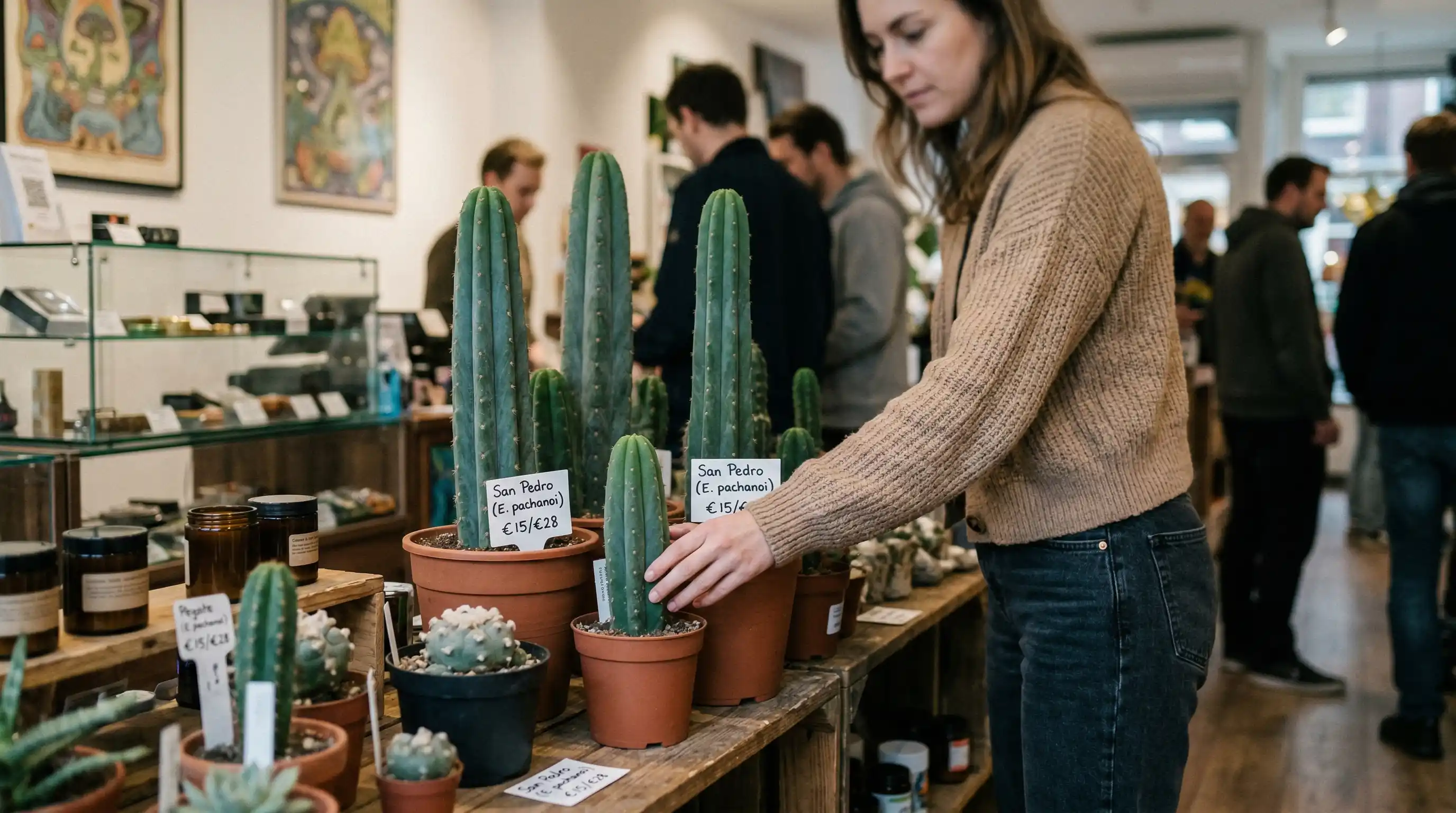
Dutch smartshops provide several options for those interested in acquiring San Pedro cactus. The most common and legally straightforward option is live cactus cuttings. These typically range from 20-50 centimeters in length and are sold as ornamental plants. The cuttings are usually taken from mature cacti and are capable of rooting when properly planted.
Some smartshops also offer San Pedro seeds, which allow for growing the cactus from scratch. While this requires more patience – San Pedro grows relatively slowly – it provides the satisfaction of nurturing the plant from its earliest stages. Seeds are completely legal and represent the most unambiguous way to acquire San Pedro genetics.
Dried San Pedro powder is another option available in some smartshops, though this exists in a more legally ambiguous space. The powder is often marketed for incense or aromatherapy purposes, but buyers should be aware that possession of processed plant material may be viewed differently by authorities than possession of living plants.
Pre-made extracts are rarely found in legitimate Dutch smartshops due to their clear association with consumption rather than ornamental use. Reputable smartshops typically avoid these products to maintain their legal standing and focus on the clearly legal options of live plants and seeds.
Cultivation Guide for Home Growers
Cultivating San Pedro at home is relatively straightforward, making it an appealing option for plant enthusiasts. The cactus thrives in well-draining soil with plenty of sunlight and minimal water. During the growing season (spring through early fall), San Pedro appreciates regular watering when the soil becomes dry, but it's crucial to avoid overwatering, which can lead to root rot.
The ideal growing medium consists of a cactus-specific potting mix or a combination of regular potting soil with added perlite, sand, and small gravel to ensure proper drainage. A ratio of approximately 50% potting soil, 25% perlite, and 25% coarse sand creates an excellent growing medium.
San Pedro cacti prefer bright, indirect sunlight when grown indoors, though they can tolerate direct sunlight once acclimated. During winter months, the cactus enters a dormant period and requires minimal water – perhaps once every 4-6 weeks. Temperature should be kept above freezing, with ideal ranges between 10-25°C (50-77°F).
Propagation is typically done through cuttings rather than seeds, as it's much faster and more reliable. A cutting should be allowed to callus for 1-2 weeks before planting to prevent rot. Once planted, new roots typically develop within 2-4 weeks under proper conditions.
Harm Reduction and Safety Considerations
While San Pedro cactus is legal to possess and grow, anyone considering its use should be aware of important safety considerations. Mescaline is a powerful psychedelic that can produce intense psychological effects lasting many hours. These experiences can be overwhelming for unprepared individuals and may trigger underlying mental health conditions.
The concentration of mescaline in San Pedro can vary dramatically between individual cacti and even different parts of the same plant. This variability makes dosing extremely difficult and unpredictable, which poses significant safety risks. Additionally, the cactus contains other alkaloids that may contribute to nausea and other uncomfortable physical effects.
Anyone considering the use of San Pedro should research extensively, consider their mental health history, and understand that the experience can be psychologically challenging. The long duration of mescaline effects means that users must be prepared for a significant time commitment and should ensure they have a safe, comfortable environment.
It's also important to note that mescaline can interact with certain medications, particularly MAOIs and some psychiatric medications. Individuals taking prescription medications should consult with healthcare providers before considering any psychoactive substance use.
The Dutch Smartshop Scene and San Pedro
The Dutch smartshop industry has evolved significantly over the past decades, adapting to changing legal landscapes while maintaining a focus on harm reduction and education. San Pedro cactus represents one of the most stable products in this market, as its legal status as an ornamental plant provides clarity that many other psychoactive substances lack.
Reputable Dutch smartshops typically emphasize the ornamental and botanical aspects of San Pedro, providing information about cultivation and care rather than consumption. This approach helps maintain the legal distinction between selling plants for ornamental purposes versus selling them for psychoactive use.
Many smartshops also offer educational resources about the cultural and historical significance of San Pedro, helping customers understand the plant's traditional uses and cultural importance. This educational approach reflects the broader Dutch philosophy of informed decision-making and harm reduction.
The smartshop community in the Netherlands often serves as a bridge between traditional plant knowledge and modern scientific understanding, providing a space where people can learn about ethnobotany and plant cultivation in a legal, regulated environment.
Future Considerations and Research
The legal status of San Pedro in the Netherlands reflects broader trends in drug policy reform and the recognition that plant-based substances may require different regulatory approaches than synthetic drugs. As research into psychedelics continues to expand, there may be further clarification of the legal boundaries surrounding traditional plant medicines.
Current research into mescaline and other phenethylamine psychedelics is limited compared to studies on psilocybin and LSD, but interest is growing. Some researchers are investigating the potential therapeutic applications of mescaline, particularly for treating depression, PTSD, and addiction.
The sustainable cultivation of San Pedro also presents interesting opportunities for the Dutch horticultural industry. As interest in ethnobotanical plants grows, there may be increased demand for domestically grown San Pedro, which could support local growers and reduce reliance on wild-harvested specimens.
Conclusion
San Pedro cactus represents a unique intersection of legal accessibility, cultural significance, and botanical interest within the Dutch smartshop scene. Its status as a legal ornamental plant provides opportunities for education, cultivation, and cultural appreciation while maintaining clear legal boundaries.
For those interested in ethnobotany, plant cultivation, or the cultural history of psychoactive plants, San Pedro offers a fascinating subject of study. The cactus's long history of traditional use, combined with its relatively straightforward cultivation requirements, makes it an appealing addition to any plant collection.
However, it's crucial to approach San Pedro with respect for both its cultural significance and its powerful psychoactive properties. Whether grown as an ornamental plant or studied for its ethnobotanical properties, San Pedro deserves the same careful consideration given to any significant botanical specimen.
The availability of San Pedro in Dutch smartshops reflects the Netherlands' pragmatic approach to drug policy and plant regulation. By maintaining clear distinctions between ornamental use and consumption, the Dutch system allows for legal access to this culturally and botanically significant plant while maintaining appropriate safeguards and boundaries.
Tags
Frequently Asked Questions
Is San Pedro cactus legal to buy in Dutch smartshops?▾
Yes, San Pedro cactus is completely legal to purchase, possess, and cultivate in the Netherlands as an ornamental plant. However, processing it for consumption enters a legal gray area, so smartshops sell it specifically for ornamental and botanical purposes.
How much mescaline does San Pedro cactus contain?▾
San Pedro typically contains between 0.11% to 2.3% mescaline by dry weight, though concentrations can vary significantly based on growing conditions, age, and genetics. The cactus also contains other alkaloids that contribute to its overall effects.
What forms of San Pedro can I buy in Dutch smartshops?▾
Dutch smartshops primarily offer live cactus cuttings (20-50cm long) and seeds for cultivation. Some may also sell dried powder marketed for incense purposes, though live plants represent the most clearly legal option.
How difficult is it to grow San Pedro cactus at home?▾
San Pedro is relatively easy to cultivate, requiring well-draining soil, bright light, minimal watering, and temperatures above freezing. Cuttings typically root within 2-4 weeks, and the cactus grows slowly but steadily with proper care.
What is the traditional use of San Pedro cactus?▾
San Pedro has been used for over 3,000 years in Andean shamanic practices, particularly in Peru and Ecuador. Traditional curanderos use it in healing ceremonies called 'mesas' for spiritual insight, emotional healing, and connecting with spiritual realms.
How long do the effects of mescaline from San Pedro last?▾
Mescaline effects typically last 10-12 hours, making it one of the longer-duration psychedelics. The experience is often described as more gentle and introspective compared to other classical psychedelics like LSD or psilocybin.
Are there any safety concerns with San Pedro cactus?▾
Yes, mescaline concentrations vary unpredictably between plants, making dosing difficult. The long duration requires significant time commitment, and the substance can interact with medications and may trigger mental health conditions in susceptible individuals.
Can I legally consume San Pedro cactus in the Netherlands?▾
While possessing and growing San Pedro is legal, processing it for consumption exists in a legal gray area. The plant is sold specifically for ornamental purposes, and smartshops cannot provide consumption instructions or market it for psychoactive use.