Reishi
Always start with a low dose and read our safety guidelines before use.
Reishi (Ganoderma lucidum) is a medicinal mushroom used for thousands of years in Traditional Chinese Medicine. Known as the 'mushroom of immortality,' it is valued for its immune-supporting, stress-reducing, and sleep-improving properties. Available in Dutch smartshops as capsules, powders, and extracts.

Overview
Reishi (Ganoderma lucidum), often called the "mushroom of immortality" or "lingzhi" in traditional Chinese medicine, is a distinctive polypore fungus that has gained significant attention in the nootropic community for its potential cognitive and health benefits. Unlike psilocybin mushrooms or other psychoactive fungi, Reishi contains no psychedelic compounds and produces no hallucinogenic effects. Instead, this glossy, reddish-brown mushroom is prized for its adaptogenic properties and subtle but potentially profound effects on mental clarity, stress resilience, and overall cognitive function.
The primary appeal of Reishi as a nootropic lies in its complex array of bioactive compounds, including triterpenes, polysaccharides (particularly beta-glucans), peptidoglycans, and various minerals. These compounds work synergistically to support neurological health, potentially enhancing focus, reducing mental fatigue, and promoting a calm yet alert mental state. Unlike stimulant-based nootropics that provide immediate and often jittery energy, Reishi offers a more subtle, sustained form of cognitive enhancement that builds over time with consistent use.
Users typically turn to Reishi for several reasons: managing stress-related cognitive decline, improving sleep quality (which indirectly supports cognitive function), enhancing immune system function, and achieving a balanced mental state that supports both relaxation and focus. The mushroom is particularly popular among individuals seeking natural alternatives to pharmaceutical interventions for anxiety, insomnia, or cognitive fatigue. Its reputation as a longevity tonic in traditional medicine has also attracted those interested in neuroprotective benefits and long-term brain health maintenance.
How It Works
Reishi's nootropic effects stem from its complex pharmacological profile, which influences multiple systems within the brain and body. The primary bioactive compounds responsible for its cognitive effects are triterpenes, particularly ganoderic acids, and polysaccharides, especially beta-glucans. These compounds work through several interconnected mechanisms to support neurological function and cognitive performance.
The triterpenes in Reishi, particularly ganoderic acids A through Z, appear to modulate neurotransmitter systems, particularly GABA (gamma-aminobutyric acid) pathways. GABA is the brain's primary inhibitory neurotransmitter, responsible for promoting relaxation and reducing neuronal excitability. Reishi's triterpenes may enhance GABAergic activity, leading to reduced anxiety and improved sleep quality without the sedating effects associated with pharmaceutical GABAergic drugs. This mechanism explains why users often report feeling calm yet mentally clear when using Reishi regularly.
The polysaccharides, particularly beta-glucans, contribute to Reishi's neuroprotective effects through their interaction with the immune system and inflammatory pathways. These compounds can cross the blood-brain barrier and may help reduce neuroinflammation, a key factor in cognitive decline and various neurological conditions. By modulating microglial activation and reducing pro-inflammatory cytokines in the brain, Reishi may help maintain optimal neuronal function and protect against age-related cognitive decline.
Reishi also appears to influence the hypothalamic-pituitary-adrenal (HPA) axis, the body's primary stress response system. Chronic activation of this system can lead to elevated cortisol levels, which negatively impact memory formation, attention, and executive function. The adaptogenic properties of Reishi may help normalize HPA axis function, leading to more balanced cortisol rhythms and improved stress resilience. This mechanism is particularly relevant for individuals experiencing chronic stress or burnout, as it may help restore cognitive function that has been impaired by prolonged stress exposure.
Additionally, some research suggests that Reishi may influence acetylcholine systems, though this mechanism is less well-established. Acetylcholine is crucial for attention, learning, and memory formation, and any enhancement of cholinergic function could contribute to improved cognitive performance.
What It Looks Like
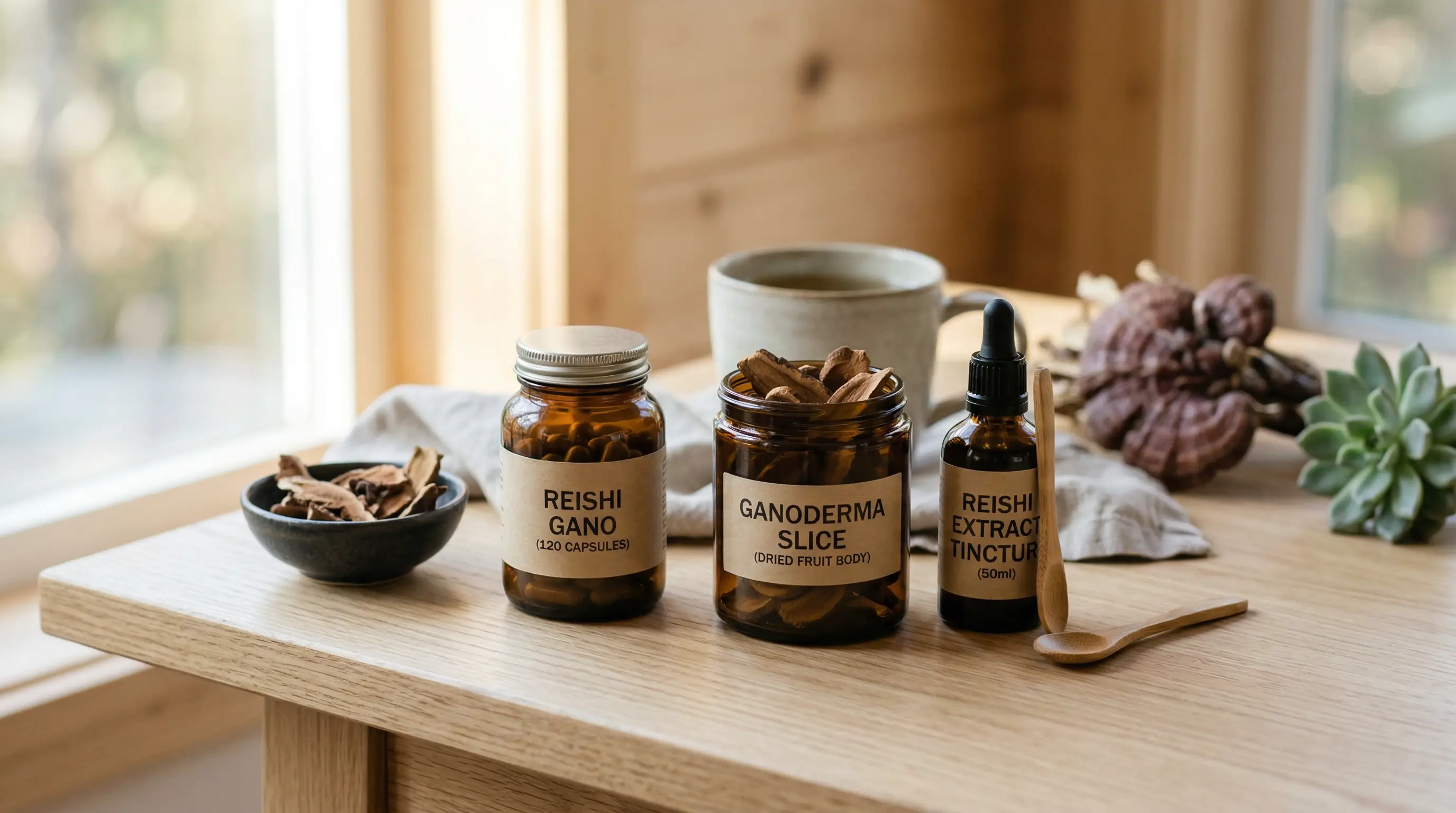
Reishi mushrooms in their natural form are immediately recognizable by their distinctive glossy, lacquered appearance that gives them an almost artificial look. Fresh Reishi caps have a reddish-brown to mahogany color with a shiny, varnish-like surface that reflects light. The mushroom typically grows in a kidney or fan shape, with a woody texture that becomes increasingly hard as it matures. The underside features tiny pores rather than gills, and the stem, when present, is typically off-center and has the same glossy appearance as the cap.
In commercial preparations, Reishi is most commonly encountered as a fine, brownish powder with a distinctly bitter taste and earthy aroma. High-quality Reishi powder should have a consistent color ranging from light brown to reddish-brown, depending on the extraction method and processing. The powder should be fine and uniform, without visible chunks or foreign matter. When mixed with water, quality Reishi powder typically creates a muddy brown liquid with a characteristic bitter, woody taste that some describe as reminiscent of coffee grounds mixed with herbs.
Reishi is also available in capsule form, where the powder is enclosed in gelatin or vegetarian capsules, typically ranging from 250mg to 1000mg per capsule. Extract forms may appear darker and more concentrated, sometimes with a slightly sticky or resinous texture due to concentrated triterpenes. Liquid extracts are typically dark brown to black and have an intensely bitter taste.
When purchasing Reishi, be aware of potential adulterants or low-quality products. Inferior products may be diluted with fillers like rice flour, starch, or other mushroom powders. Some unscrupulous vendors may sell products labeled as Reishi that contain little to no actual Ganoderma lucidum. Quality Reishi should have a certificate of analysis indicating the levels of key compounds like triterpenes and polysaccharides. Avoid products that seem unusually cheap, have an overly mild taste, or lack proper labeling and third-party testing information.
What to Expect
The subjective experience of Reishi differs significantly from most other nootropics due to its subtle, cumulative effects that build over time rather than producing immediate, noticeable changes. Unlike stimulant-based cognitive enhancers that provide rapid onset effects, Reishi's benefits typically emerge gradually over days to weeks of consistent use, making it more of a long-term cognitive support tool than an acute performance enhancer.
During the initial days of Reishi supplementation, most users report minimal immediate effects, though some sensitive individuals may notice a subtle sense of calm or slight drowsiness, particularly if taken in higher doses or on an empty stomach. The bitter taste can be quite pronounced and may cause mild stomach discomfort in some users, especially when taken without food. This initial period often leads some users to question the product's effectiveness, as the benefits are not immediately apparent.
After one to two weeks of consistent use, users typically begin to notice the first subtle effects. The most commonly reported early benefit is improved sleep quality, with users experiencing deeper, more restorative sleep and easier morning awakening. This improved sleep naturally leads to better daytime cognitive function, including enhanced focus, reduced mental fatigue, and improved mood stability. Users often describe feeling more "centered" or emotionally balanced, with reduced reactivity to daily stressors.
As use continues into the second and third weeks, the cognitive benefits typically become more pronounced. Users frequently report enhanced mental clarity and sustained attention, particularly during demanding cognitive tasks. Unlike the jittery focus associated with stimulants, Reishi-induced focus is often described as calm and sustainable, without the crash or rebound effects. Many users note improved stress resilience, finding that situations that previously caused anxiety or overwhelm feel more manageable.
Long-term users, those who have been taking Reishi for months or years, often report more profound benefits including enhanced creativity, improved problem-solving abilities, and a general sense of mental well-being. Some describe a subtle but noticeable improvement in memory consolidation and recall. The adaptogenic effects become more apparent over time, with users reporting better ability to handle both physical and mental stressors.
Dosage significantly influences the subjective experience. Lower doses (250-500mg of extract daily) tend to produce subtle calming effects and gradual cognitive enhancement. Moderate doses (500-1500mg daily) typically provide more noticeable stress reduction and cognitive benefits. Higher doses (1500mg and above) may produce more pronounced relaxation effects and could potentially cause drowsiness in sensitive individuals, particularly when first starting use.
Preparation & Consumption
Reishi can be consumed through various methods, each offering different advantages in terms of bioavailability, convenience, and user preference. The most common and convenient method is capsule consumption, where pre-measured doses of Reishi extract or powder are enclosed in gelatin or vegetarian capsules. This method eliminates the bitter taste and provides consistent dosing, making it ideal for beginners or those sensitive to the mushroom's intense flavor. Capsules should be taken with water, preferably with food to minimize potential stomach irritation.
Powder consumption offers more flexibility in dosing and can be mixed into various beverages or foods. The traditional method involves mixing Reishi powder into hot water to create a tea-like beverage, though the resulting drink is quite bitter and earthy. Many users find this bitterness more palatable when the powder is mixed into coffee, smoothies, or other strongly flavored beverages. Some users incorporate Reishi powder into cooking, adding it to soups, stews, or baked goods, though heat may potentially degrade some beneficial compounds.
Liquid extracts provide high bioavailability and rapid absorption but are typically more expensive and have an intensely bitter taste. These concentrated preparations can be taken directly under the tongue for sublingual absorption or mixed into beverages. When using liquid extracts, start with smaller doses as they are typically more potent than powder forms.
Dosing guidelines vary significantly depending on the preparation method and concentration. For standardized extracts, typical starting doses range from 250-500mg daily, taken with breakfast or lunch to avoid potential sleep interference. Users can gradually increase to 1000-1500mg daily based on individual response and tolerance. For whole mushroom powder, doses typically range from 1-3 grams daily. When using liquid extracts, follow manufacturer guidelines carefully, as concentrations can vary dramatically between products.
Timing of consumption can influence effects and should be tailored to individual goals. For stress reduction and general cognitive support, morning consumption with breakfast is typically recommended. For sleep enhancement, some users prefer evening consumption, though this should be approached cautiously as individual responses vary. Consistent daily timing helps maintain stable blood levels and optimize benefits.
Set and setting, while less critical than with psychoactive substances, still play a role in optimizing Reishi's benefits. A calm, organized environment supports the mushroom's stress-reducing effects, while maintaining consistent sleep schedules and stress management practices enhances its adaptogenic benefits.
Safety First
Reishi is generally considered safe for most healthy adults when used appropriately, but several important safety considerations must be understood before beginning supplementation. The mushroom has an excellent safety profile with centuries of traditional use and modern research supporting its low toxicity, but individual responses can vary, and certain populations should exercise particular caution.
Contraindications include pregnancy and breastfeeding, as insufficient research exists regarding Reishi's safety during these periods. Individuals with autoimmune conditions such as multiple sclerosis, lupus, or rheumatoid arthritis should consult healthcare providers before use, as Reishi's immune-modulating effects could potentially exacerbate these conditions. People with bleeding disorders or those scheduled for surgery should avoid Reishi, as it may increase bleeding risk due to its anticoagulant properties.
Drug interactions represent a significant safety concern, particularly with anticoagulant medications like warfarin, heparin, or antiplatelet drugs such as aspirin and clopidogrel. Reishi may enhance these medications' effects, potentially leading to excessive bleeding. Individuals taking immunosuppressive medications should exercise caution, as Reishi's immune-enhancing properties could potentially counteract these treatments. Blood pressure medications may also interact with Reishi, as the mushroom can have hypotensive effects.
Diabetes medications require careful monitoring when combined with Reishi, as the mushroom may enhance blood sugar-lowering effects, potentially leading to hypoglycemia. Regular blood glucose monitoring is essential for diabetic individuals using Reishi supplements.
Common side effects, while generally mild, can include dizziness, particularly when first starting supplementation or when increasing doses. Digestive upset, including nausea, stomach pain, or diarrhea, may occur, especially when taken on an empty stomach. Skin reactions, including rashes or itching, have been reported in sensitive individuals. Fatigue or drowsiness can occur, particularly with higher doses or in individuals sensitive to Reishi's calming effects.
Quality and purity concerns are paramount when selecting Reishi products. Choose supplements from reputable manufacturers that provide third-party testing results for purity, potency, and contaminants. Look for products that specify the concentration of active compounds like triterpenes and polysaccharides. Avoid products with unrealistic claims or those significantly cheaper than market averages, as these may indicate inferior quality or adulteration.
Starting with lower doses and gradually increasing allows for assessment of individual tolerance and response. Discontinue use and consult a healthcare provider if adverse reactions occur. Individuals with pre-existing medical conditions or those taking medications should consult healthcare providers before beginning Reishi supplementation.
History & Cultural Context
Reishi's history spans over 4,000 years, making it one of the most revered medicinal mushrooms in human history. In ancient China, Reishi was considered so precious that it was reserved for royalty and the wealthy elite, earning names like "the divine mushroom" and "mushroom of spiritual potency." Traditional Chinese texts, including the Shen Nong Ben Cao Jing, one of the earliest Chinese pharmacopoeias dating to around 100 CE, classified Reishi as a superior herb, meaning it could be taken continuously without adverse effects while promoting longevity and spiritual development.
The cultural significance of Reishi in Chinese tradition extends beyond mere medicine into the realm of spirituality and philosophy. Taoist monks particularly valued Reishi for its supposed ability to promote tranquility, enhance meditation, and support the pursuit of immortality. The mushroom became deeply embedded in Chinese art and literature, often depicted in paintings and sculptures as a symbol of good fortune, spiritual potency, and eternal youth. Ancient Chinese texts describe elaborate expeditions to remote mountains in search of wild Reishi, with successful foragers being rewarded with gold equal to the mushroom's weight.
The rarity of wild Reishi contributed significantly to its mystique and value. The mushroom grows naturally on decaying hardwood trees in humid, mountainous regions, and finding specimens in the wild was considered extremely fortunate. This scarcity led to numerous legends and folklore surrounding the mushroom, including stories of its ability to grant immortality and supernatural powers to those who consumed it regularly.
The transition from traditional medicine to modern scientific interest began in the 1970s when Japanese researchers successfully developed cultivation techniques for Reishi, making it more widely available for both research and consumption. This breakthrough allowed for systematic study of the mushroom's bioactive compounds and potential health benefits, leading to hundreds of scientific papers exploring its pharmacological properties.
In Western cultures, Reishi's introduction occurred gradually through the growing interest in traditional Chinese medicine and natural health approaches during the late 20th century. The rise of the nootropics movement in the early 21st century brought renewed attention to Reishi as a cognitive enhancer, though this application represents a modern interpretation of its traditional uses rather than a historical application.
Today, Reishi occupies a unique position in the global wellness market, bridging ancient wisdom and modern science. Its perception has evolved from a mystical, almost magical substance to a well-researched functional food with documented bioactive compounds and measurable effects.
Emergency Guidance
While Reishi-related emergencies are extremely rare due to the mushroom's excellent safety profile, it's important to recognize potential adverse reactions and know how to respond appropriately. Unlike emergencies involving psychoactive substances, Reishi-related issues typically involve allergic reactions, drug interactions, or exacerbation of underlying health conditions rather than acute toxicity or psychological distress.
The most serious potential emergency involves severe allergic reactions, which, while uncommon, can occur in sensitive individuals. Signs of a serious allergic reaction include difficulty breathing, swelling of the face, lips, tongue, or throat, severe rash or hives, rapid pulse, and dizziness or fainting. If these symptoms occur, discontinue Reishi immediately and seek emergency medical attention by calling emergency services. Do not attempt to treat severe allergic reactions at home.
Less severe but concerning reactions include persistent digestive upset with severe nausea, vomiting, or diarrhea that doesn't resolve within 24 hours of discontinuing use. Unusual bleeding or bruising, particularly in individuals taking anticoagulant medications, warrants immediate medical consultation. Signs of liver dysfunction, including yellowing of the skin or eyes, dark urine, or severe abdominal pain, require prompt medical evaluation, though such reactions are extremely rare with Reishi.
For individuals with diabetes, signs of hypoglycemia (low blood sugar) including shakiness, sweating, confusion, rapid heartbeat, or loss of consciousness require immediate attention. If the person is conscious, provide fast-acting carbohydrates like glucose tablets or fruit juice, and monitor closely. If unconsciousness occurs, call emergency services immediately.
If someone experiences concerning symptoms after taking Reishi, gather important information including the specific product used, dosage taken, timing of consumption, and any other medications or supplements being used. This information will be valuable for healthcare providers. Keep the product packaging available for reference.
For non-emergency but concerning symptoms like persistent headaches, unusual fatigue, or digestive issues, discontinue Reishi use and consult a healthcare provider within 24-48 hours. Document symptoms, including their onset, duration, and severity, to help healthcare providers assess the situation.
Prevention remains the best approach to avoiding Reishi-related problems. Always start with low doses, purchase from reputable sources, inform healthcare providers about Reishi use, and be particularly cautious if taking medications or having underlying health conditions. When in doubt about any symptoms or reactions, err
Legal Status in NL
Reishi is fully legal in the Netherlands and is classified as a food supplement. Available in smartshops, health stores, and online retailers.
Available in 160 shops across 61 cities. Most shops in Amsterdam (28), Rotterdam (13), Groningen (9).
Dosage Guide
Experience Timeline
Effect Profile
Positive Effects
Side Effects
Safety & Harm Reduction
Warnings
- Effects build over weeks — not immediate
- May lower blood pressure
- Can interact with blood thinners
- Buy from reputable source — verify beta-glucan content
- Stop 2 weeks before surgery
Harm Reduction Tips
- Start with low doses (500mg-1g) to assess individual tolerance
- Take with food to minimize potential gastrointestinal upset
- Choose reputable suppliers with third-party testing for purity
- Consult healthcare provider before use if taking medications
- Avoid if pregnant, breastfeeding, or have autoimmune conditions
- Monitor for allergic reactions, especially with first use
- Take breaks from regular use to prevent tolerance
- Store in cool, dry place away from moisture and light
- Be aware that effects are subtle and cumulative over time
- Keep a usage log to track effects and optimal dosing
Contraindications
- —Blood-thinning medication
- —Autoimmune conditions
- —Before surgery
- —Low blood pressure
Emergency Information
Reishi is generally very safe with minimal acute risks, but discontinue use if experiencing severe allergic reactions like difficulty breathing, swelling, or rash. If gastrointestinal distress occurs, reduce dosage and take with food. Contact healthcare provider if symptoms persist or worsen, especially if taking medications that may interact.
Interactions
Anticoagulants/Blood thinnersCaution
ImmunosuppressantsCaution
Antihypertensive medicationsCaution
Sedatives/CNS depressantsCaution
AlcoholCaution
CannabisSafe
SSRIs/SNRIsSafe
StimulantsSafe
Experience Levels
As a beginner, your Reishi journey will be subtle and gradual. Start with 500mg of standardized extract daily and don't expect immediate dramatic changes. Over the first 2-3 weeks, you may begin noticing improved sleep quality – falling asleep easier or feeling more rested upon waking. Your stress response might become more balanced, with daily challenges feeling less overwhelming. Some beginners report a gentle sense of calm and improved emotional stability after several weeks of consistent use. Take Reishi with food to prevent any mild stomach upset and establish a routine by taking it at the same time daily. Keep realistic expectations and focus on long-term wellness rather than immediate effects. Track your sleep quality, stress levels, and energy in a simple journal to notice gradual improvements. If you experience any dizziness or digestive issues, reduce your dose temporarily. Remember that Reishi is building foundational wellness support in your body, working behind the scenes to strengthen your natural resilience and immune function over time.
Frequently Asked Questions
Is Reishi legal in the Netherlands?▾
Yes, Reishi (Ganoderma lucidum) is completely legal in the Netherlands. It's classified as a food supplement and can be purchased freely from smartshops, health stores, and online retailers. There are no restrictions on possession, use, or purchase of Reishi mushroom products in any form.
What's the recommended dosage for Reishi extract?▾
For beginners, start with 500mg of standardized extract daily. Intermediate users typically take 1500mg, while experienced users may go up to 3000mg daily. Always check the beta-glucan content and follow manufacturer guidelines, as potency varies between products. Take with food to improve absorption and reduce potential stomach upset.
How long does it take to feel effects from Reishi?▾
Reishi effects build gradually over 2-4 weeks of consistent daily use. Unlike acute substances, you won't feel immediate changes. Most users report improved sleep quality and stress resilience after 2-3 weeks. For immune support benefits, allow 4-6 weeks of regular use to notice meaningful changes.
What should I expect from my first Reishi experience?▾
Don't expect dramatic immediate effects. Reishi works subtly over time to support overall wellness. You may gradually notice better sleep quality, reduced stress response, and improved energy levels. Some users report feeling more balanced and resilient to daily stressors after several weeks of consistent use.
Are there any safety concerns with Reishi?▾
Reishi is generally very safe but can lower blood pressure and may interact with blood-thinning medications. Stop use 2 weeks before any surgery. People with autoimmune conditions should consult healthcare providers before use, as Reishi can stimulate immune function. Always buy from reputable sources to ensure quality.
Can Reishi interact with medications?▾
Yes, Reishi can interact with blood-thinning medications like warfarin, potentially increasing bleeding risk. It may also enhance the effects of blood pressure medications. If you're taking any prescription medications, especially for blood pressure or clotting, consult your healthcare provider before starting Reishi supplementation.
Where can I buy quality Reishi in the Netherlands?▾
Reishi is available at most Dutch smartshops, health food stores, and online retailers. Look for products with verified beta-glucan content and third-party testing. Reputable smartshops often carry high-quality extracts with standardized active compounds. Avoid extremely cheap products as they may have low potency.
Can I travel with Reishi supplements?▾
Yes, you can travel internationally with Reishi supplements as they're legal food supplements. Keep them in original packaging with labels visible. For air travel within the EU, there are no restrictions. When traveling outside the EU, check destination country regulations, though Reishi is legal in most countries.
Should I take Reishi with food?▾
Taking Reishi with food is recommended to improve absorption and reduce potential stomach irritation. The triterpenes and beta-glucans in Reishi are better absorbed when taken with a meal containing some fat. Morning or evening dosing both work well, depending on your routine and goals.
How does Reishi compare to other medicinal mushrooms?▾
Reishi is primarily known for stress reduction and immune support, while Lion's Mane focuses on cognitive enhancement and nerve health. Reishi has a more calming, adaptogenic effect compared to the more stimulating cognitive effects of some other nootropics. Both work gradually over weeks rather than providing immediate effects.
What's the difference between Reishi powder and extract?▾
Reishi extracts are concentrated forms with higher levels of active compounds like beta-glucans and triterpenes. Powders are simply dried, ground mushrooms with lower potency. Extracts typically require smaller doses (500-3000mg) while powders may need 3-10g daily. Extracts are more convenient and cost-effective for therapeutic use.
Can I take Reishi long-term?▾
Yes, Reishi is considered safe for long-term daily use and is traditionally used this way. Many benefits, particularly immune support and stress resilience, develop and maintain with consistent use over months or years. Take occasional breaks if desired, but there's no evidence requiring cycling off Reishi.
Are there any side effects from Reishi?▾
Reishi is well-tolerated by most people with minimal side effects. Some users may experience mild digestive upset, dizziness (from blood pressure lowering), or skin rash initially. These effects are typically mild and resolve with continued use or dose reduction. Start with lower doses to assess tolerance.
Who should avoid Reishi supplements?▾
People taking blood-thinning medications, those with autoimmune conditions, individuals with very low blood pressure, and anyone scheduled for surgery within 2 weeks should avoid Reishi. Pregnant or breastfeeding women should consult healthcare providers before use, as safety data is limited for these populations.
What should I look for when buying Reishi?▾
Look for standardized extracts with verified beta-glucan content (typically 10-30%). Choose products with third-party testing for purity and potency. Reputable brands will specify extraction ratios and active compound percentages. Avoid products without clear labeling or those making exaggerated health claims.
How It Compares — Reishi
| Dimension | Reishi | Lion's Mane | Mucuna Pruriens | Bacopa Monnieri |
|---|---|---|---|---|
| Primary Focus | Stress reduction & immune support | Cognitive enhancement & nerve health | — | — |
| Onset Time | 2-4 weeks (cumulative) | 2-4 weeks (cumulative) | Variable, can be faster | Several weeks (cumulative) |
| Duration | Ongoing with daily use | Ongoing with daily use | Several hours per dose | Ongoing with daily use |
| Intensity | Very subtle/gradual | Mild (2/10) | Moderate (3/10) | Mild (2/10) |
| Legal Status NL | Legal | Legal | Legal | Legal |
| Best For | Sleep, stress resilience, immunity | Memory, focus, neuroprotection | Mood, motivation, energy | Learning, memory retention |
| Risk Profile | Very low, blood pressure concerns | Very low, minimal interactions | Low-moderate, dopamine interactions | — |
Related Searches
References
- Sanodiya BS, Thakur GS, Baghel RK, Prasad GB, Bisen PS. Ganoderma lucidum (Lingzhi or Reishi): a medicinal mushroom · Current Pharmaceutical Biotechnology · 2009
- Cui XY, Cui SY, Zhang J, Wang ZJ, Yu B, Sheng ZF, Zhang XQ, Zhang YH. Ganoderma lucidum promotes sleep through a gut microbiota-dependent and serotonin-involved pathway in mice · Scientific Reports · 2012doi:10.1038/srep11906
- Noguchi M, Kakuma T, Tomiyasu K, Yamada A, Itoh K, Konishi F, Kumamoto S, Shimizu K, Kondo R, Matsuoka K. Randomized clinical trial of an ethanol extract of Ganoderma lucidum in men with lower urinary tract symptoms · Phytomedicine · 2008doi:10.1016/j.phymed.2007.09.003
- Thyagarajan A, Zhu J, Sliva D. Triterpenes from Ganoderma lucidum induce autophagy in colon cancer through the inhibition of p38 mitogen-activated protein kinase (p38 MAPK) · Nutrition and Cancer · 2007doi:10.1080/01635580701308083
- Jin X, Ruiz Beguerie J, Sze DM, Chan GC. A systematic review of the effectiveness and safety of Ganoderma lucidum for hepatitis B · Journal of Alternative and Complementary Medicine · 2012doi:10.1089/acm.2011.0231
- Chang CJ, Lin CS, Lu CC, Martel J, Ko YF, Ojcius DM, Tseng SF, Wu TR, Chen YY, Young JD, Lai HC. Ganoderma lucidum reduces obesity in mice by modulating the composition of the gut microbiota · Nature Communications · 2015doi:10.1038/ncomms8489
- Zhu XL, Chen AF, Lin ZB. Immunomodulating activities of Ganoderma, a mushroom with medicinal properties · Food Reviews International · 2007
- Gao Y, Zhou S, Jiang W, Huang M, Dai X. Ganoderic acid A is a novel leukemia inhibitory factor · Leukemia Research · 2003doi:10.1016/S0145-2126(02)00263-6
Disclaimer: This information is for educational purposes only and does not constitute medical advice. Always consult a qualified healthcare professional before using any substance. If you experience adverse effects, contact your doctor or call 112 (Netherlands emergency).