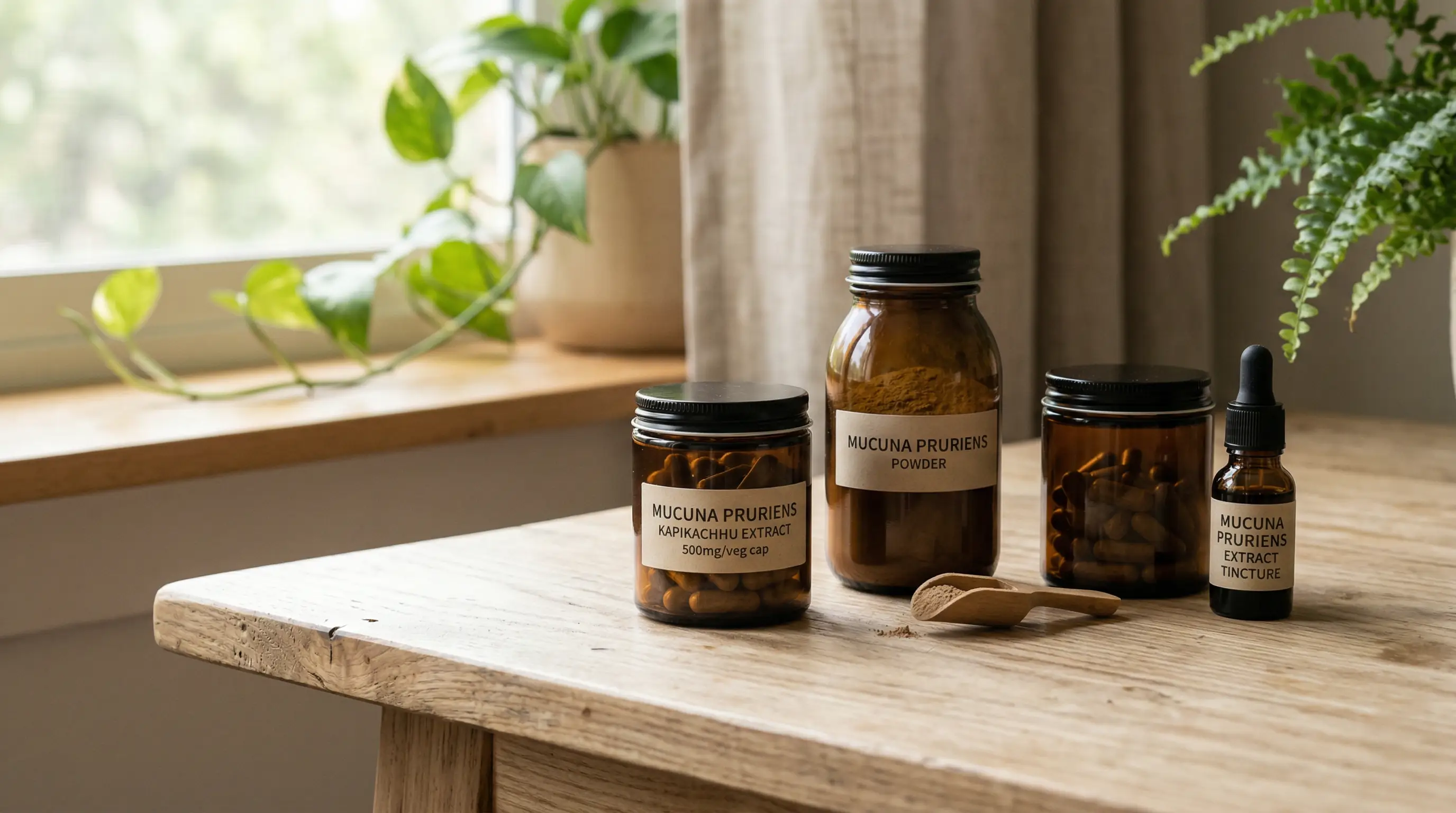
Mucuna Pruriens
Always start with a low dose and read our safety guidelines before use.
Mucuna Pruriens is a tropical legume containing natural L-DOPA, a precursor to dopamine. It enhances mood, motivation, and cognitive function while supporting healthy dopamine levels. Popular nootropic in Dutch smartshops for mood enhancement.

Overview
Mucuna pruriens, commonly known as velvet bean, monkey tamarind, or cowhage, is a tropical legume that has garnered significant attention in the nootropic and wellness communities for its unique neurochemical properties. This climbing shrub, native to Africa and tropical Asia, produces distinctive fuzzy pods containing seeds that serve as the primary source of its bioactive compounds. The plant's most notable characteristic is its exceptionally high concentration of L-DOPA (levodopa), a direct precursor to the neurotransmitter dopamine, making it one of nature's richest sources of this crucial brain chemical.
People turn to Mucuna pruriens for various reasons, primarily centered around its potential to support cognitive function, mood regulation, and overall neurological health. The supplement has gained popularity among individuals seeking natural alternatives to support focus, motivation, and mental clarity, as well as those interested in its traditional applications for male reproductive health and general vitality. Unlike synthetic L-DOPA medications, Mucuna pruriens contains a complex array of additional compounds including serotonin, nicotine, bufotenin, and various alkaloids that may work synergistically to modulate its effects and potentially reduce some of the side effects associated with isolated L-DOPA supplementation.
The appeal of Mucuna pruriens extends beyond its dopaminergic properties. Traditional Ayurvedic medicine has employed this plant for centuries to address various health concerns, lending credibility to its therapeutic potential. Modern research has begun to validate some of these traditional uses, investigating its neuroprotective properties, antioxidant effects, and potential applications in supporting healthy aging and cognitive longevity. However, users must approach this powerful botanical with respect and understanding, as its high L-DOPA content means it can produce significant physiological effects and may interact with various medications and health conditions.
How It Works
The primary mechanism of action for Mucuna pruriens centers around its exceptionally high L-DOPA content, which typically ranges from 3-7% by weight in quality extracts. L-DOPA serves as the immediate precursor to dopamine in the brain's biosynthetic pathway. When consumed, L-DOPA crosses the blood-brain barrier more readily than dopamine itself, where it is then converted to dopamine by the enzyme aromatic L-amino acid decarboxylase (AADC). This conversion process effectively increases dopamine availability in various brain regions, particularly in areas rich in dopaminergic neurons such as the substantia nigra, ventral tegmental area, and prefrontal cortex.
The increased dopamine availability influences multiple neural circuits and systems. In the prefrontal cortex, enhanced dopamine signaling can improve working memory, attention, and executive function, which explains many of the cognitive benefits users report. The mesolimbic dopamine pathway, often called the brain's reward circuit, becomes more active, potentially enhancing motivation, drive, and the experience of pleasure and satisfaction. This mechanism underlies many users' reports of improved mood and increased motivation to engage in goal-directed behaviors.
Beyond its dopaminergic effects, Mucuna pruriens contains several other bioactive compounds that contribute to its overall pharmacological profile. The presence of serotonin and its precursors may help modulate mood and sleep patterns, while various alkaloids and antioxidant compounds provide neuroprotective benefits. Some research suggests that the whole plant extract may offer advantages over isolated L-DOPA, as these additional compounds may help prevent some of the tolerance and side effects associated with long-term dopamine supplementation.
The plant also contains compounds that may inhibit monoamine oxidase, an enzyme responsible for breaking down neurotransmitters including dopamine, serotonin, and norepinephrine. This mild MAO inhibition could potentially extend and enhance the effects of the increased neurotransmitter availability. Additionally, Mucuna pruriens appears to support the body's natural antioxidant systems, which may help protect dopaminergic neurons from oxidative stress and support long-term brain health.
What It Looks Like
Mucuna pruriens supplements come in several distinct forms, each with characteristic appearances that consumers should familiarize themselves with to ensure product authenticity and quality. The most common commercial form is a fine powder derived from ground seeds, which typically exhibits a light brown to tan coloration with a slightly nutty, earthy aroma. High-quality seed powder should have a relatively uniform consistency without excessive clumping, though some natural variation in particle size is normal. The powder may have a slightly bitter taste, which is characteristic of the L-DOPA content.
Standardized extracts represent another popular form, usually appearing as a darker brown powder with a more concentrated, intense aroma. These extracts are often standardized to specific L-DOPA percentages, commonly ranging from 15% to 40% L-DOPA content. The higher the standardization, the darker and more potent the powder typically appears. Quality extracts should dissolve relatively well in water, though complete dissolution may not occur due to other plant compounds present.
Capsulated forms are widely available and convenient for dosing. These typically contain either the raw seed powder or standardized extracts in gelatin or vegetarian capsules. Reputable manufacturers will clearly label the contents, including whether the product contains raw seed powder or a standardized extract, along with the L-DOPA percentage if applicable. The capsules themselves should be intact without cracks or discoloration, and the contents should match the expected appearance of the specified form.
Whole seeds, while less common in commercial settings, may occasionally be encountered. These are kidney-shaped, dark brown to black seeds approximately 1-2 centimeters in length. The seeds have a hard outer shell and should not be confused with other legume seeds. Raw seeds require proper preparation and are not typically consumed directly due to their tough exterior and the need for processing to optimize bioavailability.
Consumers should be aware of potential adulterants or low-quality products that may appear similar but lack the characteristic properties of genuine Mucuna pruriens. Inferior products might appear lighter in color, lack the distinctive aroma, or fail to produce expected effects. Always source from reputable suppliers who provide third-party testing results and clear labeling of L-DOPA content.
What to Expect
The subjective experience of Mucuna pruriens varies considerably based on dosage, individual sensitivity, timing of consumption, and the specific form used. Understanding these variations is crucial for setting appropriate expectations and using the supplement safely and effectively. The onset of effects typically occurs within 30-90 minutes of consumption, with peak effects usually manifesting 1-3 hours post-ingestion, depending on stomach contents and individual metabolism.
At lower doses, typically ranging from 100-500mg of standardized extract or 1-3 grams of raw seed powder, users commonly report subtle but noticeable improvements in mood and mental clarity. Many describe a gentle lifting of mood, increased optimism, and enhanced motivation to engage in daily activities. Cognitive effects at this level often include improved focus and concentration, with some users noting enhanced ability to maintain attention on tasks for extended periods. The experience is generally described as clean and natural, without the jittery or artificial feeling sometimes associated with synthetic stimulants.
Moderate doses, ranging from 500mg-1g of standardized extract or 3-6 grams of raw powder, tend to produce more pronounced effects. Users frequently report significant improvements in motivation and drive, often describing a renewed enthusiasm for projects and goals. Cognitive enhancement becomes more apparent, with many noting improved working memory, faster mental processing, and enhanced problem-solving abilities. Mood elevation is typically more pronounced at this level, with users describing feelings of well-being, confidence, and emotional stability. Some individuals also report increased physical energy and reduced fatigue.
Higher doses, while not recommended for beginners, can produce more intense effects but also carry increased risk of side effects. At these levels, users may experience very pronounced mood elevation, potentially approaching euphoric states in sensitive individuals. Cognitive effects can become quite pronounced, but may also begin to show diminishing returns or even negative effects such as difficulty with fine motor control or overstimulation. Physical effects may include increased heart rate, slight tremor, or restlessness.
The duration of effects typically ranges from 4-8 hours, with most users reporting a gradual decline rather than an abrupt cessation. Many users note that the effects seem to integrate well with daily activities, enhancing rather than disrupting normal functioning. However, some individuals may experience difficulty sleeping if doses are taken too late in the day, due to the stimulating effects on dopamine systems.
Individual responses can vary significantly based on factors such as baseline dopamine levels, genetic variations in dopamine metabolism, concurrent medications, and overall health status. Some users may be particularly sensitive and require much lower doses, while others may need higher amounts to achieve desired effects. It's also worth noting that regular use may lead to tolerance, requiring periodic breaks to maintain effectiveness.
Preparation & Consumption
Proper preparation and consumption methods are essential for maximizing the benefits of Mucuna pruriens while minimizing potential risks and side effects. The most straightforward method involves oral consumption, which can be accomplished through several approaches depending on the form of the supplement and individual preferences. Understanding optimal timing, dosing strategies, and preparation techniques can significantly impact both the effectiveness and safety of the experience.
For powdered forms, whether raw seed powder or standardized extracts, mixing with water or juice is the most common approach. The powder should be thoroughly stirred or shaken to ensure even distribution, though complete dissolution may not occur due to the presence of various plant compounds. Some users prefer to mix the powder with a small amount of liquid to create a concentrated solution that can be consumed quickly, followed by additional liquid to wash down any residual taste. Others find that mixing with fruit juice helps mask the naturally bitter flavor while potentially enhancing absorption due to the vitamin C content.
Timing of consumption plays a crucial role in optimizing effects and minimizing side effects. Taking Mucuna pruriens on an empty stomach generally results in faster onset and more pronounced effects, as food can slow absorption and potentially interfere with L-DOPA uptake. However, some individuals may experience nausea when taking the supplement without food, particularly at higher doses. In such cases, consuming with a light meal or snack can help reduce gastrointestinal discomfort while still allowing for reasonable absorption.
The timing relative to other supplements and medications requires careful consideration. Protein-rich meals should be avoided for at least 30 minutes before and after consumption, as amino acids can compete with L-DOPA for absorption across the blood-brain barrier. This competitive inhibition can significantly reduce the effectiveness of the supplement. Similarly, iron supplements should be separated from Mucuna pruriens consumption by several hours, as iron can interfere with L-DOPA absorption.
Dosing should always begin conservatively, particularly for new users or those switching between different forms or brands. Starting with the lowest effective dose allows individuals to assess their sensitivity and response before gradually increasing if needed. A common approach involves beginning with 25-50% of the intended dose for the first few uses, then gradually increasing based on response and tolerance. This titration approach helps prevent overwhelming effects and allows users to find their optimal dosing range.
Set and setting, while perhaps less critical than with classical psychedelics, still play important roles in the Mucuna pruriens experience. The supplement's mood-enhancing and motivating effects can be optimized by consuming it in environments and contexts that support the desired outcomes. For cognitive enhancement, this might mean taking it before engaging in mentally demanding tasks. For mood support, consumption in positive, supportive environments can enhance the beneficial effects.
Safety First
Safety considerations for Mucuna pruriens use are paramount due to its potent pharmacological activity and potential for significant drug interactions. The high L-DOPA content means this supplement can produce substantial physiological effects and may pose risks for certain individuals or when combined with specific medications. Understanding these risks and taking appropriate precautions is essential for safe use.
The most critical safety concern involves interactions with monoamine oxidase inhibitors (MAOIs), including both pharmaceutical MAOIs used for depression and certain foods and supplements with MAOI activity. The combination of L-DOPA with MAOIs can lead to dangerous hypertensive crises, characterized by severe increases in blood pressure that can be life-threatening. This interaction extends beyond prescription MAOIs to include certain antidepressants, some antibiotics, and even foods high in tyramine. Users must carefully review all medications and supplements for potential MAOI activity before using Mucuna pruriens.
Individuals with cardiovascular conditions should exercise particular caution, as the dopaminergic effects can influence heart rate and blood pressure. Those with existing hypertension, arrhythmias, or other cardiac conditions should consult healthcare providers before use and consider cardiovascular monitoring during initial use. The supplement may also interact with blood pressure medications, potentially requiring dosage adjustments under medical supervision.
Psychiatric considerations are equally important, as Mucuna pruriens can significantly affect mood and mental state. Individuals with bipolar disorder may be at risk for triggering manic episodes, particularly during vulnerable periods or when combined with other mood-affecting substances. Those with psychotic disorders should avoid use, as dopamine enhancement can potentially exacerbate symptoms. Even individuals with depression should proceed cautiously, as the mood-elevating effects, while potentially beneficial, can sometimes lead to emotional instability if not properly managed.
Pregnancy and breastfeeding represent absolute contraindications for Mucuna pruriens use, as L-DOPA can cross the placental barrier and affect fetal development. The effects on nursing infants are also unknown and potentially harmful. Women of childbearing age should ensure reliable contraception if choosing to use this supplement.
Regular monitoring becomes important for long-term users, as chronic dopamine supplementation can potentially lead to tolerance, dependence, or dysregulation of natural dopamine production. Periodic breaks from supplementation, often called "cycling," may help prevent these issues. Users should also be aware of potential withdrawal effects when discontinuing use, which may include temporary mood depression, fatigue, and reduced motivation.
Quality control and product testing represent additional safety considerations. Due to the lack of standardized regulation in the supplement industry, products may vary significantly in potency and purity. Third-party testing for heavy metals, pesticides, and accurate L-DOPA content is crucial. Users should source products only from reputable manufacturers who provide certificates of analysis and maintain good manufacturing practices.
Dosing accuracy is critical for safety, particularly given the potent nature of L-DOPA. Users should invest in accurate scales for measuring powdered forms and should never estimate doses. Starting with conservative amounts and gradually increasing allows for safe exploration of individual tolerance and optimal dosing ranges.
History & Cultural Context
The history of Mucuna pruriens spans millennia, with its therapeutic use deeply rooted in traditional medicine systems across multiple cultures. The plant's significance extends far beyond its recent popularity in Western nootropic communities, representing a rich tapestry of traditional knowledge that has been passed down through generations of healers and practitioners. Understanding this historical context provides valuable insight into both the plant's therapeutic potential and the cultural wisdom surrounding its use.
In Ayurvedic medicine, one of the world's oldest healing systems originating in India over 3,000 years ago, Mucuna pruriens holds a revered position as a rasayana, or rejuvenative herb. Sanskrit texts refer to it as "Kapikacchu," and it has been traditionally employed to support reproductive health, enhance vitality, and promote longevity. Ancient Ayurvedic practitioners recognized its ability to strengthen the nervous system and improve mental clarity, observations that align remarkably well with modern understanding of its dopaminergic properties. The traditional preparation methods often involved careful processing to reduce potential side effects while maximizing therapeutic benefits.
Traditional Chinese Medicine also incorporated Mucuna pruriens, though to a lesser extent than in Ayurvedic practice. Chinese herbalists valued it for its ability to tonify kidney yang energy and support reproductive function, particularly in men. The plant was often combined with other herbs in complex formulations designed to address specific patterns of disharmony, reflecting the holistic approach characteristic of TCM practice.
Indigenous communities throughout Africa and Southeast Asia developed their own traditional uses for Mucuna pruriens, often focusing on its applications for treating various neurological conditions and supporting overall vitality. Some African traditional medicine systems used it to address what would now be recognized as symptoms potentially related to dopamine deficiency, including certain movement disorders and mood disturbances. These traditional applications demonstrate an intuitive understanding of the plant's neurological effects that predates modern pharmacological knowledge by centuries.
The transition of Mucuna pruriens from traditional medicine to modern scientific investigation began in earnest during the 20th century. Early pharmacological research in the 1930s and 1940s identified L-DOPA as the primary active compound, leading to its eventual development as a pharmaceutical treatment for Parkinson's disease. This discovery represented a fascinating convergence of ancient wisdom and modern science, as traditional uses for movement and neurological disorders found validation through contemporary research.
The plant's entry into Western wellness and nootropic communities occurred gradually, gaining momentum in the late 20th and early 21st centuries as interest in natural cognitive enhancers grew. The biohacking and nootropic movements embraced Mucuna pruriens as a natural alternative to synthetic dopamine-enhancing compounds, appreciating both its traditional pedigree and scientific backing. This adoption has led to increased research interest and commercial availability, though it has also raised concerns about proper use and safety awareness.
Cultural perceptions of Mucuna pruriens have evolved significantly over time. While traditional cultures often viewed it with reverence and used it within comprehensive healing frameworks, modern Western use sometimes lacks this contextual understanding. This shift highlights the importance of respecting traditional knowledge while applying modern safety standards and scientific understanding to optimize benefits and minimize risks.
Emergency Guidance
Recognizing and responding to potential emergencies or adverse reactions related to Mucuna pruriens use requires understanding the specific risks associated with its pharmacological activity and knowing appropriate intervention strategies. While serious emergencies are relatively rare with proper use, the supplement's potent effects on dopamine systems can occasionally lead to concerning symptoms that require prompt attention and appropriate response.
The most serious potential emergency involves hypertensive crisis, particularly in individuals who may have unknowingly combined Mucuna pruriens with MAOIs or MAOI-containing substances. Signs of hypertensive crisis include severe headache, chest
Legal Status in NL
Legal
Available in 160 shops across 61 cities. Most shops in Amsterdam (28), Rotterdam (13), Groningen (9).
Dosage Guide
Experience Timeline
Effect Profile
Positive Effects
Side Effects
Safety & Harm Reduction
Harm Reduction Tips
- Start with low doses (100-200mg standardized extract) to assess tolerance
- Take on an empty stomach or with light carbohydrates for better absorption
- Avoid high-protein meals within 2 hours of dosing
- Cycle usage to prevent tolerance and maintain effectiveness
- Monitor for signs of dyskinesia or involuntary movements
- Stay hydrated and maintain electrolyte balance
- Avoid daily use to prevent potential dopamine receptor downregulation
- Keep a dosage log to track effects and optimal timing
- Consult healthcare providers if taking any medications
- Source from reputable suppliers with third-party testing
Emergency Information
If experiencing severe nausea, vomiting, or movement disorders, discontinue use and seek medical attention. Inform medical professionals about mucuna pruriens use as it can interact with certain medications. Stay hydrated and rest in a comfortable environment if experiencing mild adverse effects.
Interactions
MAOIsDangerous
Carbidopa/LevodopaDangerous
AntipsychoticsCaution
SSRIs/SNRIsCaution
StimulantsCaution
AlcoholCaution
Iron supplementsCaution
Protein-rich foodsCaution
Experience Levels
As a newcomer to Mucuna Pruriens, expect a gentle introduction to natural cognitive enhancement. Your first experiences will likely be subtle - perhaps noticing slightly improved motivation when tackling daily tasks or feeling more emotionally balanced during stressful situations. The effects build gradually, so don't expect immediate dramatic changes like you might with caffeine or synthetic nootropics. Many beginners report feeling more 'like themselves' rather than experiencing an obvious altered state. You might notice improved focus during work or study sessions, enhanced mood stability, and increased drive to pursue goals. Some users experience mild digestive sensitivity initially, which typically resolves within a few days. Sleep quality often improves as dopamine regulation stabilizes. The beauty of Mucuna Pruriens for beginners lies in its forgiving nature - it's difficult to take too much, and side effects are generally mild and temporary. Track your daily mood and motivation levels to better appreciate the subtle but meaningful improvements. Remember that this is a marathon, not a sprint - the real benefits emerge with consistent use over weeks rather than days.
Frequently Asked Questions
Is Mucuna Pruriens legal in the Netherlands?▾
Yes, Mucuna Pruriens is completely legal in the Netherlands. It's classified as a dietary supplement and can be purchased freely from smartshops, health stores, and online retailers. There are no restrictions on possession, use, or distribution of this natural nootropic.
What is the recommended dosage for beginners?▾
Start with 200-400mg of standardized extract (15-20% L-DOPA) once daily, preferably on an empty stomach. Begin with the lowest dose to assess tolerance. Some users prefer raw powder starting at 1-2 grams daily. Always read product labels as concentrations vary between brands.
How long does it take to feel the effects?▾
Initial effects may be noticed within 30-60 minutes, but optimal benefits typically develop over 2-4 weeks of consistent use. Some users report improved mood and motivation within the first few days, while cognitive benefits tend to accumulate gradually with regular supplementation.
What should I expect from my first experience?▾
First-time users often notice subtle improvements in mood, motivation, and mental clarity. Effects are generally mild and build over time rather than producing immediate dramatic changes. Some may experience slight nausea if taken on an empty stomach, so consider taking with light food initially.
Are there any safety risks or side effects?▾
Mucuna Pruriens is generally well-tolerated, but some users may experience nausea, headaches, or digestive upset, especially at higher doses. Rare cases of vivid dreams or sleep disturbances have been reported. Start with low doses and discontinue if adverse effects persist.
Can Mucuna Pruriens interact with medications?▾
Yes, Mucuna Pruriens can interact with several medications, particularly antidepressants, antipsychotics, and Parkinson's medications due to its L-DOPA content. It may also interact with blood pressure medications. Always consult a healthcare provider before combining with prescription drugs.
Where can I buy Mucuna Pruriens in the Netherlands?▾
Mucuna Pruriens is available at most Dutch smartshops, health food stores, and online supplement retailers. Popular chains like Holland & Barrett often stock it, and specialized nootropic vendors offer higher-quality extracts. Compare L-DOPA concentrations and choose reputable brands.
Can I travel internationally with Mucuna Pruriens?▾
While legal in the Netherlands, regulations vary by country. Most EU countries allow it as a dietary supplement, but some nations may restrict L-DOPA containing products. Check destination country laws before traveling and keep products in original packaging with labels.
How does Mucuna Pruriens compare to synthetic nootropics?▾
Mucuna Pruriens offers a gentler, more natural approach compared to synthetic nootropics. Effects develop gradually and are generally milder but more sustainable. It's considered safer with fewer side effects, though it may be less immediately noticeable than synthetic alternatives like modafinil.
Should I cycle Mucuna Pruriens or take it continuously?▾
Many users take Mucuna Pruriens continuously without cycling, as tolerance development is uncommon. However, some prefer 5 days on, 2 days off cycles to maintain sensitivity. Listen to your body and consider periodic breaks if effects diminish or side effects develop.
Can I combine Mucuna Pruriens with other nootropics?▾
Mucuna Pruriens can be safely combined with many nootropics like Lion's Mane, but avoid combining with other dopaminergic substances. Popular stacks include pairing with B-vitamins, magnesium, or adaptogenic herbs. Start with single substances before experimenting with combinations.
What's the difference between raw powder and standardized extracts?▾
Raw Mucuna Pruriens powder contains 3-6% L-DOPA naturally, while standardized extracts concentrate this to 15-40%. Extracts provide more predictable dosing and stronger effects, while raw powder offers a broader spectrum of compounds but requires higher doses to achieve similar effects.
Are there any long-term risks with regular use?▾
Long-term studies on Mucuna Pruriens supplementation are limited, but traditional use suggests it's generally safe for extended periods. Some theoretical concerns exist about dopamine receptor sensitivity with very long-term use. Regular health check-ups are advisable for chronic users.
Who should avoid using Mucuna Pruriens?▾
Pregnant or breastfeeding women should avoid Mucuna Pruriens. People with melanoma, psychiatric disorders, or those taking MAO inhibitors should also avoid it. Individuals with cardiovascular conditions should consult healthcare providers before use due to potential blood pressure effects.
How It Compares — Mucuna Pruriens
| Dimension | Mucuna Pruriens | Lion's Mane |
|---|---|---|
| Intensity | Moderate (3-4/10) | Mild (2/10) |
| Onset Time | 30-60 minutes (acute), 2-4 weeks (optimal) | 2-4 weeks (cumulative) |
| Duration | 4-6 hours (acute), ongoing with daily use | Ongoing with daily use |
| Legal Status NL | Legal | Legal |
| Primary Mechanism | Dopamine precursor (L-DOPA) | Nerve growth factor stimulation |
| Best For | Mood, motivation, movement | Memory, neuroprotection, focus |
| Risk Profile | Low-moderate (drug interactions possible) | Very low |
Related Searches
References
- Katzenschlager R, Evans A, Manson A, Patsalos PN, Ratnaraj N, Watt H, Timmermann L, Van der Giessen R, Lees AJ. An alternative treatment for Parkinson's disease with Mucuna pruriens (Bak): A pharmacological review · Journal of Neurology, Neurosurgery & Psychiatry · 2004doi:10.1136/jnnp.2003.035659
- Katzenschlager R, Poewe W, Rascol O, Trenkwalder C, Deuschl G, Chaudhuri KR, Henriksen T, van Laar T, Spivey K, Vel S, Stocchi F, Tolosa E, Barone P, Pelmear J, Breen K, Lees AJ. Mucuna pruriens in Parkinson disease: a double-blind, randomized, controlled, crossover study · Neurology · 2004doi:10.1212/01.WNL.0000139829.28422.A5
- Lampariello LR, Cortelazzo A, Guerranti R, Sticozzi C, Valacchi G. Mucuna pruriens seed powder feeding influences reproductive conditions and development in Japanese quail, Coturnix coturnix japonica · Journal of Animal Physiology and Animal Nutrition · 2012doi:10.1111/j.1439-0396.2011.01238.x
- Manyam BV, Dhanasekaran M, Hyman TA. Neuroprotective effects of the antiparkinson drug Mucuna pruriens · Phytotherapy Research · 2004doi:10.1002/ptr.1514
- Cassani E, Cilia R, Laguna J, Barichella M, Contin M, Cereda E, Isaias IU, Pezzoli G. L-DOPA in Mucuna versus synthetic L-DOPA in the treatment of Parkinson's disease: a double-blind study · Journal of Neural Transmission · 2016doi:10.1007/s00702-016-1598-8
- Shukla KK, Mahdi AA, Ahmad MK, Shankhwar SN, Rajender S, Jaiswar SP. Mucuna pruriens reduces stress and improves the quality of semen in infertile men · Evidence-Based Complementary and Alternative Medicine · 2009doi:10.1093/ecam/nep138
- Suresh S, Prithiviraj E, Prakash S. Mucuna pruriens and its major constituent L-DOPA recover spermatogenic loss by combating ROS, loss of mitochondrial membrane potential and apoptosis · PLoS One · 2010doi:10.1371/journal.pone.0008655
- Lieu CA, Kunselman AR, Manyam BV, Venkiteswaran K, Subramanian T. Mucuna pruriens: A comprehensive review of its therapeutic applications · Advances in Pharmacological Sciences · 2010doi:10.1155/2010/197467
Disclaimer: This information is for educational purposes only and does not constitute medical advice. Always consult a qualified healthcare professional before using any substance. If you experience adverse effects, contact your doctor or call 112 (Netherlands emergency).