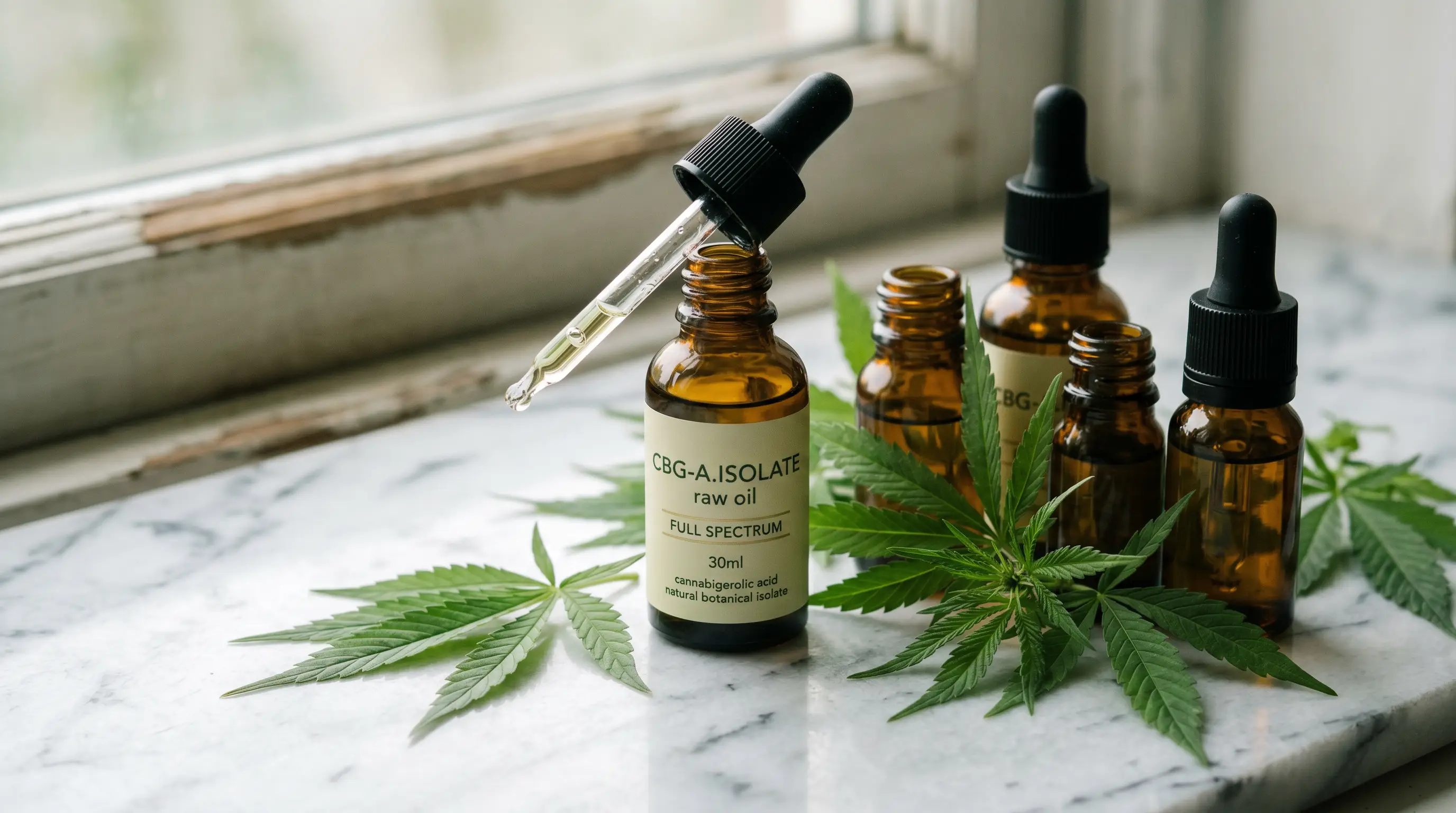
CBG-A Isolate
Always start with a low dose and read our safety guidelines before use.
CBG-A (Cannabigerolic Acid) Isolate is the pure, crystalline form of the acidic precursor to CBG, often called the 'mother of all cannabinoids'. It requires decarboxylation to convert to active CBG and may offer unique therapeutic benefits in its raw form. Emerging in Dutch smartshops as research into minor cannabinoids expands.

Overview
Cannabigerolic acid (CBG-A) isolate represents one of the most intriguing yet understudied cannabinoids in the cannabis plant's complex chemical profile. As the acidic precursor to cannabigerol (CBG), CBG-A serves as the foundational building block from which other major cannabinoids like THC-A and CBD-A are synthesized through enzymatic processes within the plant. This "mother cannabinoid" has garnered increasing attention in recent years as extraction and isolation techniques have advanced, allowing researchers and consumers to explore its unique properties in pure, crystalline form.
CBG-A isolate typically appears as a white to off-white crystalline powder with purity levels exceeding 95%, containing minimal traces of other cannabinoids, terpenes, or plant materials. Unlike its decarboxylated counterpart CBG, CBG-A retains its carboxylic acid group, which significantly influences its pharmacological behavior and bioavailability. This structural difference means that CBG-A exhibits distinct therapeutic potential and interacts differently with the human endocannabinoid system compared to other well-known cannabinoids.
People seek out CBG-A isolate for various reasons, including its reported anti-inflammatory properties, potential neuroprotective effects, and its role as a precursor compound for creating other cannabinoids through controlled decarboxylation. The compound has shown promise in preliminary research for addressing conditions such as inflammatory bowel disease, neurodegenerative disorders, and certain bacterial infections. Additionally, some users appreciate CBG-A for its non-psychoactive nature, allowing them to explore cannabinoid therapy without the intoxicating effects associated with THC. The isolate form provides precise dosing capabilities and eliminates variables introduced by other plant compounds, making it particularly valuable for those seeking consistent, predictable effects or conducting personal research into cannabinoid therapeutics.
How It Works
CBG-A operates through a complex interplay with the human endocannabinoid system, though its mechanisms of action differ notably from other cannabinoids due to its acidic structure. The endocannabinoid system consists of cannabinoid receptors (primarily CB1 and CB2), endogenous cannabinoids produced by the body, and the enzymes responsible for their synthesis and breakdown. While CBG-A does interact with these receptors, its binding affinity is generally lower than that of THC or CBD, suggesting that much of its therapeutic potential may arise through alternative pathways.
Research indicates that CBG-A exhibits significant activity at various non-cannabinoid receptors, including TRPA1 and TRPM8 channels, which are involved in pain perception and temperature sensation. The compound also demonstrates interaction with 5-HT1A serotonin receptors, potentially explaining some of its reported mood-stabilizing and anxiolytic effects. Unlike THC, CBG-A does not produce psychoactive effects because it lacks significant affinity for CB1 receptors in the brain, and its acidic form prevents it from readily crossing the blood-brain barrier in the same manner as neutral cannabinoids.
The anti-inflammatory properties of CBG-A appear to stem from its ability to modulate inflammatory mediators and cytokine production. Studies suggest that CBG-A can inhibit the production of pro-inflammatory compounds while promoting the release of anti-inflammatory substances. This dual action may explain its potential therapeutic value in treating inflammatory conditions. Additionally, CBG-A has demonstrated antibacterial properties, particularly against methicillin-resistant Staphylococcus aureus (MRSA), through mechanisms that appear to involve disruption of bacterial cell membrane integrity.
When consumed, CBG-A undergoes partial decarboxylation in the body, converting some portion to CBG through exposure to heat and enzymatic processes. This conversion rate varies based on individual metabolism, consumption method, and environmental factors. The presence of both CBG-A and its decarboxylated form CBG in the system may create synergistic effects, potentially enhancing the overall therapeutic impact through what researchers term the "entourage effect," even in isolate preparations where this conversion occurs naturally within the body.
What It Looks Like
CBG-A isolate presents as a fine, crystalline powder with a characteristic appearance that distinguishes it from other cannabinoid isolates. The pure compound typically exhibits a white to slightly off-white coloration, though variations in processing methods and storage conditions can result in subtle differences in hue. The crystals themselves are generally small and uniform, creating a powder-like consistency that flows freely when properly stored. Under magnification, individual crystals may appear as small, geometric structures, though this level of detail is rarely visible to the naked eye.
The texture of high-quality CBG-A isolate should feel smooth and fine between the fingers, without grittiness or clumping that might indicate the presence of impurities or moisture absorption. Fresh isolate typically has no discernible odor, or may carry a very faint, clean scent that lacks the terpene profiles associated with full-spectrum cannabis products. Any strong or unusual odors could indicate contamination or degradation of the product.
Commercial CBG-A isolate is commonly packaged in small glass vials, sealed pouches, or containers designed to protect the compound from light, moisture, and air exposure. Reputable suppliers typically provide certificates of analysis (COAs) that detail the purity level, which should exceed 95% for true isolate products. These documents also reveal the presence of any residual solvents, pesticides, or other cannabinoids that might remain from the extraction process.
Potential adulterants or look-alikes include other cannabinoid isolates such as CBD-A, CBD, or CBG isolate, which may appear visually similar but possess different therapeutic properties and legal statuses. Less scrupulous suppliers might substitute cheaper compounds or dilute the product with inert fillers like mannitol or lactose. Some synthetic compounds designed to mimic cannabinoid effects could also be passed off as CBG-A isolate, making third-party testing and reputable sourcing essential for consumer safety. The crystalline structure and melting point of authentic CBG-A isolate can serve as identifying characteristics for those with appropriate testing equipment.
What to Expect
The subjective experience of CBG-A isolate differs markedly from psychoactive cannabinoids, as users typically report subtle, primarily physical effects rather than pronounced mental alterations. The onset of effects generally occurs within 30 to 90 minutes when consumed orally, though sublingual administration may produce faster onset times of 15 to 45 minutes. The duration of effects typically ranges from 4 to 8 hours, depending on dosage, individual metabolism, and consumption method.
At lower doses, typically ranging from 5 to 15 milligrams, users commonly report a gentle sense of physical relaxation without sedation. Many describe a subtle reduction in muscle tension and a general feeling of ease throughout the body. Some individuals notice improved focus and mental clarity, though these effects are generally mild and may be more noticeable to those dealing with underlying inflammation or discomfort. The absence of psychoactive effects means that cognitive function remains largely unimpaired, allowing users to maintain normal daily activities.
Moderate doses, generally considered to be between 15 and 50 milligrams, may produce more pronounced physical effects while maintaining the non-intoxicating profile. Users often report enhanced mood stability, reduced anxiety levels, and improved stress resilience. Some individuals experience better sleep quality when taking CBG-A isolate in the evening, though it does not typically cause drowsiness during daytime use. Digestive comfort may improve for some users, potentially reflecting the compound's anti-inflammatory properties in the gastrointestinal system.
Higher doses, exceeding 50 milligrams, can intensify the physical relaxation effects and may produce more noticeable mood enhancement. However, some users report diminishing returns at very high doses, suggesting that CBG-A may have an optimal dosage range beyond which additional benefits plateau. Unlike THC, there are no reports of euphoria, altered perception, or impaired motor function even at elevated doses. Some individuals may experience mild fatigue or drowsiness at higher doses, particularly when combined with other relaxing substances or consumed in the evening.
The experience arc typically involves a gradual onset of effects, reaching peak intensity within 2 to 3 hours of consumption, followed by a gentle decline over the subsequent 3 to 5 hours. Users rarely report abrupt onset or offset of effects, contributing to the compound's reputation for providing smooth, manageable experiences. Individual responses can vary significantly based on factors such as body weight, metabolism, tolerance to cannabinoids, and the presence of food in the digestive system during oral consumption.
Preparation & Consumption
CBG-A isolate offers versatility in preparation and consumption methods, each with distinct advantages regarding onset time, duration, and bioavailability. The most straightforward approach involves direct oral consumption, where the measured dose is placed under the tongue for sublingual absorption or mixed with food or beverages. Sublingual administration typically provides faster onset times and improved bioavailability compared to swallowing the isolate directly, as it bypasses first-pass metabolism in the liver.
For sublingual use, place the measured dose under the tongue and allow it to dissolve for 60 to 90 seconds before swallowing any remainder. This method can reduce onset time to 15 to 30 minutes while potentially increasing the overall absorption rate. When mixing with food or beverages, consider that fatty substances may enhance absorption due to the lipophilic nature of cannabinoids. Adding CBG-A isolate to oils, butter, or full-fat dairy products can improve bioavailability, though this may also extend the onset time to 45 to 90 minutes.
Dosing guidance for CBG-A isolate should begin conservatively, particularly for individuals new to cannabinoid supplementation. Initial doses of 5 to 10 milligrams allow users to assess their individual sensitivity and response patterns. This starting dose can be maintained for several days to establish baseline effects before considering increases. Subsequent adjustments should be made in 5 to 10 milligram increments, with at least 48 to 72 hours between dose changes to allow for full evaluation of effects.
Accurate measurement requires a precision scale capable of measuring milligrams, as eyeball estimates can lead to significant dosing errors. Many users find it helpful to pre-measure doses into small containers or capsules to ensure consistency. For those without access to precision scales, some suppliers offer pre-measured capsules or tablets, though these may be more expensive than bulk isolate.
Set and setting considerations for CBG-A isolate are generally less critical than with psychoactive substances, given its non-intoxicating nature. However, first-time users should still choose comfortable, familiar environments where they can monitor their response without external stressors. Maintaining a consumption log that tracks dose, timing, effects, and any concurrent medications or supplements can help optimize individual protocols and identify patterns in response.
Vaporization represents another consumption method, though it requires specialized equipment capable of handling crystalline materials at appropriate temperatures. This method provides rapid onset but shorter duration compared to oral consumption. Some users incorporate CBG-A isolate into homemade topical preparations for localized effects, though research on transdermal absorption remains limited.
Safety First
CBG-A isolate is generally considered to have a favorable safety profile, though several important considerations must be addressed to ensure responsible use. Unlike psychoactive cannabinoids, CBG-A does not impair cognitive function or motor skills, reducing risks associated with driving or operating machinery. However, individual responses can vary, and first-time users should exercise caution until they understand their personal reaction patterns.
Drug interactions represent a significant safety consideration, particularly for individuals taking prescription medications. CBG-A may influence the activity of cytochrome P450 enzymes, which are responsible for metabolizing many pharmaceutical drugs. This interaction could potentially alter the effectiveness or side effects of medications including blood thinners, seizure medications, and certain antidepressants. Individuals taking any prescription medications should consult with healthcare providers before incorporating CBG-A isolate into their regimen, and should monitor for any changes in medication effectiveness or unexpected side effects.
Contraindications include pregnancy and breastfeeding, as insufficient research exists regarding the safety of CBG-A for developing fetuses or infants. Individuals with severe liver or kidney disease should exercise particular caution, as these organs play crucial roles in cannabinoid metabolism and elimination. Those with a history of cannabis sensitivity or allergic reactions to cannabis products should approach CBG-A isolate with extreme caution, starting with minimal doses under medical supervision if they choose to proceed.
Quality assurance through third-party testing is essential for safety, as the unregulated nature of many cannabinoid markets can lead to contaminated or mislabeled products. Reputable suppliers should provide certificates of analysis showing cannabinoid content, residual solvents, pesticides, heavy metals, and microbial contamination levels. Products lacking this documentation or sourced from unknown suppliers carry increased risks of contamination with harmful substances.
Storage safety requires keeping CBG-A isolate in cool, dry, dark conditions to prevent degradation and maintain potency. Proper labeling and secure storage away from children and pets is essential, as the white powder appearance could be mistaken for other substances. Users should be aware that while CBG-A itself is non-psychoactive, partial decarboxylation during storage or metabolism can produce small amounts of CBG, which may have different effects.
Potential side effects, while generally mild, can include digestive upset, changes in appetite, or mild fatigue, particularly at higher doses. Some individuals may experience headaches or dizziness, though these effects are uncommon. Starting with low doses and gradually increasing allows users to identify their tolerance levels and minimize the risk of adverse effects. Any persistent or concerning symptoms should prompt discontinuation and consultation with healthcare providers.
History & Cultural Context
The discovery and isolation of CBG-A represents a relatively recent chapter in cannabinoid research, emerging from the broader scientific exploration of cannabis chemistry that began in earnest during the mid-20th century. While cannabis has been used medicinally and recreationally for thousands of years across various cultures, the identification of specific cannabinoids like CBG-A required advanced analytical techniques that only became available in recent decades. The compound was first identified and characterized in the 1960s and 1970s alongside other major cannabinoids, though it received significantly less attention than THC and CBD due to its non-psychoactive nature and lower concentrations in most cannabis varieties.
The recognition of CBG-A as the "mother cannabinoid" emerged from research into cannabinoid biosynthesis pathways within the cannabis plant. Scientists discovered that CBG-A serves as the precursor from which other major cannabinoids are synthesized through specific enzymatic processes. This fundamental role in cannabis biochemistry elevated CBG-A's importance in academic research, even as commercial interest remained limited due to extraction challenges and market focus on more abundant cannabinoids.
Cultural perception of CBG-A has evolved significantly as cannabis legalization has expanded and consumer interest in minor cannabinoids has grown. Initially viewed primarily as a research curiosity or intermediate compound in cannabinoid production, CBG-A has gained recognition as a potentially valuable therapeutic agent in its own right. This shift reflects broader changes in cannabis culture, moving from recreational focus toward medical and wellness applications that emphasize the plant's complex chemistry rather than simply its psychoactive properties.
The development of CBG-A isolate as a commercial product represents the intersection of advancing extraction technology and growing consumer sophistication regarding cannabinoid therapeutics. Early extraction methods were inefficient at isolating minor cannabinoids like CBG-A, making pure isolates prohibitively expensive and rare. Improvements in chromatographic separation techniques, supercritical CO2 extraction, and other purification methods have made CBG-A isolate more accessible to researchers and consumers.
Within the broader context of cannabis normalization, CBG-A isolate occupies a unique position as a non-psychoactive compound that challenges traditional perceptions of cannabis products. Its therapeutic potential without intoxicating effects has made it appealing to demographics that might otherwise avoid cannabis-derived products, including older adults, medical patients seeking symptom relief without impairment, and individuals in professions with strict drug testing policies.
The regulatory landscape surrounding CBG-A varies significantly by jurisdiction, with some regions treating it similarly to CBD while others maintain restrictions based on its cannabis origin. This regulatory uncertainty has influenced market development and consumer access, creating a complex patchwork of legal statuses that continues to evolve as lawmakers grapple with the nuances of individual cannabinoid regulation versus blanket cannabis policies.
Emergency Guidance
While CBG-A isolate is generally considered safe with a low risk of serious adverse effects, understanding how to respond to potential difficulties or emergencies remains crucial for responsible use. The non-psychoactive nature of CBG-A means that traditional cannabis-related emergencies such as panic attacks or acute psychosis are extremely unlikely, but other complications could still arise, particularly in cases of overconsumption, allergic reactions, or interactions with other substances.
Signs that may indicate a problematic reaction include persistent nausea or vomiting, severe headache, dizziness that impairs balance, unusual changes in heart rate or blood pressure, difficulty breathing, or any symptoms suggestive of an allergic reaction such as hives, swelling, or throat constriction. While these reactions are rare with CBG-A isolate, they require immediate attention and should not be dismissed as minor side effects.
If someone experiences concerning symptoms after consuming CBG-A isolate, the first step involves ensuring their safety and comfort while assessing the severity of the situation. Move the individual to a quiet, comfortable environment away from stimulation, and encourage them to sit or lie down in a position that feels stable. Provide reassurance that CBG-A is non-psychoactive and that any effects will be temporary, as anxiety about the situation can sometimes worsen symptoms.
For mild to moderate adverse effects such as nausea, headache, or dizziness, supportive care often proves sufficient. Encourage the individual to stay hydrated with small sips of water, avoid sudden movements that might worsen dizziness, and rest until symptoms subside. Light snacks may help with nausea, though this should be avoided if vomiting is present. Monitor the person closely for any worsening of symptoms or development of new concerning signs.
Seek immediate medical attention if the individual experiences difficulty breathing, chest pain, severe allergic reaction symptoms, loss of consciousness, seizures, or any symptoms that suggest a serious medical emergency. When calling emergency services, provide clear information about what substance was consumed, the approximate dose and timing, and describe the current symptoms. Be honest with medical professionals about CBG-A consumption, as this information is crucial for appropriate treatment and is protected by patient confidentiality.
Contact poison control centers if there are concerns about overconsumption or potential interactions with other substances. These services can provide expert guidance on whether emergency medical care is necessary and offer advice for managing symptoms at home when appropriate. Keep the product packaging and any certificates of analysis available, as this information may be valuable for medical professionals or poison control specialists.
For individuals taking prescription medications who experience unusual symptoms after CBG-A consumption, contact their prescribing physician or pharmacist for guidance, as drug interactions could be responsible for the adverse effects. Document the incident thoroughly, including timing, dosage, symptoms, and resolution, as this information can be valuable for future medical care and may help identify patterns or sensitivities that could prevent future problems.
Legal Status in NL
Legal
Available in 181 shops across 67 cities. Most shops in Amsterdam (32), Rotterdam (13), Online (11).
Dosage Guide
Experience Timeline
Effect Profile
Positive Effects
Side Effects
Safety & Harm Reduction
Harm Reduction Tips
- Start with very low doses (1-5mg) to assess individual tolerance
- Keep a dosage log to track effects and optimal amounts
- Store in a cool, dark place to prevent degradation
- Avoid heating if you want to maintain the acidic form
- Purchase from reputable sources with third-party lab testing
- Be aware that effects may be subtle compared to other cannabinoids
- Allow adequate time between doses to assess effects
- Stay hydrated and maintain a comfortable environment
- Avoid driving or operating machinery until effects are known
- Consult healthcare providers if taking medications or have health conditions
Emergency Information
CBG-A is generally well-tolerated with minimal risk of serious adverse effects. If experiencing unexpected reactions, remain calm and seek fresh air and a comfortable environment. Contact emergency services if severe allergic reactions occur, such as difficulty breathing or swelling. Having a trusted person present is recommended when trying any new substance.
Interactions
AlcoholCaution
SSRIs/SNRIsCaution
Blood thinnersCaution
Sedatives/BenzodiazepinesCaution
Cannabis/THCSafe
CBDSafe
StimulantsSafe
Experience Levels
As a beginner to CBG-A Isolate, expect very subtle effects that may be barely noticeable at first. Start with 5-10mg sublingually and wait at least 2 hours before considering additional doses. Many first-time users report mild mental clarity or a gentle sense of calm without any intoxication. The experience is often described as 'background' wellness support rather than obvious effects. Some beginners notice improved focus during daily activities or slightly better sleep quality over time. Don't expect immediate or dramatic changes - CBG-A works subtly and may require consistent use to notice benefits. Pay attention to how you feel over several days rather than expecting instant results. Keep a simple log of dosage and any observations. If you don't notice effects initially, this is normal - CBG-A's benefits may be more apparent with regular use. Avoid increasing doses too quickly, as the optimal amount varies significantly between individuals. Remember that CBG-A is non-psychoactive, so you won't experience a 'high' or altered consciousness.
Frequently Asked Questions
Is CBG-A Isolate legal in the Netherlands?▾
Yes, CBG-A Isolate is completely legal in the Netherlands. As a non-psychoactive cannabinoid isolate, it falls outside controlled substance regulations. You can legally purchase, possess, and use CBG-A Isolate throughout the country without any legal concerns.
What dosage should I start with for CBG-A Isolate?▾
Since CBG-A research is still emerging, start with very small amounts - around 5-10mg. CBG-A is the acidic precursor to CBG and may have different effects than its decarboxylated form. Begin conservatively and gradually increase if needed, as individual responses can vary significantly.
Does CBG-A Isolate get you high?▾
No, CBG-A Isolate is non-psychoactive and will not produce a 'high' like THC. As the acidic precursor to CBG, it may offer subtle wellness effects without intoxication. Some users report mild relaxation or focus enhancement, but effects are generally very subtle compared to psychoactive cannabinoids.
How do I use CBG-A Isolate?▾
CBG-A Isolate can be consumed sublingually (under the tongue), mixed into foods or beverages, or vaporized at low temperatures. For maximum bioavailability, sublingual administration is recommended. The crystalline powder dissolves easily and has minimal taste.
What's the difference between CBG-A and CBG?▾
CBG-A is the acidic precursor to CBG, requiring heat (decarboxylation) to convert to active CBG. CBG-A may have unique properties in its raw form, potentially offering different therapeutic benefits. CBG-A is often called the 'mother cannabinoid' as it's the precursor to many other cannabinoids.
Are there any side effects of CBG-A Isolate?▾
CBG-A appears to have a very mild side effect profile, though research is limited. Some users may experience mild digestive upset if taking large amounts. As with any supplement, start with small doses to assess individual tolerance. Consult healthcare providers if you have concerns.
Can I travel with CBG-A Isolate?▾
Within the Netherlands and EU, CBG-A Isolate should be legal to transport as it's a non-controlled substance. However, always check destination country laws before international travel, as cannabinoid regulations vary globally. Keep original packaging and lab reports when traveling.
Where can I buy CBG-A Isolate in the Netherlands?▾
CBG-A Isolate is available through licensed smartshops, specialized cannabinoid retailers, and online vendors serving the Netherlands. Always purchase from reputable sources that provide third-party lab testing results to ensure purity and potency.
Does CBG-A Isolate interact with medications?▾
Limited research exists on CBG-A drug interactions, but cannabinoids can potentially interact with certain medications. If you take prescription medications, especially those metabolized by liver enzymes, consult your healthcare provider before using CBG-A Isolate.
How long do effects of CBG-A Isolate last?▾
The duration of CBG-A effects is not well-established through research. Users typically report subtle effects lasting 2-4 hours when taken sublingually. Individual metabolism, dosage, and consumption method all influence duration.
Can I mix CBG-A Isolate with other cannabinoids?▾
CBG-A can potentially be combined with other legal cannabinoids like CBD for enhanced effects through the 'entourage effect.' Start with lower doses of each compound when combining. Always research interactions and consider consulting knowledgeable retailers or healthcare providers.
How should I store CBG-A Isolate?▾
Store CBG-A Isolate in a cool, dry, dark place in an airtight container. Avoid exposure to heat, light, and moisture which can degrade the compound. Properly stored isolate can maintain potency for 1-2 years.
Is CBG-A Isolate suitable for first-time cannabinoid users?▾
Yes, CBG-A Isolate's non-psychoactive nature makes it relatively suitable for beginners. Its mild effects and low risk profile provide a gentle introduction to cannabinoids. However, always start with very small doses and research thoroughly before use.
What should I look for when buying CBG-A Isolate?▾
Look for products with third-party lab testing showing purity levels above 95%, absence of contaminants, and accurate cannabinoid profiles. Reputable vendors provide certificates of analysis (COAs) and clear product information. Avoid products without proper testing documentation.
How does CBG-A compare to CBD for wellness use?▾
Both are non-psychoactive, but CBG-A is less researched than CBD. CBD has extensive studies supporting various wellness applications, while CBG-A research is emerging. Some users find CBG-A more energizing compared to CBD's typically calming effects, though individual responses vary significantly.
How It Compares — CBG-A Isolate
| Dimension | CBG-A Isolate | CBD | Cannabis | HHC-O |
|---|---|---|---|---|
| Intensity | Very mild | Mild to moderate | Moderate | Strong |
| Duration | Unknown (likely 2-4 hours) | 4-8 hours | 2-8 hours | — |
| Onset Time | Unknown (likely 15-45 min) | 15-45 minutes | Immediate-90 minutes | — |
| Legal Status NL | Legal | Legal | Tolerated (gedoogbeleid) | Grey area |
| Research Level | Limited/emerging | Extensive | — | Very limited |
| Best For | Subtle wellness, research | Anxiety, pain, inflammation | Recreation, medical use | Experienced users only |
| Availability | Specialized retailers | Widely available | — | Limited availability |
Related Searches
References
- Cascio MG, Zamberletti E, Marini P, Parolaro D, Pertwee RG. Cannabigerolic acid, a major biosynthetic precursor molecule in cannabis, exhibits α2-adrenoceptor binding activity · Journal of Natural Products · 2012doi:10.1021/np300050s
- Nagarkatti P, Pandey R, Rieder SA, Hegde VL, Nagarkatti M. The endocannabinoid system: an emerging key player in inflammation · Nature Reviews Immunology · 2009doi:10.1038/nri2623
- Brierley DI, Samuels J, Duncan M, Whalley BJ, Williams CM. Cannabigerolic acid enhances α2-adrenoceptor-mediated vasorelaxation through 5-HT1A receptor activation in rat aorta · British Journal of Pharmacology · 2017doi:10.1111/bph.13717
- Hanuš LO, Meyer SM, Muñoz E, Taglialatela-Scafati O, Appendino G. Phytocannabinoids: a unified critical inventory · Natural Product Reports · 2016doi:10.1039/c6np00074f
- Borrelli F, Fasolino I, Romano B, Capasso R, Maiello F, Coppola D, Orlando P, Battista G, Pagano E, Di Marzo V, Izzo AA. Cannabigerolic acid, a major constituent of hemp hurds, exhibits anti-inflammatory effects via the nuclear factor erythroid 2-related factor 2 pathway · British Journal of Pharmacology · 2013doi:10.1111/bph.12073
- Nachnani R, Raup-Konsavage WM, Vrana KE. The pharmacology and therapeutic potential of cannabigerol and its derivatives · Pharmacology & Therapeutics · 2021doi:10.1016/j.pharmthera.2020.107626
- Taura F, Sirikantaramas S, Shoyama Y, Yoshikai K, Shoyama Y, Morimoto S. Biosynthesis of the cannabinoids · Journal of Natural Products · 2007doi:10.1021/np060652z
- Gugliandolo A, Pollastro F, Grassi G, Bramanti P, Mazzon E. Anti-inflammatory activity of cannabigerol-related compounds in LPS-stimulated murine BV2 microglial cells · Neurochemical Research · 2018doi:10.1007/s11064-018-2516-1
Disclaimer: This information is for educational purposes only and does not constitute medical advice. Always consult a qualified healthcare professional before using any substance. If you experience adverse effects, contact your doctor or call 112 (Netherlands emergency).