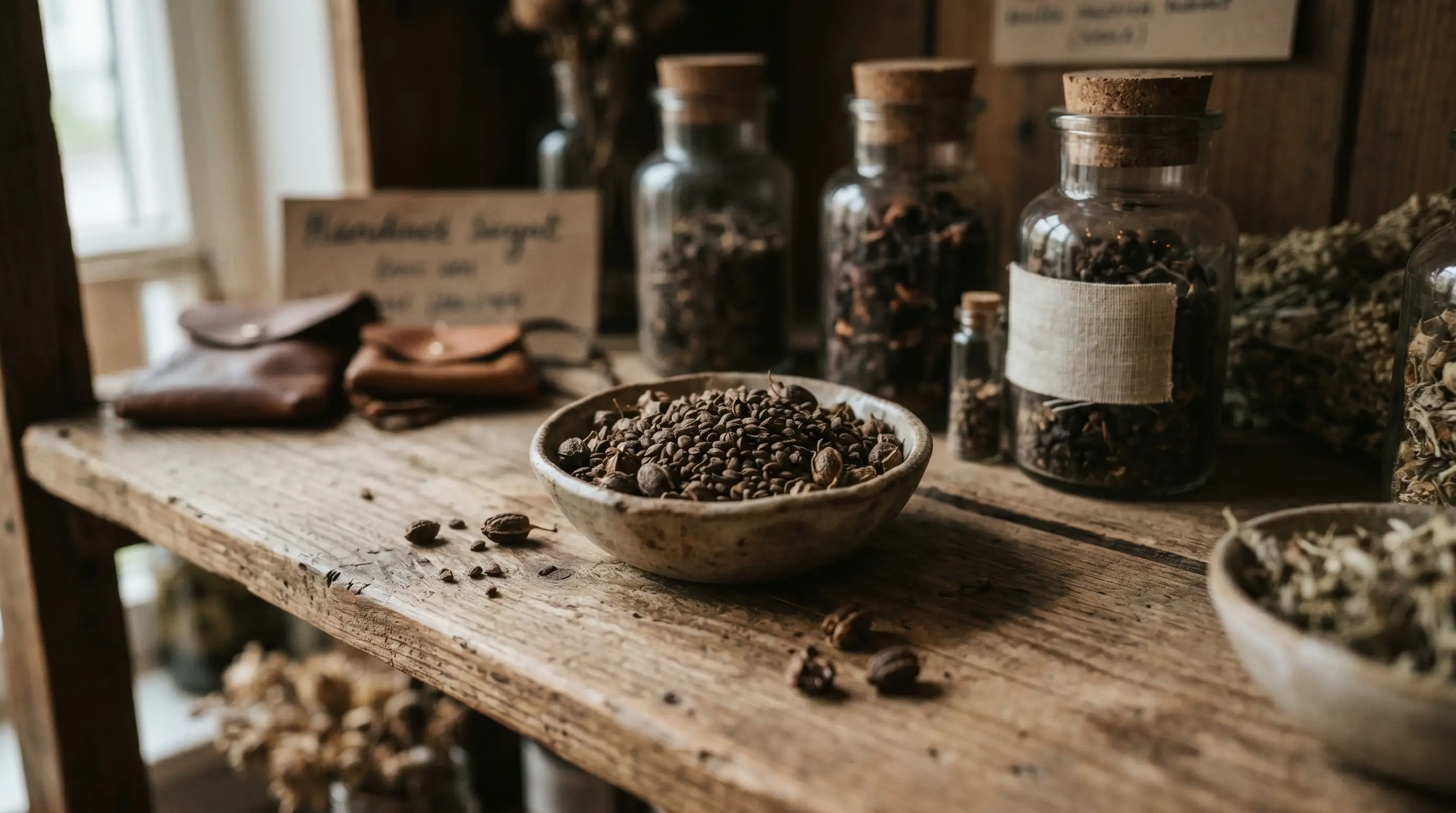
Syrian Rue

Definition
Peganum harmala, a plant containing harmala alkaloids (harmine, harmaline) that act as MAO inhibitors. Commonly sold in Dutch smartshops as seeds or extract, often used in combination with DMT-containing plants to create ayahuasca analogs. The harmala alkaloids extend and intensify the effects of tryptamines by preventing their breakdown in the digestive system.
In Depth
Syrian Rue (Peganum harmala) is a perennial shrub native to the Mediterranean region and Central Asia, highly valued in the Dutch smartshop scene for its unique pharmacological properties. The plant contains potent harmala alkaloids, primarily harmine, harmaline, and tetrahydroharmine, which function as reversible monoamine oxidase inhibitors (MAOIs). These compounds have made Syrian Rue seeds and extracts essential components in the preparation of ayahuasca analogs and other psychoactive combinations. In Dutch smartshops, Syrian Rue is typically sold as whole seeds, ground powder, or concentrated extracts, often marketed alongside DMT-containing plants like Mimosa hostilis or Psychotria viridis. The plant's primary significance lies in its ability to inhibit the MAO-A enzyme, which normally breaks down tryptamine compounds like DMT, psilocin, and 5-MeO-DMT in the digestive system. When consumed before or alongside these substances, Syrian Rue dramatically extends their duration and intensifies their effects, transforming what would otherwise be inactive oral doses into powerful psychedelic experiences. This mechanism is identical to how traditional ayahuasca works, where Banisteriopsis caapi vine serves the same MAOI function. Beyond its use in psychedelic combinations, Syrian Rue has a rich history in traditional medicine across various cultures, where it has been used for treating depression, anxiety, and various ailments. The seeds contain approximately 2-7% harmala alkaloids by weight, making them a concentrated source of these compounds. In the Netherlands, Syrian Rue occupies a legal gray area – while the plant itself is not explicitly controlled, its use in combination with other substances may fall under drug preparation laws. Dutch smartshops typically provide detailed information about proper preparation methods, dosing guidelines, and safety considerations when selling Syrian Rue products. The plant requires careful handling and respect, as MAOI interactions can be dangerous when combined with certain medications, foods, or other substances. Experienced users often prepare Syrian Rue tea by boiling the seeds for extended periods, filtering the liquid, and consuming it 30-60 minutes before taking other psychoactive compounds. The effects of Syrian Rue alone include mild sedation, dream enhancement, and subtle mood changes, but its true value lies in its synergistic properties with other substances.
Etymology
The name 'Syrian Rue' derives from its historical association with Syria and the broader Levantine region, though the plant is not actually related to true rue (Ruta species). The scientific name Peganum harmala comes from the Greek 'peganum' meaning a type of plant, and 'harmala,' the Arabic name for the species.
Examples
“The smartshop customer asked about Syrian Rue seeds to create a pharmahuasca blend with Mimosa hostilis root bark.”
“Many experienced psychonauts consider Syrian Rue essential for activating orally inactive tryptamines.”
“The herbalist explained that Syrian Rue requires a strict dietary protocol due to its MAOI properties.”
“Dutch smartshops often sell Syrian Rue alongside detailed preparation guides and safety warnings.”
“The traditional use of Syrian Rue in Middle Eastern folk medicine spans thousands of years.”
Common Misconceptions
Syrian Rue is psychoactive on its own - while it has mild effects, its primary value is as an MAOI enhancer
All harmala-containing plants are interchangeable - different species have varying alkaloid profiles and potencies
Syrian Rue is completely safe because it's natural - MAOI interactions can be dangerous with many substances
The plant is called 'rue' because it's related to garden rue - they are completely different plant families
Practical Tips
Always research MAOI dietary restrictions and drug interactions before using Syrian Rue products
Start with small amounts to assess individual sensitivity to harmala alkaloids
Purchase from reputable Dutch smartshops that provide detailed preparation instructions and safety information
Store Syrian Rue seeds in a cool, dry place to maintain alkaloid potency over time
Consider consulting experienced users or harm reduction resources before attempting ayahuasca analogs
Frequently Asked Questions
Is Syrian Rue legal in the Netherlands?▾
Syrian Rue seeds and plant material are generally legal to purchase and possess in the Netherlands. However, preparing it for consumption in combination with other substances may fall under drug preparation laws, so users should be aware of legal implications.
How long do Syrian Rue effects last?▾
Syrian Rue's MAOI effects typically last 4-6 hours, though this can vary based on dosage and individual metabolism. The plant's influence on other substances can extend their duration significantly.
What foods should be avoided when using Syrian Rue?▾
MAOI interactions require avoiding tyramine-rich foods like aged cheeses, cured meats, fermented products, and certain beverages. A strict dietary protocol should be followed for 24 hours before and after use.
Can Syrian Rue be used alone for psychoactive effects?▾
While Syrian Rue has mild psychoactive properties including sedation and dream enhancement, it's primarily valued for its ability to potentiate other tryptamine compounds rather than as a standalone psychoactive.
How is Syrian Rue typically prepared in Dutch smartshops?▾
Dutch smartshops commonly sell Syrian Rue as whole seeds, ground powder, or concentrated extracts. Seeds are often prepared as a tea through extended boiling and straining processes.
What's the difference between Syrian Rue and Banisteriopsis caapi?▾
Both contain harmala alkaloids and serve similar MAOI functions, but Syrian Rue is more potent and concentrated. Banisteriopsis caapi is traditional to ayahuasca, while Syrian Rue is used in modern ayahuasca analogs.
Are there any medical contraindications for Syrian Rue?▾
Syrian Rue should not be used with antidepressants, certain medications, or by people with specific medical conditions. Always consult healthcare providers and research interactions thoroughly before use.
How much Syrian Rue is typically used in preparations?▾
Dosages vary widely, but common ranges are 2-4 grams of seeds for MAOI effects. Dutch smartshops typically provide specific dosing guidelines with their products, and starting with lower amounts is always recommended.