Kratom

Definition
A tropical tree (Mitragyna speciosa) from Southeast Asia. Its leaves contain mitragynine, which has stimulant effects at low doses and sedative/pain-relieving effects at higher doses. Legal and widely available in Dutch smartshops.
In Depth
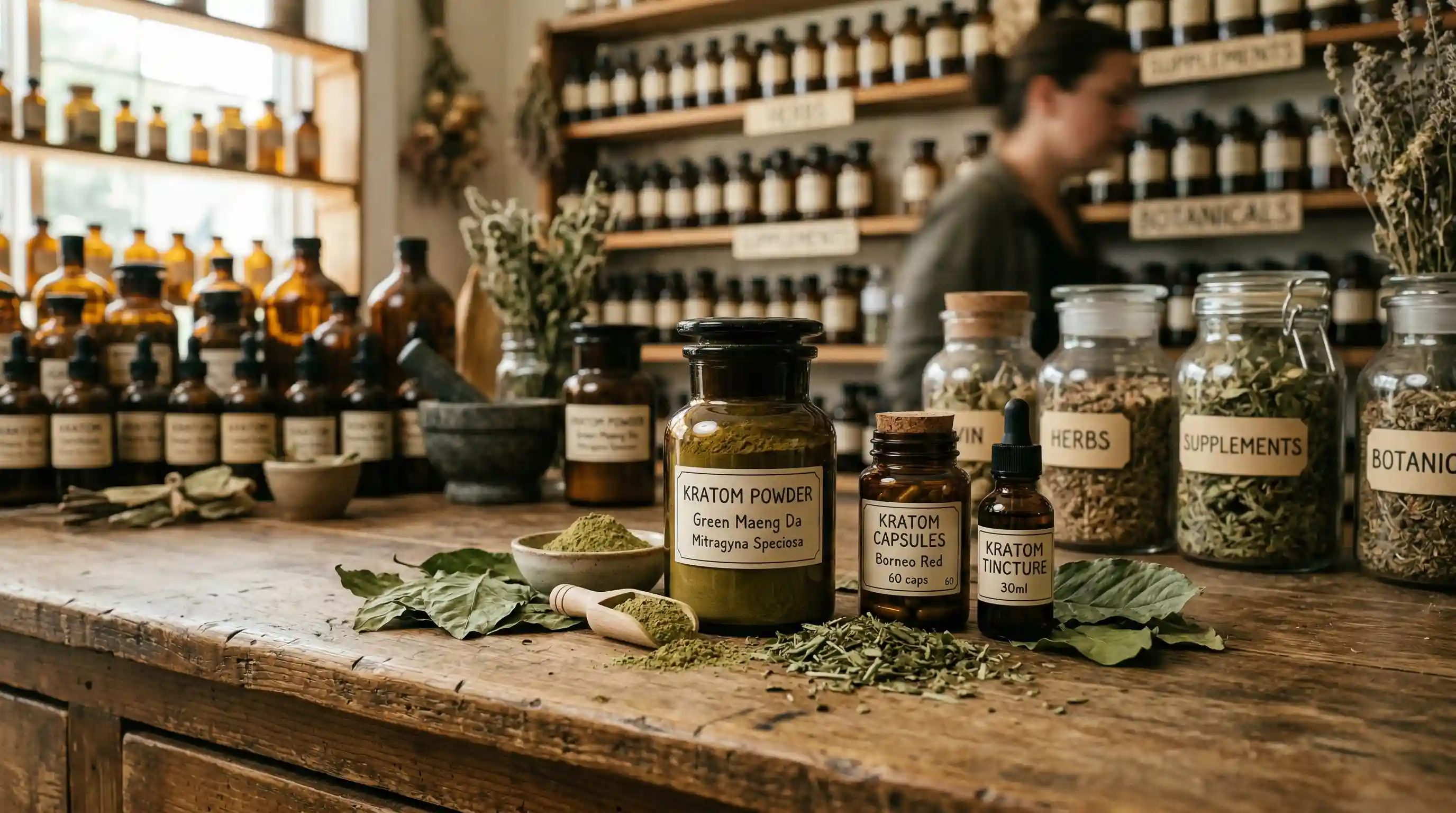
Kratom (Mitragyna speciosa) is a tropical evergreen tree native to Southeast Asia, particularly Thailand, Malaysia, Myanmar, and Papua New Guinea. The tree belongs to the coffee family (Rubiaceae) and can grow up to 25 meters tall in its natural habitat. For centuries, indigenous populations have traditionally chewed kratom leaves or brewed them into tea for their psychoactive properties, using the plant to combat fatigue, manage pain, and enhance work productivity. The primary active compounds in kratom are mitragynine and 7-hydroxymitragynine, alkaloids that interact with opioid receptors in the brain, producing effects that vary significantly based on dosage. At lower doses (1-5 grams), kratom typically acts as a stimulant, providing increased energy, alertness, and sociability similar to caffeine but more pronounced. Users often report enhanced focus, motivation, and mood elevation. At moderate to higher doses (5-15 grams), kratom's effects shift toward sedation, pain relief, and euphoria, with some users comparing the experience to mild opioids. In the Netherlands, kratom occupies a unique position within the legal psychoactive landscape. Unlike many countries where kratom faces regulatory restrictions or outright bans, the Netherlands maintains a relatively permissive stance, allowing kratom to be sold legally in smartshops throughout the country. This accessibility has made Dutch smartshops popular destinations for kratom enthusiasts from neighboring countries with stricter regulations. Dutch smartshops typically offer various kratom strains, each purported to have distinct effects profiles. Red vein varieties are generally associated with relaxation and pain relief, white veins with energy and focus, and green veins with balanced effects. Popular strains include Maeng Da, Bali, Thai, and Malay varieties, though the actual differences between strains remain scientifically unverified. Kratom is commonly available in multiple forms: dried leaf powder, capsules, extracts, and occasionally fresh or dried whole leaves. The powder form remains most popular due to its versatility and cost-effectiveness. Users typically consume kratom by mixing the powder with water or juice, though some prefer the 'toss and wash' method of placing powder directly in the mouth followed by liquid. The legal status and widespread availability in Dutch smartshops have made the Netherlands a significant hub for kratom research and commerce within Europe. However, this accessibility comes with important considerations regarding responsible use, as kratom can be habit-forming and may interact with other substances or medications.
Etymology
The name 'kratom' derives from the Thai word 'กระท่อม' (krathom), which is the traditional Thai name for the Mitragyna speciosa tree. The scientific name 'Mitragyna' was given by Dutch botanist Pieter Korthals, who named it after the shape of the leaves' stigmas, which resemble a bishop's mitre.
Examples
“Many visitors to Amsterdam specifically seek out smartshops that carry high-quality kratom strains from reputable suppliers.”
“The smartshop owner explained that red vein kratom is typically preferred by customers seeking relaxation, while white vein varieties appeal to those wanting energy enhancement.”
“After trying various kratom products, she found that green Malay provided the perfect balance of mood enhancement and pain relief for her chronic condition.”
“Dutch kratom vendors often provide detailed information about alkaloid content and recommended dosages to ensure customer safety.”
“The popularity of kratom in Netherlands smartshops has led to increased quality control and standardization among suppliers.”
Common Misconceptions
All kratom strains have identical effects - in reality, different strains and vein colors can produce notably different experiences.
Kratom is completely safe because it's natural and legal - while legal in the Netherlands, kratom can still cause dependence and side effects.
Higher doses always produce better effects - kratom has a unique dose-response curve where more isn't necessarily better.
Kratom extracts are always superior to powder - extracts may be more potent but can increase tolerance and dependence risk more quickly.
Practical Tips
Start with low doses (1-2 grams) to assess your individual sensitivity, as kratom effects vary significantly between users.
Purchase from reputable Dutch smartshops that provide lab testing results and clear strain information.
Avoid daily use to prevent tolerance and potential dependence - limit consumption to 2-3 times per week maximum.
Stay hydrated when using kratom, as it can cause dehydration, and avoid mixing with alcohol or other depressants.
Keep a usage journal to track doses, strains, and effects to find your optimal kratom experience while monitoring for signs of tolerance.
Frequently Asked Questions
Is kratom legal in the Netherlands?▾
Yes, kratom is completely legal in the Netherlands and can be purchased openly in smartshops throughout the country. The Netherlands has not scheduled kratom under controlled substances legislation, making it one of the few European countries where kratom remains fully accessible.
What's the difference between kratom strains?▾
Kratom strains are typically categorized by vein color and origin region. Red veins are generally more sedating and pain-relieving, white veins more energizing, and green veins offer balanced effects. However, scientific evidence for distinct strain differences is limited, and effects can vary significantly between suppliers and individual batches.
How much kratom should I take as a beginner?▾
Beginners should start with 1-2 grams of kratom powder to assess individual sensitivity. Effects typically begin within 30-60 minutes and can last 4-6 hours. It's important to wait at least 2 hours before taking additional doses, as kratom's effects can be delayed.
Can kratom be addictive?▾
Yes, kratom has addiction potential, particularly with daily use or high doses. Regular users may develop tolerance and experience withdrawal symptoms when stopping. To minimize addiction risk, limit use to 2-3 times per week maximum and avoid daily consumption.
What are the side effects of kratom?▾
Common kratom side effects include nausea, constipation, dry mouth, dizziness, and drowsiness. At higher doses, users may experience vomiting, confusion, or respiratory depression. Long-term heavy use can lead to liver problems, weight loss, and psychological dependence.
Can I travel with kratom from the Netherlands?▾
Kratom legality varies significantly between countries. While legal in the Netherlands, kratom is banned or controlled in many other European countries, the UK, and several US states. Always research destination laws before traveling with kratom to avoid legal complications.
How should kratom be stored?▾
Store kratom powder in a cool, dry place away from direct sunlight, preferably in airtight containers. Proper storage can maintain kratom's potency for 1-3 years. Avoid storing in humid environments like bathrooms, as moisture can lead to mold growth and alkaloid degradation.
What's the best way to consume kratom powder?▾
The most common method is mixing kratom powder with water, juice, or smoothies to mask the bitter taste. Some users prefer the 'toss and wash' method (placing powder in mouth followed by liquid), while others use capsules for convenience. Taking kratom on an empty stomach typically produces stronger effects.