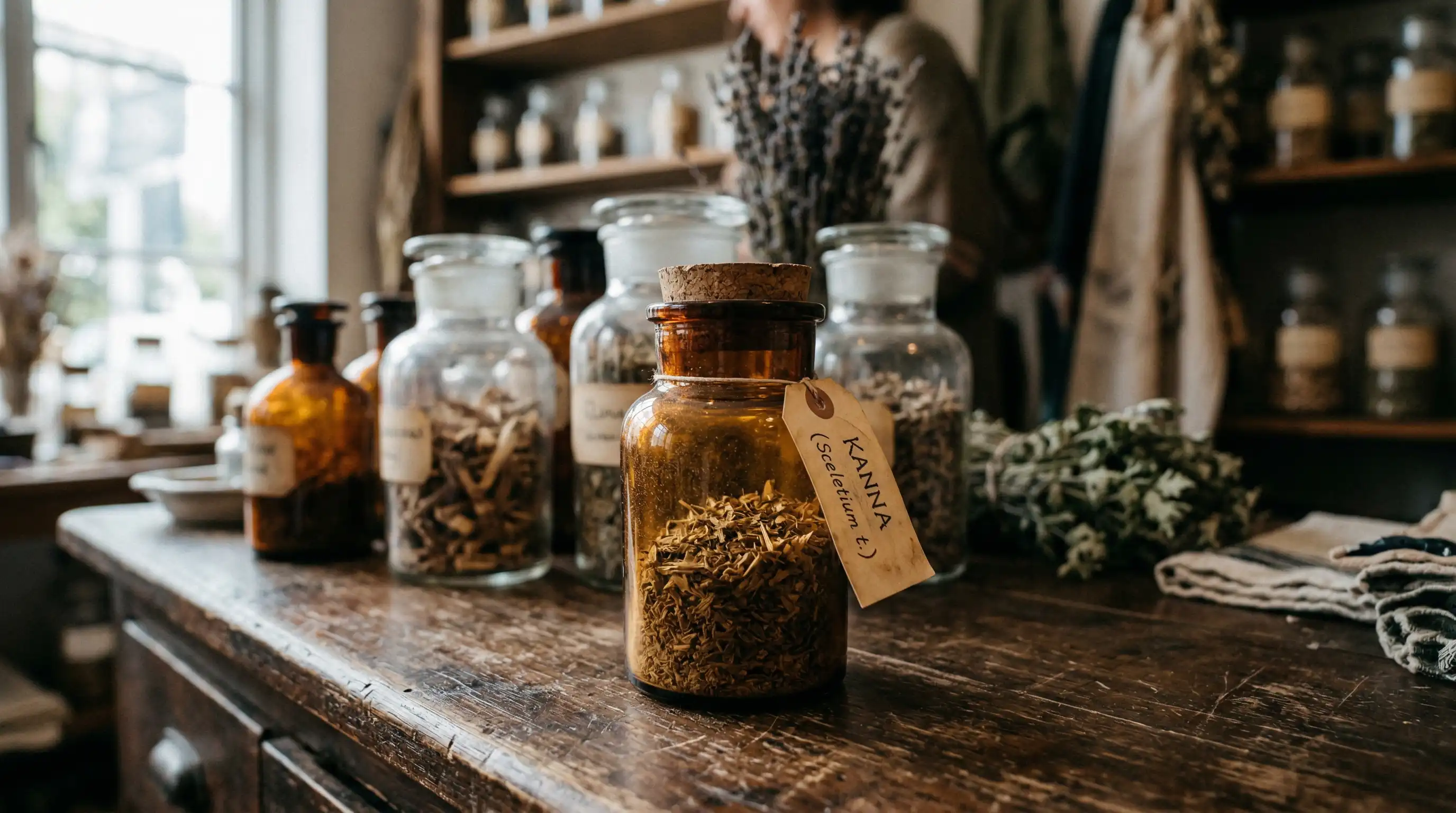
Kanna

Definition
A succulent plant (Sceletium tortuosum) from South Africa containing mesembrine, which acts as a serotonin reuptake inhibitor. Used for mood enhancement and anxiety reduction. Available in Dutch smartshops.
In Depth
Kanna, scientifically known as Sceletium tortuosum, is a succulent plant native to South Africa that has been used for centuries by indigenous Khoikhoi and San peoples for its mood-enhancing and stress-relieving properties. The plant contains several psychoactive alkaloids, most notably mesembrine, which functions as a selective serotonin reuptake inhibitor (SSRI), similar to conventional antidepressant medications but with a natural origin and different effect profile. In the Dutch smartshop scene, kanna has gained significant popularity as a legal alternative for mood enhancement, anxiety reduction, and mild euphoric effects without the intense psychoactive experiences associated with classical psychedelics. The plant material is typically processed into various forms including dried leaf powder, standardized extracts, and concentrated preparations that can be smoked, chewed, made into tea, or taken sublingually. Dutch smartshops commonly stock kanna products ranging from traditional dried plant material to modern standardized extracts containing specific concentrations of active alkaloids. The effects of kanna are generally described as calming yet uplifting, providing users with reduced anxiety, enhanced mood, and increased sociability without significant impairment of cognitive function. Unlike many other psychoactive substances, kanna is considered to have a favorable safety profile with minimal risk of dependence or serious adverse effects when used responsibly. The substance has attracted attention from researchers studying natural alternatives to synthetic antidepressants, particularly for its unique mechanism of action that combines serotonin reuptake inhibition with additional effects on other neurotransmitter systems. In the Netherlands, kanna occupies a unique position in the legal landscape of psychoactive substances, being readily available in smartshops while many other mood-altering substances face restrictions. This accessibility has made it a popular choice among individuals seeking natural mood support, those interested in ethnobotanical traditions, and people looking for alternatives to conventional pharmaceuticals. The growing interest in kanna reflects broader trends in the Dutch smartshop culture toward natural, plant-based substances that offer therapeutic benefits with lower risk profiles compared to synthetic alternatives.
Etymology
The name 'kanna' derives from the Khoikhoi word meaning 'something to chew,' reflecting the traditional method of consumption by indigenous South African peoples. The scientific name Sceletium tortuosum refers to the plant's skeletal-like dried appearance and twisted growth pattern.
Examples
“Many Dutch smartshop customers choose kanna as a natural alternative to synthetic mood enhancers.”
“The bartender recommended trying kanna tea before the evening's social gathering to reduce anxiety.”
“After researching various ethnobotanicals, she decided to start with kanna due to its gentle effects and good safety profile.”
“The smartshop's kanna extract contained standardized levels of mesembrine for consistent dosing.”
“He found that smoking kanna provided faster onset compared to making it into tea.”
Common Misconceptions
Kanna produces intense psychedelic effects similar to psilocybin or LSD
All kanna products have the same potency regardless of preparation method
Kanna is addictive and causes withdrawal symptoms like synthetic antidepressants
The plant can be used safely in combination with any other medications without consideration
Practical Tips
Start with small doses to assess individual sensitivity, as effects can vary significantly between people
Choose reputable smartshops that provide standardized extracts with known alkaloid concentrations
Avoid combining kanna with prescription antidepressants or MAOIs without consulting healthcare professionals
Store kanna products in cool, dry conditions away from direct sunlight to preserve potency
Consider different consumption methods (smoking, tea, sublingual) to find what works best for your needs
Frequently Asked Questions
Is kanna legal in the Netherlands?▾
Yes, kanna is completely legal in the Netherlands and is widely available in smartshops throughout the country. It is not controlled under Dutch drug laws and can be purchased, possessed, and used without legal restrictions.
How long do kanna effects last?▾
Kanna effects typically last 1-3 hours depending on the consumption method and dosage. Smoking or sublingual use provides faster onset but shorter duration, while tea or oral consumption offers longer-lasting but more gradual effects.
Can you overdose on kanna?▾
While kanna has a good safety profile, taking excessive amounts can cause unpleasant side effects like nausea, headaches, or anxiety. Fatal overdoses are not documented, but responsible dosing is always recommended for optimal experience.
What does kanna feel like?▾
Users typically report feeling relaxed, uplifted, and more sociable with reduced anxiety and stress. The effects are generally subtle and functional, allowing normal daily activities while providing mood enhancement.
Can kanna be detected in drug tests?▾
Standard drug tests do not screen for kanna alkaloids like mesembrine. However, specialized tests could potentially detect these compounds if specifically designed to do so, though this is extremely rare in practice.
Is it safe to drive after using kanna?▾
While kanna doesn't typically cause significant impairment, individual reactions vary and some users may experience mild sedation. It's advisable to avoid driving until you understand how kanna affects you personally.
How much kanna should beginners take?▾
Beginners should start with 50-100mg of standardized extract or 200-500mg of dried plant material. Effects can be assessed after 30-60 minutes, and dosage can be gradually increased if needed for subsequent uses.
Can kanna help with depression?▾
While kanna contains compounds that affect serotonin levels and many users report mood benefits, it should not be considered a replacement for professional mental health treatment. Consult healthcare providers for depression management.