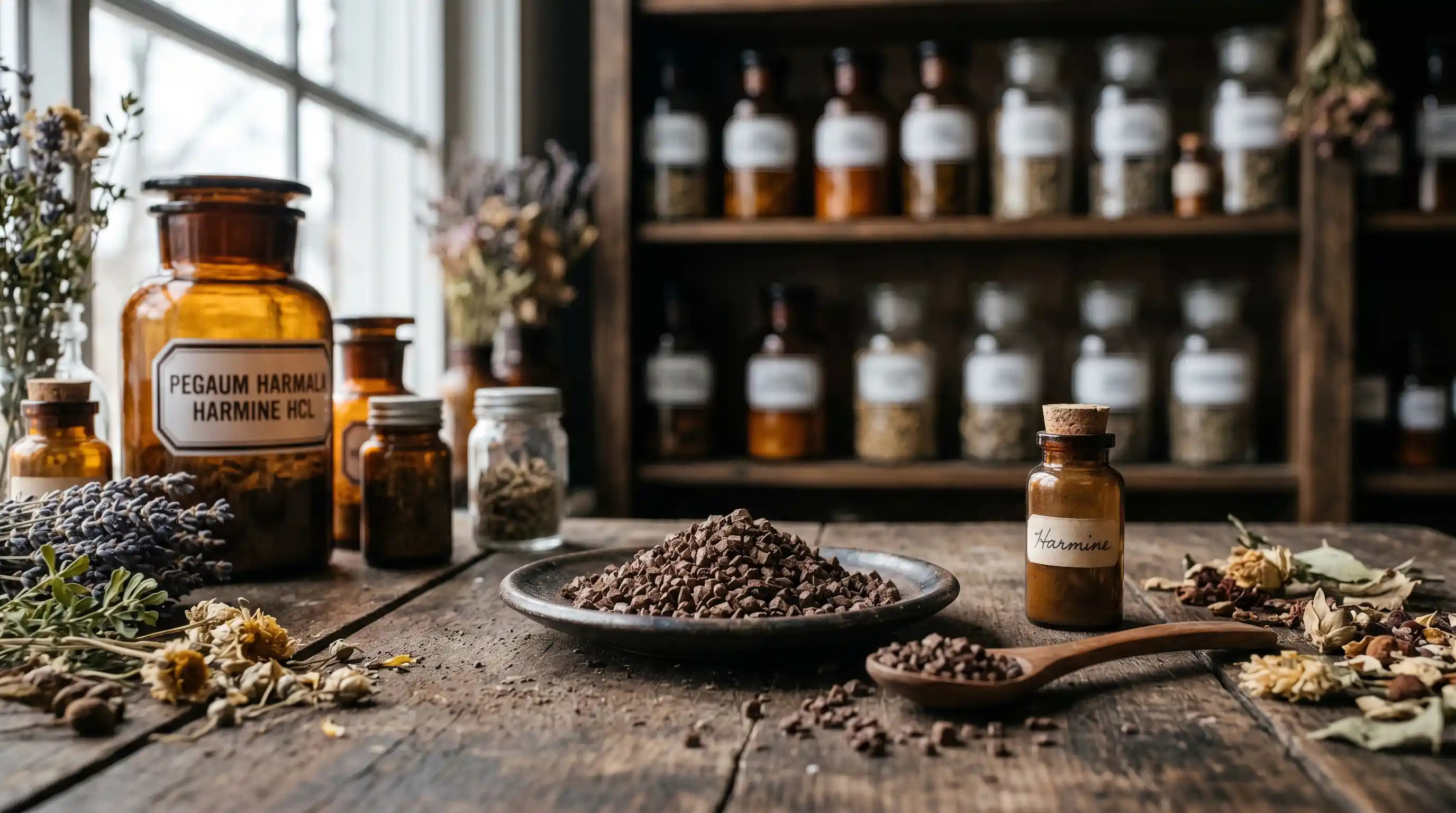
Harmine

Definition
A beta-carboline alkaloid found in Syrian rue and other plants, commonly sold in Dutch smartshops as a natural MAOI (monoamine oxidase inhibitor). It's often used in combination with DMT-containing plants to create ayahuasca-like brews, as it prevents the breakdown of DMT in the digestive system. Harmine is legal in the Netherlands and popular among psychonauts for its reversible MAO-A inhibition properties.
In Depth
Harmine is a naturally occurring beta-carboline alkaloid that serves as a powerful monoamine oxidase inhibitor (MAOI), primarily found in the seeds of Peganum harmala, commonly known as Syrian rue. This compound has gained significant attention in the Dutch smartshop scene due to its unique pharmacological properties and legal status in the Netherlands. As a reversible inhibitor of monoamine oxidase-A (MAO-A), harmine prevents the breakdown of various neurotransmitters and psychoactive compounds, making it an essential component in traditional and modern psychedelic practices. The primary appeal of harmine lies in its ability to potentiate and extend the effects of other psychoactive substances, particularly tryptamines like DMT. When consumed orally, DMT is typically rendered inactive by MAO enzymes in the digestive system. However, when combined with harmine, the DMT becomes orally active, creating what many refer to as 'pharmahuasca' or synthetic ayahuasca. This combination has made harmine a cornerstone substance for psychonauts seeking to explore altered states of consciousness through legal means in the Netherlands. Dutch smartshops commonly stock harmine in various forms, including pure alkaloid extracts, Syrian rue seeds, and pre-prepared capsules. The substance is particularly valued for its relatively predictable effects and safety profile when used responsibly. Unlike irreversible MAOIs used in pharmaceutical applications, harmine's inhibition is temporary and reversible, typically lasting 4-6 hours. This characteristic makes it more suitable for recreational and spiritual use, as users don't need to maintain long-term dietary restrictions. Beyond its use as a MAOI, harmine possesses mild psychoactive properties on its own, often described as producing a dreamy, contemplative state with enhanced visual perception and introspection. Some users report that harmine alone can induce vivid dreams and a sense of mental clarity. The compound has also been studied for potential therapeutic applications, including neuroprotective effects and possible benefits for neurodegenerative conditions. In the context of Dutch smartshop culture, harmine represents the intersection of traditional plant medicine and modern psychedelic exploration. Many customers seek it out as part of their journey into plant-based consciousness exploration, often after researching ayahuasca and its traditional uses. The legal availability of harmine in the Netherlands has made it accessible to those interested in exploring these practices without the legal risks associated with other substances. However, the use of harmine requires careful consideration and preparation, as MAOIs can interact dangerously with certain foods, medications, and other substances. Responsible smartshops typically provide comprehensive information about these interactions and emphasize the importance of proper preparation and set-and-setting considerations.
Etymology
The name 'harmine' derives from Peganum harmala, the scientific name for Syrian rue, the plant from which it was first isolated in 1841. The term 'harmala' itself comes from the Arabic word 'harmal,' reflecting the plant's historical use in Middle Eastern traditional medicine.
Examples
“The smartshop customer asked about harmine's role as a natural MAOI for creating ayahuasca-like experiences.”
“Many psychonauts in Amsterdam prefer harmine over synthetic MAOIs due to its reversible inhibition properties.”
“The herbalist explained that harmine from Syrian rue seeds requires careful preparation and dosing.”
“Dutch smartshops often stock harmine alongside DMT-containing plants for customers interested in pharmahuasca.”
“Before using harmine, experienced users always research potential food and drug interactions thoroughly.”
Common Misconceptions
Harmine is the same as harmala alkaloids - it's actually just one of several beta-carbolines found in Syrian rue
Harmine is completely safe to combine with any substance - it can have dangerous interactions with many medications and foods
All MAOIs work the same way - harmine is specifically a reversible MAO-A inhibitor with unique properties
Harmine produces strong psychedelic effects on its own - its primary role is as a potentiator for other substances
Practical Tips
Always research MAOI dietary restrictions before using harmine, avoiding tyramine-rich foods for 24 hours before and after use
Start with low doses when first experimenting with harmine, as individual sensitivity can vary significantly
Purchase harmine from reputable Dutch smartshops that provide detailed information about purity and dosing guidelines
Never combine harmine with antidepressants, stimulants, or other medications without consulting healthcare professionals
Prepare your set and setting carefully, as harmine can intensify and prolong psychedelic experiences significantly
Frequently Asked Questions
Is harmine legal in the Netherlands?▾
Yes, harmine is completely legal in the Netherlands and is commonly sold in smartshops. It's classified as a natural plant alkaloid and faces no legal restrictions, making it accessible for research and personal use.
How long do harmine effects last?▾
Harmine's MAOI effects typically last 4-6 hours, though this can vary based on dosage and individual metabolism. The compound's inhibition of MAO-A enzymes is reversible, meaning normal enzyme function gradually returns.
Can you use harmine alone or does it need to be combined with other substances?▾
Harmine can be used alone and produces mild psychoactive effects including enhanced dreams, introspection, and subtle visual changes. However, it's most commonly used as a potentiator for other substances like DMT-containing plants.
What foods should you avoid when using harmine?▾
When using harmine, avoid tyramine-rich foods including aged cheeses, cured meats, fermented foods, and certain alcoholic beverages. These interactions can cause dangerous blood pressure spikes due to harmine's MAOI properties.
Where can you buy harmine in Dutch smartshops?▾
Most established Dutch smartshops carry harmine in various forms, including pure alkaloid extracts, Syrian rue seeds, and prepared capsules. Look for shops that provide detailed product information and usage guidelines.
How much harmine should beginners use?▾
Beginners should start with low doses, typically 100-150mg of harmine extract, and always under proper guidance. Individual sensitivity varies greatly, and it's crucial to understand MAOI interactions before use.
What's the difference between harmine and pharmaceutical MAOIs?▾
Harmine is a reversible MAO-A inhibitor with a shorter duration of action compared to pharmaceutical MAOIs. This makes it more suitable for occasional use without requiring long-term dietary restrictions.
Can harmine interact with medications?▾
Yes, harmine can interact dangerously with many medications including antidepressants, stimulants, and certain pain medications. Always consult healthcare professionals before combining harmine with any prescription drugs.