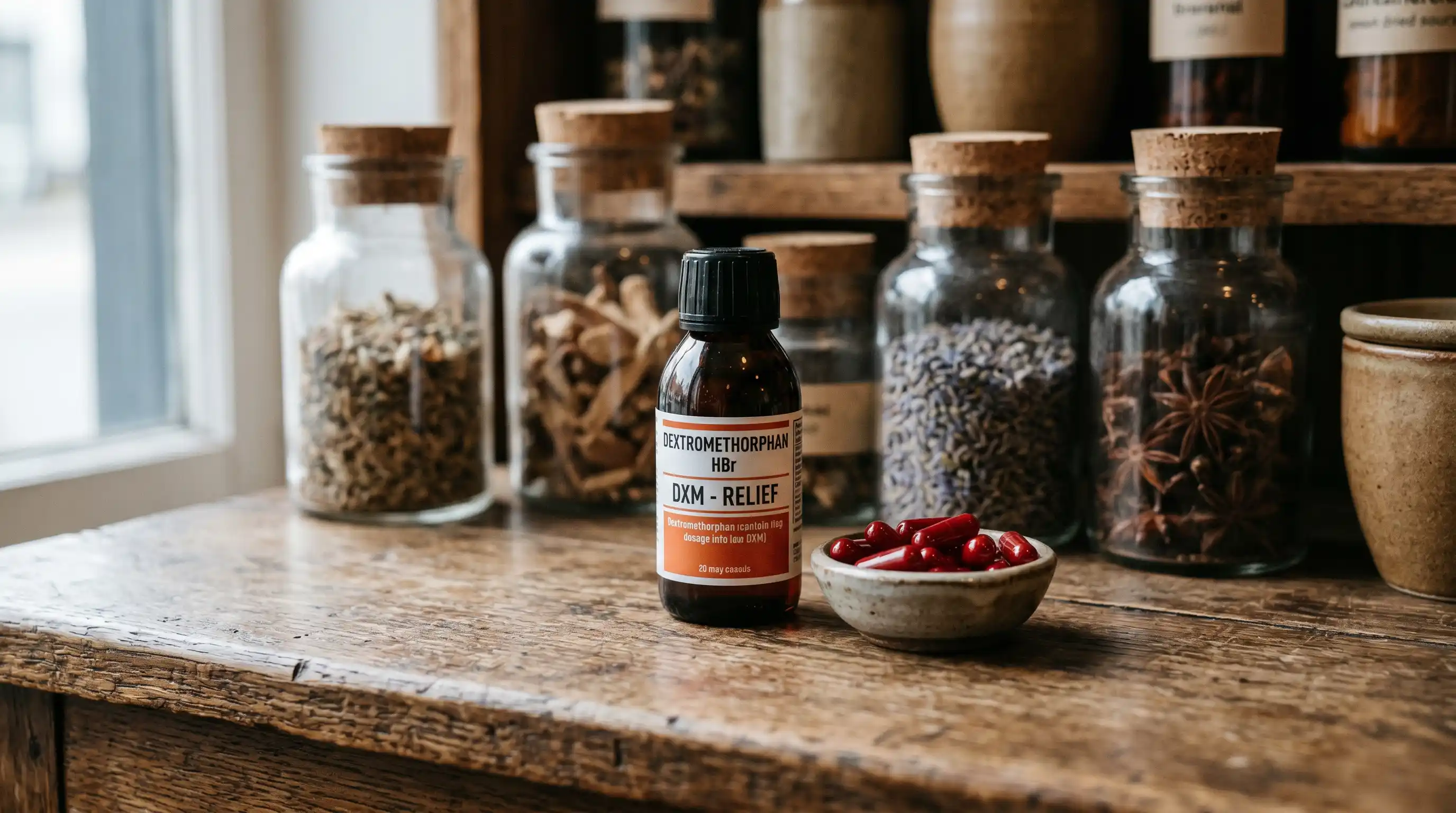
Dextromethorphan (DXM)

Definition
A dissociative compound found in cough suppressants that produces psychoactive effects at higher doses. While not typically sold in Dutch smartshops, it's relevant to harm reduction discussions due to its accessibility and potential for misuse. Understanding DXM helps smartshop customers make informed decisions about legal alternatives.
In Depth
Dextromethorphan (DXM) is a synthetic dissociative compound primarily found in over-the-counter cough suppressants and cold medications. Originally developed as a non-addictive alternative to codeine for cough suppression, DXM belongs to the morphinan class of compounds and acts as an NMDA receptor antagonist. At therapeutic doses (15-30mg), it effectively suppresses cough reflexes, but at significantly higher doses (100-1500mg), it produces profound psychoactive effects including dissociation, euphoria, and altered perception of reality. While DXM is not typically sold in Dutch smartshops due to its classification as a medicine rather than a natural psychoactive substance, understanding its effects and risks is crucial for harm reduction education within the smartshop community. The compound operates through multiple mechanisms, primarily blocking NMDA receptors in the brain while also affecting serotonin and dopamine reuptake. This complex pharmacology creates dose-dependent effects ranging from mild stimulation at low recreational doses to complete dissociative experiences at higher amounts. The accessibility of DXM through common cough medicines makes it particularly relevant to harm reduction discussions, as individuals seeking psychoactive experiences may encounter it before discovering safer, legal alternatives available in smartshops. Dutch smartshop culture emphasizes education about all psychoactive substances, including those not directly sold, to help customers make informed decisions about their consciousness exploration journey. DXM's effects are often described in plateaus, with each level representing different intensities of dissociation and psychoactive experience. The first plateau resembles mild intoxication, while higher plateaus can produce out-of-body experiences and profound alterations in consciousness similar to ketamine or other dissociatives. However, unlike many natural psychedelics available in smartshops, DXM carries significant health risks including potential for physical dependence, dangerous interactions with other medications, and serious side effects when combined with certain substances. The compound's long duration of action (6-8 hours) and potential for uncomfortable physical side effects make it less appealing than many alternatives found in the regulated smartshop environment. Understanding DXM helps smartshop customers appreciate the advantages of natural, traditional psychoactive plants and compounds that have been used safely for centuries. This knowledge also supports harm reduction by helping individuals recognize the signs of DXM use and understand why exploring consciousness through traditional, natural substances available in smartshops may offer safer and more meaningful experiences.
Etymology
The name dextromethorphan derives from its chemical structure, combining 'dextro' (meaning right-handed, referring to its molecular orientation) with 'methorphan' (indicating its relationship to the morphinan family of compounds). It was first synthesized in 1954 by scientists at Hoffmann-La Roche as part of research into non-addictive cough suppressants.
Examples
“While DXM isn't sold in Dutch smartshops, understanding its effects helps customers appreciate why natural alternatives like salvia divinorum offer safer dissociative experiences.”
“The smartshop owner explained that unlike DXM found in cough medicines, the legal psychoactive plants they sell have traditional use histories and established safety profiles.”
“Harm reduction workshops at Amsterdam smartshops often discuss DXM to educate customers about the risks of easily accessible substances versus regulated natural products.”
“Many people discover smartshops after negative experiences with substances like DXM, seeking safer alternatives for consciousness exploration.”
“The pharmacist noted that DXM interactions with other medications make natural smartshop products a preferable option for many customers.”
Common Misconceptions
DXM is completely safe because it's available over-the-counter in cough medicines
All dissociative substances work the same way and carry similar risks
DXM is a natural psychedelic like those found in smartshops
Higher doses of DXM simply produce stronger versions of the same effects
Practical Tips
If customers ask about dissociative experiences, direct them toward legal alternatives like salvia divinorum that are specifically sold for such purposes
Educate customers about the importance of choosing substances with traditional use histories over synthetic compounds found in medicines
Emphasize that smartshop products undergo quality control and proper dosing guidelines, unlike repurposed medications
Recommend customers research any substance thoroughly and consider starting with milder, natural options available in your shop
Always advise customers to avoid combining any psychoactive substances, especially those with unknown interactions like DXM
Frequently Asked Questions
Is DXM legal in the Netherlands?▾
DXM is legal as a medicine in cough suppressants but is regulated as a pharmaceutical product. It's not sold in smartshops as it's classified as a medicine rather than a natural psychoactive substance.
Why don't Dutch smartshops sell DXM products?▾
Smartshops focus on natural, traditional psychoactive substances with established cultural use. DXM is a synthetic pharmaceutical compound that doesn't fit the natural product philosophy of the smartshop industry.
What are safer alternatives to DXM for dissociative experiences?▾
Legal alternatives available in Dutch smartshops include salvia divinorum, which provides dissociative effects with a shorter duration and established traditional use. Always research proper dosing and set/setting before use.
Can DXM be detected in drug tests?▾
Yes, DXM can trigger false positives for PCP and other substances in some drug tests. It can also be specifically tested for and may remain detectable for several days after use.
What are the main risks of using DXM recreationally?▾
Recreational DXM use carries risks including dangerous interactions with other medications, potential for psychological dependence, and serious side effects at high doses. Unlike regulated smartshop products, cough medicines contain additional active ingredients that can be harmful.
How does DXM compare to natural psychedelics sold in smartshops?▾
Unlike natural psychedelics with centuries of traditional use, DXM is a synthetic compound designed for medical purposes. Natural alternatives typically have better-understood effects, traditional preparation methods, and established safety guidelines.
Is it safe to combine DXM with other substances?▾
No, DXM has dangerous interactions with many substances including antidepressants, MAOIs, and other medications. This unpredictability is one reason why natural smartshop products with known interaction profiles are preferred for safe exploration.