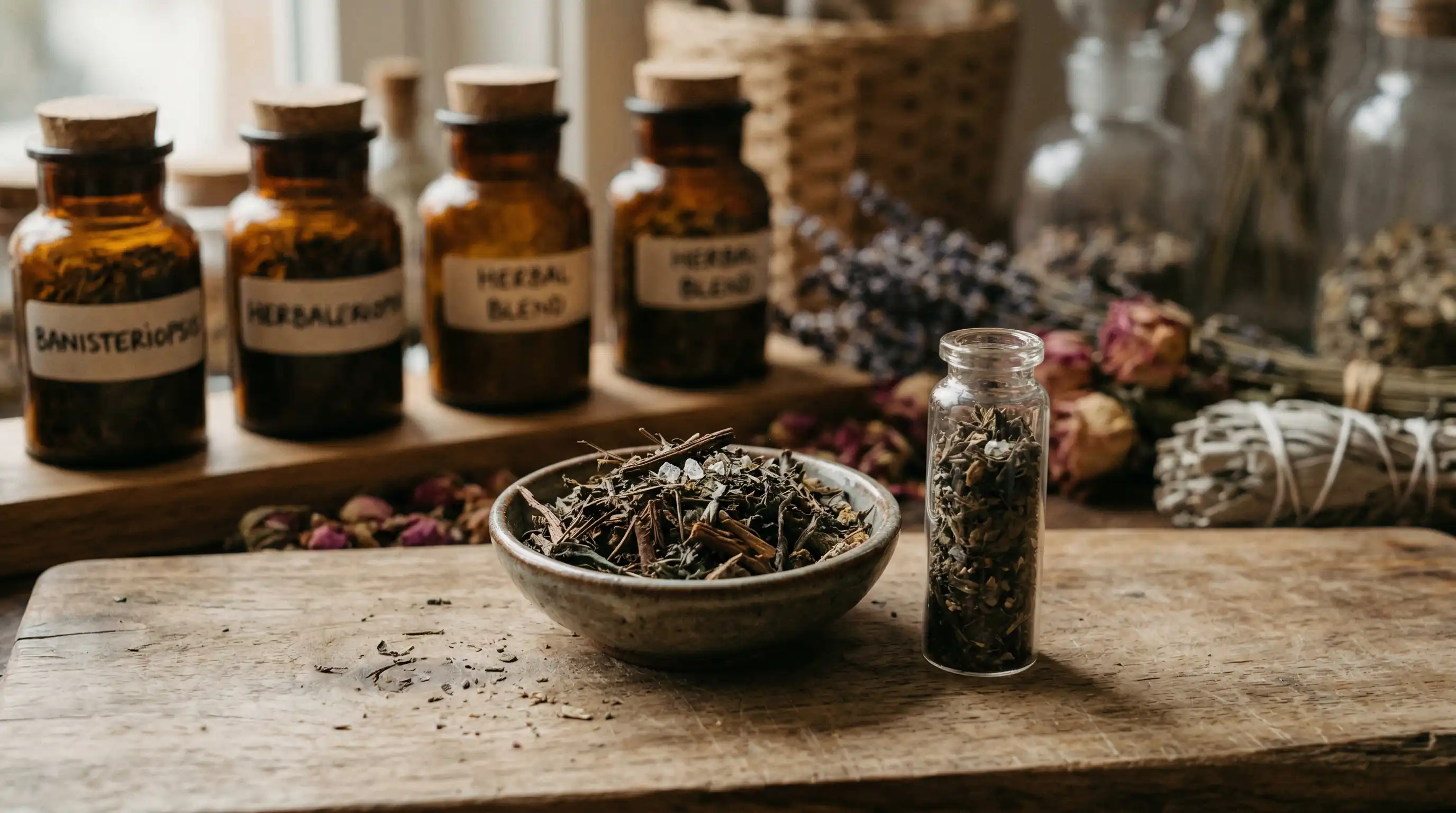
Changa

Definition
A smokable blend containing DMT infused into herbs, often including MAO inhibitors to extend the experience. While DMT itself is controlled under Dutch law, changa represents an important concept in psychedelic culture that smartshop customers often inquire about. The term originates from Australian psychedelic culture but has gained recognition in Dutch harm reduction discussions.
In Depth
Changa is a smokable herbal blend that contains N,N-Dimethyltryptamine (DMT) infused into various plant materials, typically combined with herbs containing monoamine oxidase inhibitors (MAOIs). This combination creates a unique psychoactive preparation that extends and modifies the DMT experience compared to smoking pure DMT crystals. The term originated in Australian psychedelic communities and has since gained recognition worldwide, including within Dutch harm reduction and psychedelic education circles. While DMT itself is classified as a controlled substance under Dutch law, understanding changa remains important for smartshop professionals and customers interested in psychedelic culture and harm reduction practices. The blend typically consists of a base herb such as mullein, passionflower, or mint, infused with DMT extract and often combined with MAOI-containing plants like Syrian rue (Peganum harmala) or Banisteriopsis caapi. The inclusion of MAOIs serves to extend the duration of the DMT experience from the typical 5-15 minutes to potentially 20-60 minutes, while also allowing for oral activity of the DMT component. This creates a more gradual onset and longer-lasting experience compared to pure DMT, making it more accessible to some users. In the context of Dutch smartshops, changa represents an important educational topic for harm reduction discussions, as customers often inquire about DMT-related substances and their effects. While smartshops cannot legally sell DMT or changa preparations, they play a crucial role in providing accurate information about these substances, their risks, and safer use practices. The preparation method involves dissolving DMT extract in a solvent and then evaporating it onto the chosen herb blend, creating a smokable mixture that can be consumed through various methods including pipes, vaporizers, or rolled cigarettes. Understanding changa is particularly relevant for those interested in the intersection of traditional plant medicines and modern psychedelic practices, as it represents a bridge between ancient ayahuasca traditions and contemporary smoking blends. The substance has gained attention in research contexts for its potential therapeutic applications, similar to other psychedelics being studied for mental health treatments. Dutch harm reduction organizations often include information about changa in their educational materials, emphasizing the importance of proper preparation, dosing, and set and setting considerations for anyone who might encounter these substances.
Etymology
The term 'changa' was coined by Australian psychonaut Julian Palmer in the early 2000s, derived from a Quechua word meaning 'mixture' or 'blend.' The name reflects the substance's nature as a combination of multiple plant materials and psychoactive compounds.
Examples
“The harm reduction workshop included information about changa and its extended duration compared to pure DMT.”
“Many psychedelic researchers study changa as an example of how traditional plant wisdom can inform modern preparation methods.”
“Dutch smartshop employees often receive questions about changa from customers interested in psychedelic culture.”
“The preparation of changa requires careful attention to ratios and proper infusion techniques.”
“Educational materials about changa emphasize the importance of understanding both DMT and MAOI interactions.”
Common Misconceptions
Changa is legal in the Netherlands because it contains herbs - DMT remains a controlled substance regardless of preparation method.
Changa is the same as ayahuasca - while both contain DMT and MAOIs, they have different preparation methods and consumption routes.
All changa blends are identical - compositions vary significantly between different preparations and makers.
Changa is safer than pure DMT because it's 'natural' - the combination with MAOIs actually creates additional considerations and potential interactions.
Practical Tips
Always research the legal status of substances in your jurisdiction before seeking information about preparation or use.
If discussing changa for educational purposes, emphasize the importance of understanding drug interactions, especially with MAOIs.
Focus harm reduction conversations on set, setting, and the extended duration compared to pure DMT experiences.
Recommend consulting with healthcare providers before considering any psychoactive substances, especially for those on medications.
Direct customers to reputable harm reduction resources and organizations for comprehensive safety information.
Frequently Asked Questions
Is changa legal in the Netherlands?▾
No, changa is not legal in the Netherlands because it contains DMT, which is classified as a controlled substance under Dutch law. While the herb components may be legal individually, the presence of DMT makes the entire preparation illegal.
How is changa different from ayahuasca?▾
While both contain DMT and MAOIs, changa is typically smoked while ayahuasca is consumed orally as a brew. Changa usually has a shorter duration (20-60 minutes) compared to ayahuasca (4-8 hours) and involves different preparation methods and cultural contexts.
What herbs are commonly used in changa blends?▾
Common base herbs include mullein, passionflower, mint, and damiana, often combined with MAOI-containing plants like Syrian rue or Banisteriopsis caapi. The specific blend varies depending on the preparer's preferences and intended effects.
Why do people add MAOIs to changa?▾
MAOIs extend the duration of the DMT experience and can make it orally active. They also create a more gradual onset and potentially smoother experience compared to pure DMT, though they also introduce additional safety considerations.
Can smartshops in the Netherlands sell changa ingredients?▾
While some individual herbs used in changa may be legally available, smartshops cannot sell DMT or preparations containing it. They can provide educational information about harm reduction and direct customers to appropriate resources.
What are the risks associated with changa use?▾
Risks include those associated with both DMT and MAOIs, including potential drug interactions, psychological effects, and the extended duration compared to pure DMT. The combination requires careful consideration of medications and health conditions.
How long does a changa experience typically last?▾
Changa experiences typically last 20-60 minutes when smoked, significantly longer than pure DMT (5-15 minutes) but shorter than oral ayahuasca preparations. The exact duration depends on the specific blend and dosage used.
Where can I learn more about changa safety?▾
Reputable harm reduction organizations, academic research, and established psychedelic education resources provide the most reliable information about changa safety and risk reduction practices. Always consult healthcare providers for personalized advice.