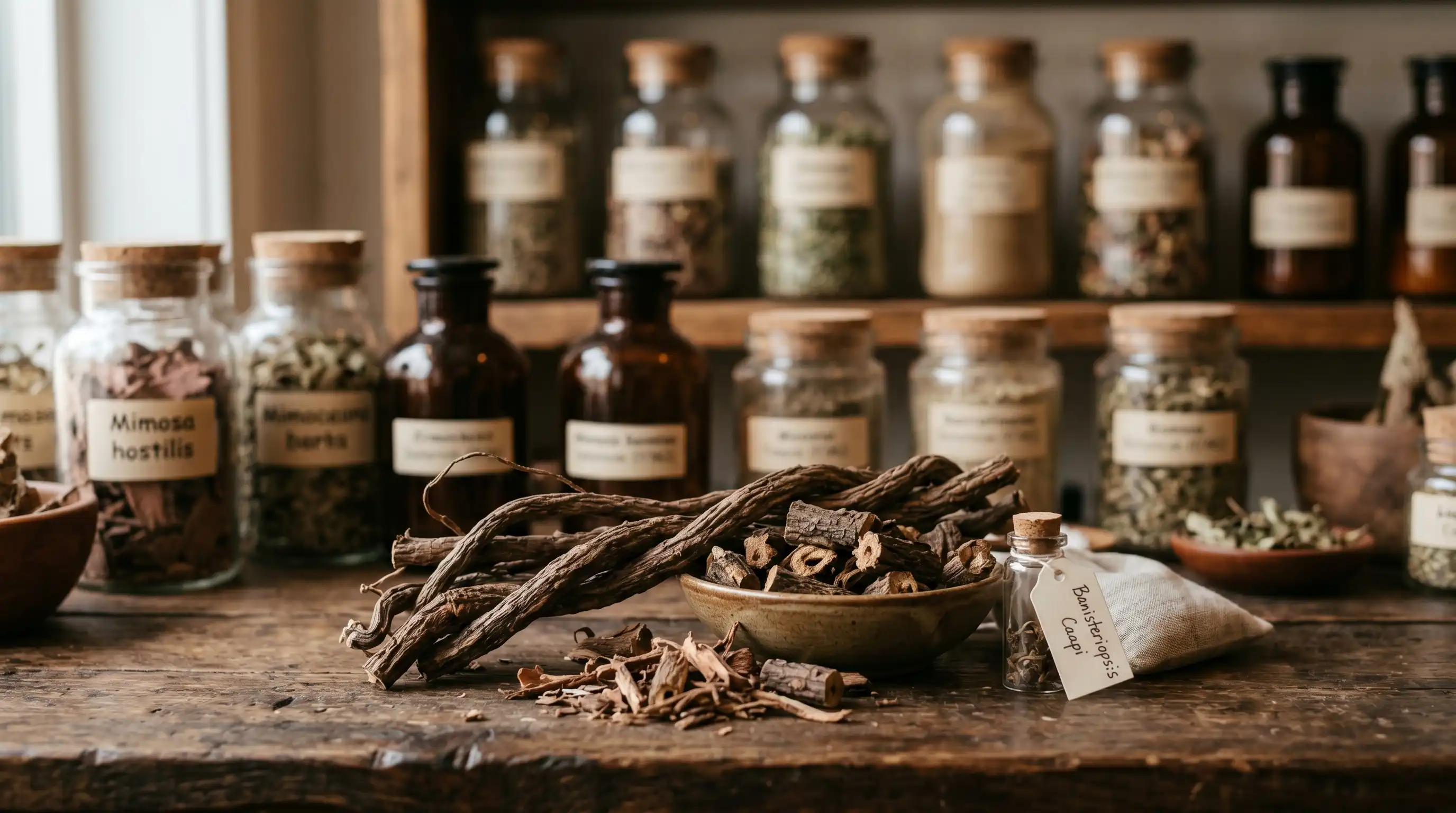
Banisteriopsis Caapi

Definition
A vine native to the Amazon rainforest that contains MAO inhibitors including harmine and harmaline. Often sold in Dutch smartshops as dried bark or extract, it's traditionally used as the base ingredient in ayahuasca preparations. The vine enables the oral activity of DMT by preventing its breakdown in the digestive system.
In Depth
Banisteriopsis caapi, commonly known as the ayahuasca vine or yagé, is a woody climbing vine indigenous to the Amazon rainforest that has become increasingly available in Dutch smartshops as dried bark, powdered extracts, and concentrated preparations. This remarkable plant contains powerful monoamine oxidase inhibitors (MAOIs), primarily harmine, harmaline, and tetrahydroharmine, which have profound effects on human neurotransmitter systems. In traditional Amazonian shamanism, Banisteriopsis caapi serves as the foundational ingredient in ayahuasca brews, where it's combined with DMT-containing plants like Psychotria viridis to create one of the world's most significant entheogenic preparations. The vine's MAO-inhibiting properties are crucial because they prevent the breakdown of orally consumed DMT in the digestive system, allowing this normally inactive compound to reach the brain and produce its characteristic visionary effects. Within the Dutch smartshop ecosystem, Banisteriopsis caapi occupies a unique legal and cultural position. While the vine itself remains legal to purchase and possess in the Netherlands, its traditional use in ayahuasca preparation exists in a complex legal gray area. Dutch smartshops typically sell the vine as dried bark pieces, standardized extracts, or concentrated alkaloid preparations, often marketed for research purposes or as botanical specimens. The availability of high-quality Banisteriopsis caapi in Dutch smartshops has made the Netherlands a significant hub for individuals interested in exploring traditional plant medicines and consciousness research. The vine's effects when consumed alone include mild sedation, enhanced dream activity, and subtle alterations in perception and mood. Many users report that Banisteriopsis caapi produces a gentle, introspective state characterized by increased emotional sensitivity and vivid imagery behind closed eyelids. These solo experiences, sometimes called 'vine-only' journeys, have gained popularity among those seeking the therapeutic and spiritual benefits of the plant without the intensity of full ayahuasca experiences. The growing interest in Banisteriopsis caapi reflects broader trends in psychedelic research and the increasing recognition of traditional plant medicines in Western contexts. Scientific studies have begun investigating the vine's potential therapeutic applications, particularly for depression, addiction, and PTSD, contributing to its legitimacy in research communities. Dutch smartshops have responded to this interest by offering various preparations and providing educational resources about traditional uses, preparation methods, and safety considerations. The quality and authenticity of Banisteriopsis caapi available in Dutch smartshops varies significantly, with reputable vendors sourcing their materials directly from indigenous communities or certified suppliers in South America. This direct sourcing helps ensure both quality and ethical considerations, as the commercialization of traditional plant medicines raises important questions about cultural appropriation and benefit-sharing with indigenous communities.
Etymology
The name Banisteriopsis caapi derives from the genus Banisteriopsis, named after botanist John Banister, combined with 'caapi,' which comes from the Tupi indigenous language meaning 'vine of the soul' or 'vine of the dead.'
Examples
“The smartshop offered several grades of Banisteriopsis caapi bark, from basic shredded material to concentrated 10:1 extracts.”
“Many researchers begin their plant medicine studies with Banisteriopsis caapi alone before exploring more complex preparations.”
“The traditional preparation of Banisteriopsis caapi involves boiling the bark for several hours to extract the active alkaloids.”
“Dutch smartshops have become a primary source for authentic Banisteriopsis caapi outside of South America.”
“The MAOI properties of Banisteriopsis caapi require careful attention to dietary restrictions and drug interactions.”
Common Misconceptions
Banisteriopsis caapi alone produces the same intense visionary effects as full ayahuasca preparations
All Banisteriopsis caapi sold in smartshops is of equal quality and potency
The vine is completely safe to use without considering MAOI dietary restrictions and drug interactions
Banisteriopsis caapi and ayahuasca are interchangeable terms referring to the same thing
Practical Tips
Always source Banisteriopsis caapi from reputable Dutch smartshops that provide clear information about origin and alkaloid content
Follow strict MAOI dietary guidelines for at least 24 hours before and after consuming Banisteriopsis caapi preparations
Start with small amounts when first experimenting with the vine to assess individual sensitivity and response
Store dried Banisteriopsis caapi bark in airtight containers away from light and moisture to preserve alkaloid content
Research potential interactions with medications, especially antidepressants and other psychiatric drugs, before use
Frequently Asked Questions
Is Banisteriopsis caapi legal in the Netherlands?▾
Yes, Banisteriopsis caapi itself is legal to purchase, possess, and sell in the Netherlands. However, its use in ayahuasca preparations may fall into legal gray areas depending on other ingredients and context of use.
What's the difference between Banisteriopsis caapi bark and extract?▾
Bark is the raw, dried material containing natural alkaloid concentrations, while extracts are concentrated preparations with standardized alkaloid content. Extracts are more potent and require smaller doses but may lack some compounds present in whole bark.
Can you use Banisteriopsis caapi alone without other plants?▾
Yes, many people use Banisteriopsis caapi alone for its mild psychoactive effects, enhanced dreams, and introspective qualities. These 'vine-only' experiences are gentler than full ayahuasca preparations and don't require DMT-containing plants.
What dietary restrictions apply when using Banisteriopsis caapi?▾
Due to its MAOI properties, users must avoid tyramine-rich foods like aged cheeses, cured meats, fermented foods, and alcohol. These restrictions typically apply 24 hours before and after consumption to prevent dangerous interactions.
How do you prepare Banisteriopsis caapi for consumption?▾
Traditional preparation involves boiling shredded bark for several hours to create a concentrated tea. The liquid is then strained and reduced to a manageable volume. Preparation methods vary depending on whether using raw bark or concentrated extracts.
What are the effects of Banisteriopsis caapi when used alone?▾
Solo use typically produces mild sedation, enhanced emotional sensitivity, vivid closed-eye imagery, and improved dream recall. Effects are generally subtle and introspective compared to full ayahuasca experiences.
Where can I buy authentic Banisteriopsis caapi in the Netherlands?▾
Reputable Dutch smartshops and specialized ethnobotanical suppliers offer various forms of Banisteriopsis caapi. Look for vendors who provide clear sourcing information and alkaloid content details to ensure authenticity and quality.
What drug interactions should I be aware of with Banisteriopsis caapi?▾
The MAOI compounds in Banisteriopsis caapi can interact dangerously with many medications, particularly antidepressants, stimulants, and certain pain medications. Always consult healthcare providers and research interactions thoroughly before use.