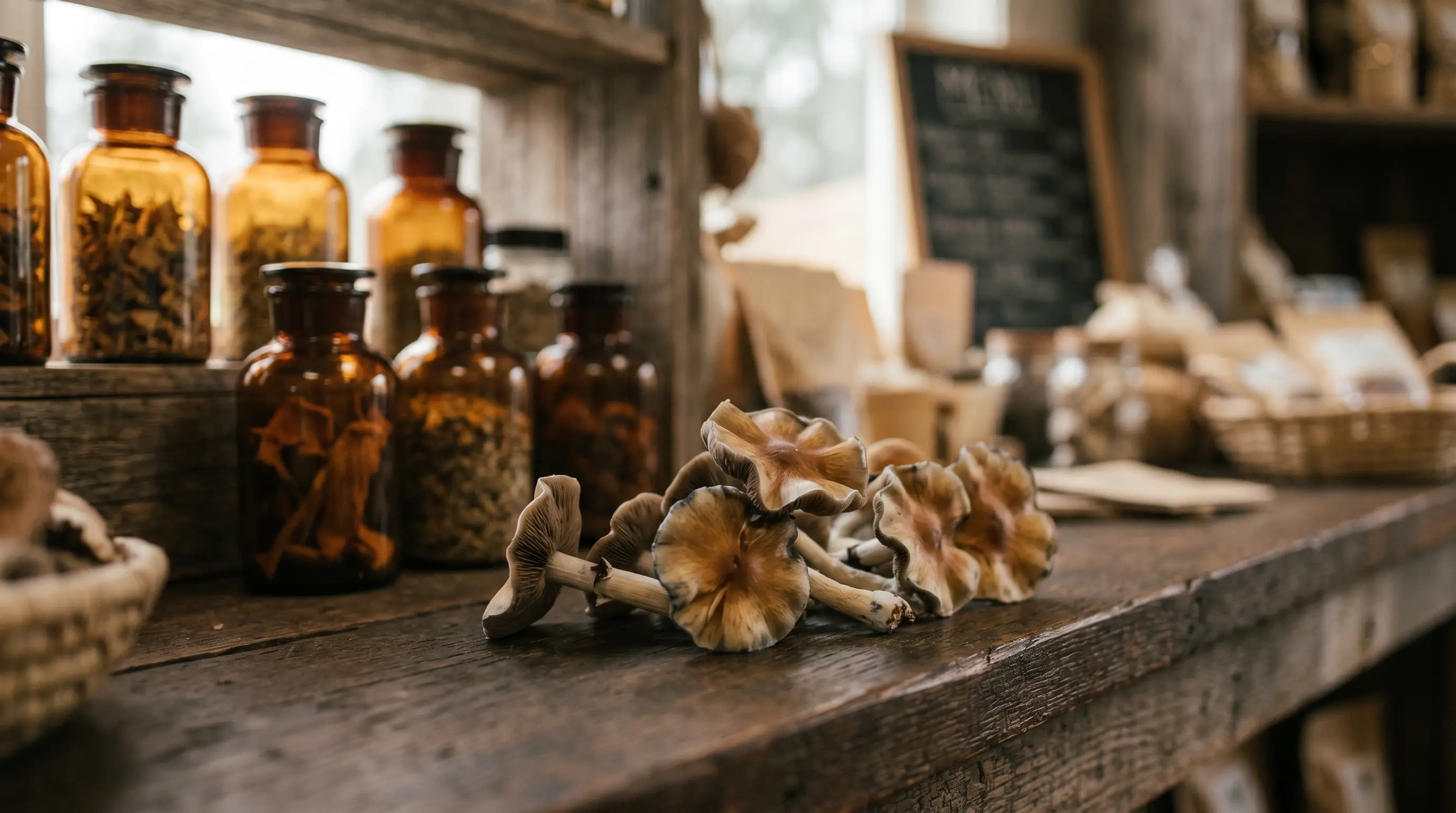
Psilocybe cyanescens

Definition
A potent psilocybin-containing mushroom species known for its distinctive wavy caps and blue bruising when damaged. While not legally cultivated as truffles in the Netherlands, it's an important species in global psychedelic culture and research.
In Depth
Psilocybe cyanescens, commonly known as the 'Wavy Cap' mushroom, is one of the most potent naturally occurring psilocybin-containing fungi in the world. This species is distinguished by its characteristic undulating cap margins that give it its common name, along with its pronounced blue bruising when handled or damaged - a telltale sign of high psilocybin content. Native to the Pacific Northwest of North America, P. cyanescens has since spread to other temperate regions including parts of Europe, where it grows on wood chips, mulch, and decaying organic matter in urban and suburban environments. The species typically contains between 0.85-1.30% psilocybin and 0.36-0.73% psilocin by dry weight, making it significantly more potent than the more commonly known Psilocybe cubensis. In the context of Dutch smartshop culture, while P. cyanescens itself cannot be legally sold or cultivated, its significance lies in the broader understanding of psilocybin-containing species and their role in psychedelic research and harm reduction education. The Netherlands' unique legal framework allows for the sale of psilocybin truffles (sclerotia) from other Psilocybe species, making Dutch smartshops important educational hubs for those interested in learning about the full spectrum of psilocybin-containing fungi. Understanding P. cyanescens helps contextualize the potency variations between different psilocybin sources and emphasizes the importance of proper identification, dosage awareness, and harm reduction practices. The species has gained particular attention in mycological and psychedelic research circles due to its high alkaloid content and its ability to fruit in cooler temperatures, making it a subject of scientific interest for understanding psilocybin biosynthesis and ecological adaptation. For visitors to Dutch smartshops, knowledge of P. cyanescens serves as an educational foundation for understanding why proper sourcing, identification, and dosage guidelines are crucial when exploring psilocybin experiences through legal alternatives like truffles.
Etymology
The genus name 'Psilocybe' derives from the Greek words 'psilos' meaning 'bare' or 'smooth' and 'kybe' meaning 'head,' referring to the smooth cap surface. The species epithet 'cyanescens' comes from the Latin 'cyaneus' meaning 'blue,' referencing the distinctive blue bruising characteristic of this mushroom.
Examples
“While Psilocybe cyanescens cannot be legally purchased in Dutch smartshops, understanding its potency helps customers make informed decisions about truffle dosages.”
“The distinctive wavy caps and blue bruising of Psilocybe cyanescens make it one of the most recognizable wild psilocybin mushrooms.”
“Researchers studying Psilocybe cyanescens have contributed valuable data to our understanding of psilocybin's therapeutic potential.”
“Many mycology enthusiasts visit Dutch smartshops to learn about legal alternatives after reading about Psilocybe cyanescens online.”
“The high psilocybin content in Psilocybe cyanescens demonstrates why proper dosage education is essential in smartshop harm reduction programs.”
Common Misconceptions
That Psilocybe cyanescens can be legally purchased in Dutch smartshops - only psilocybin truffles are legal
That all blue-bruising mushrooms are Psilocybe cyanescens - many species exhibit this trait
That P. cyanescens and psilocybin truffles have the same potency - cyanescens is typically much stronger
That finding wild P. cyanescens in the Netherlands means they can be legally harvested - possession remains illegal
Practical Tips
Use knowledge of P. cyanescens potency as a reference point when discussing appropriate truffle dosages with smartshop staff
Always purchase psilocybin products from licensed Dutch smartshops rather than attempting to source wild mushrooms
Ask smartshop employees about the potency differences between various truffle species if you're familiar with P. cyanescens literature
Utilize smartshop educational resources to understand why proper identification and sourcing matter in psychedelic harm reduction
Consider starting with lower truffle doses if your research background includes reading about high-potency species like P. cyanescens
Frequently Asked Questions
Can I buy Psilocybe cyanescens in Dutch smartshops?▾
No, Psilocybe cyanescens mushrooms cannot be legally purchased in Dutch smartshops. Only psilocybin-containing truffles (sclerotia) from specific Psilocybe species are legal for sale in the Netherlands.
How potent is Psilocybe cyanescens compared to legal truffles?▾
Psilocybe cyanescens is significantly more potent than most legal truffles, containing 0.85-1.30% psilocybin by dry weight. This makes proper dosage calculation crucial when transitioning between different psilocybin sources.
What makes Psilocybe cyanescens blue when bruised?▾
The blue bruising occurs when psilocin, the active metabolite of psilocybin, oxidizes upon exposure to air after the mushroom tissue is damaged. This blue coloration is often an indicator of psilocybin content.
Where does Psilocybe cyanescens naturally grow?▾
Originally native to the Pacific Northwest, P. cyanescens now grows in temperate regions worldwide on wood chips, mulch, and decaying organic matter. It thrives in urban environments and fruits in cooler temperatures than many other psilocybin species.
Is Psilocybe cyanescens used in scientific research?▾
Yes, P. cyanescens is studied for its high psilocybin content and unique growing characteristics. Research on this species contributes to our understanding of psilocybin biosynthesis and potential therapeutic applications.
How can I learn more about psilocybin species in Dutch smartshops?▾
Dutch smartshops often provide educational materials and knowledgeable staff who can discuss the differences between various psilocybin-containing species and their legal alternatives. Many shops offer harm reduction resources and dosage guidance.
What should I know about dosage if I'm familiar with P. cyanescens literature?▾
If you've read about P. cyanescens dosages, remember that legal truffles typically require higher doses due to lower psilocybin concentration. Always consult with smartshop staff for appropriate truffle dosing recommendations.