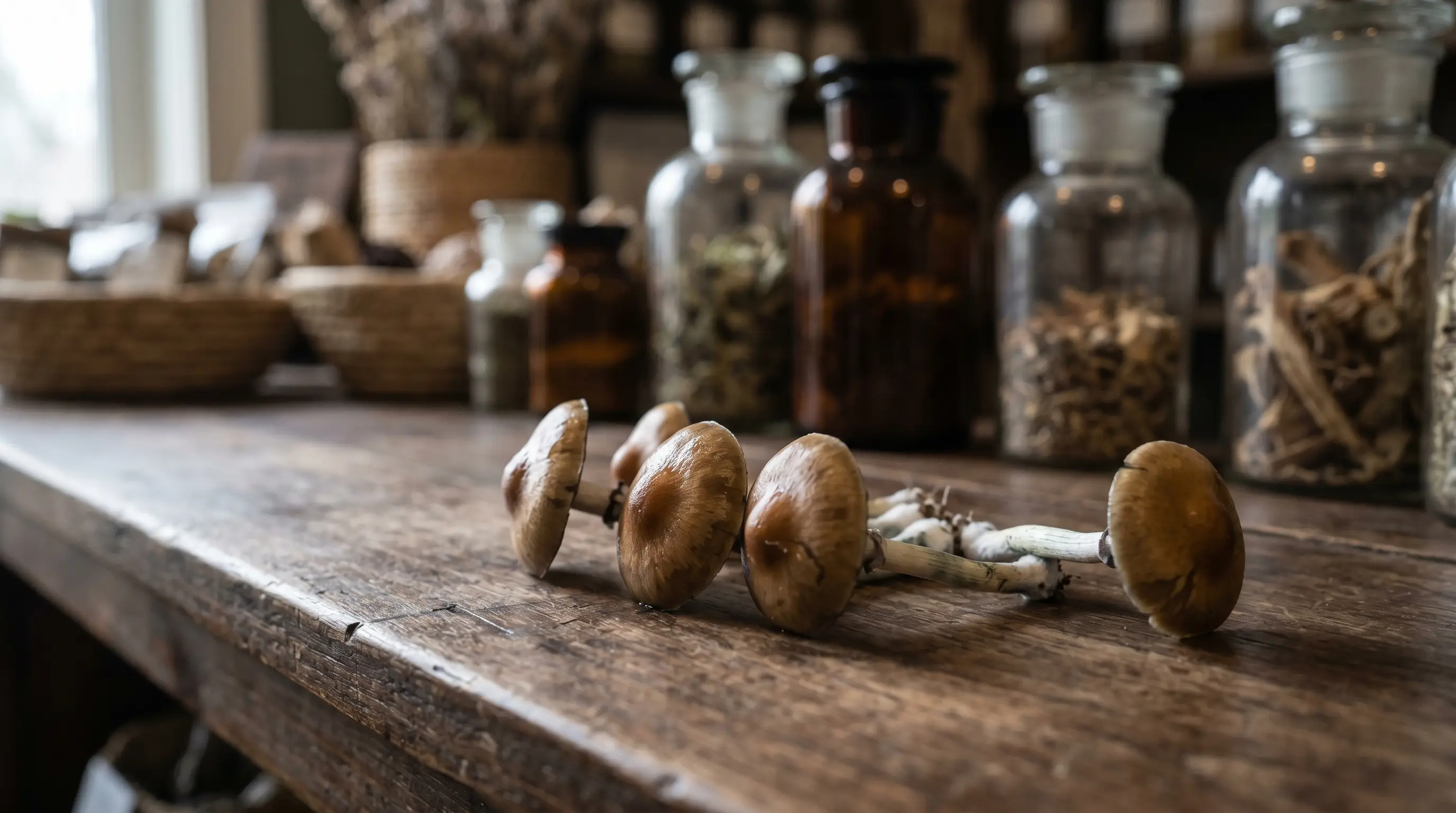
Psilocybe azurescens

Definition
A highly potent species of psilocybin mushroom known for its distinctive blue bruising and wavy cap edges. While not commonly sold as sclerotia in Dutch smartshops, it represents one of the most potent naturally occurring psilocybin species and is often discussed in mycological circles.
In Depth
Psilocybe azurescens is widely regarded as one of the most potent naturally occurring psilocybin mushroom species in the world, containing exceptionally high concentrations of psilocybin, psilocin, and baeocystin. Originally discovered in 1979 by Paul Stamets along the Columbia River in Oregon, this species has gained legendary status among mycologists and psychedelic researchers for its remarkable potency, which can be 2-3 times higher than more common species like Psilocybe cubensis. The mushroom is easily recognizable by its distinctive caramel-colored cap with wavy, undulating edges and its pronounced blue bruising when handled or damaged, a characteristic reaction caused by the oxidation of psilocin compounds. While Psilocybe azurescens is not commercially available in Dutch smartshops due to legal restrictions on dried mushrooms, understanding this species is crucial for anyone interested in mycology and the broader psychedelic landscape. In the Netherlands, smartshops legally sell psilocybin-containing sclerotia (magic truffles) from species like Psilocybe tampanensis and Psilocybe mexicana, which offer a more controlled and predictable experience compared to the intense potency of P. azurescens. The species naturally grows in wood chip mulch and sandy soils along the Pacific Northwest coast, thriving in cool, humid conditions during autumn months. Its extreme potency means that even experienced users approach it with considerable caution, as doses as small as 0.5-1 gram of dried material can produce profound psychedelic effects lasting 6-8 hours. The mushroom's reputation has made it a subject of intense interest in psychedelic research, particularly in studies examining the therapeutic potential of high-dose psilocybin experiences. For visitors to Dutch smartshops, while P. azurescens itself isn't available, understanding its place in the psilocybin spectrum helps contextualize the relative strength and effects of legally available truffle varieties. The species serves as an important reference point for potency discussions and highlights the importance of proper dosing, set, setting, and harm reduction practices when working with any psilocybin-containing substances. Its study has also contributed significantly to our understanding of psilocybin biosynthesis and the ecological role of psychoactive compounds in fungal species.
Etymology
The name 'azurescens' derives from the Latin word 'azureus' meaning 'azure' or 'blue,' referring to the species' characteristic intense blue bruising when damaged. The genus name 'Psilocybe' comes from Greek 'psilos' (bare) and 'kybe' (head), describing the smooth cap surface typical of these mushrooms.
Examples
“Psilocybe azurescens is often called the 'flying saucer mushroom' due to its distinctive wavy cap edges and extreme potency.”
“While Dutch smartshops cannot sell Psilocybe azurescens, they offer legal psilocybin truffles that provide a safer introduction to psychedelic experiences.”
“Mycologists consider Psilocybe azurescens the gold standard for natural psilocybin potency, containing up to 1.8% psilocybin by dry weight.”
“The blue bruising characteristic of Psilocybe azurescens is so pronounced that it can appear almost black when heavily handled.”
“Researchers studying Psilocybe azurescens have contributed valuable insights into the therapeutic potential of high-dose psilocybin treatments.”
Common Misconceptions
That Psilocybe azurescens can be legally purchased in Dutch smartshops like other psilocybin products
That all psilocybin mushrooms have similar potency levels to P. azurescens
That the blue bruising indicates the mushroom is damaged or unsafe to consume
That P. azurescens can be easily cultivated indoors like Psilocybe cubensis
Practical Tips
When discussing potency with smartshop staff, use P. azurescens as a reference point to understand the relative strength of available truffle varieties
Always start with the lowest recommended dose of any psilocybin product, as even legal truffles can be surprisingly potent for newcomers
Research the legal status of different psilocybin species in your home country before traveling, as laws vary significantly worldwide
Focus on harm reduction practices and proper set and setting regardless of which psilocybin species or product you're considering
Consult with knowledgeable smartshop staff about appropriate alternatives if you're specifically interested in higher-potency experiences
Frequently Asked Questions
Can you buy Psilocybe azurescens in Dutch smartshops?▾
No, Psilocybe azurescens mushrooms are not legally available in Dutch smartshops. However, smartshops do sell legal psilocybin-containing truffles (sclerotia) from other Psilocybe species that provide similar psychoactive effects in a regulated format.
How potent is Psilocybe azurescens compared to magic truffles?▾
Psilocybe azurescens is significantly more potent than most magic truffles, containing 2-3 times higher concentrations of psilocybin. While truffles typically contain 0.2-0.6% psilocybin, P. azurescens can contain up to 1.8% psilocybin by dry weight.
Why does Psilocybe azurescens turn blue when touched?▾
The blue bruising occurs when psilocin compounds in the mushroom oxidize upon exposure to air and physical damage. This blue coloration is actually an indicator of psilocybin content and is considered a positive identification feature rather than a sign of contamination.
Where does Psilocybe azurescens naturally grow?▾
Psilocybe azurescens naturally grows along the Pacific Northwest coast of North America, particularly in Oregon and Washington. It thrives in wood chip mulch, sandy soils, and coastal dune grasses during cool, humid autumn months.
Is Psilocybe azurescens safe for beginners?▾
Due to its extreme potency, Psilocybe azurescens is not recommended for beginners. Even experienced users approach this species with caution, as its high psilocybin content can produce unexpectedly intense effects that may be overwhelming for those new to psychedelics.
What makes Psilocybe azurescens different from other psilocybin mushrooms?▾
P. azurescens stands out for its exceptional potency, distinctive wavy cap edges, pronounced blue bruising, and its natural habitat preference for coastal wood chip environments. It also contains higher levels of baeocystin, a compound that may contribute to its unique effects profile.
Can Psilocybe azurescens be cultivated at home?▾
While possible, P. azurescens is much more difficult to cultivate than species like Psilocybe cubensis. It requires specific temperature cycles, wood-based substrates, and outdoor conditions that mimic its natural Pacific Northwest habitat, making it impractical for most home cultivators.
What should I know about dosing with Psilocybe azurescens?▾
Due to its extreme potency, P. azurescens requires much smaller doses than other psilocybin species. Experienced users typically start with 0.5-1 gram dried, compared to 2-3 grams for less potent species. The effects can last 6-8 hours and may be more intense than expected.