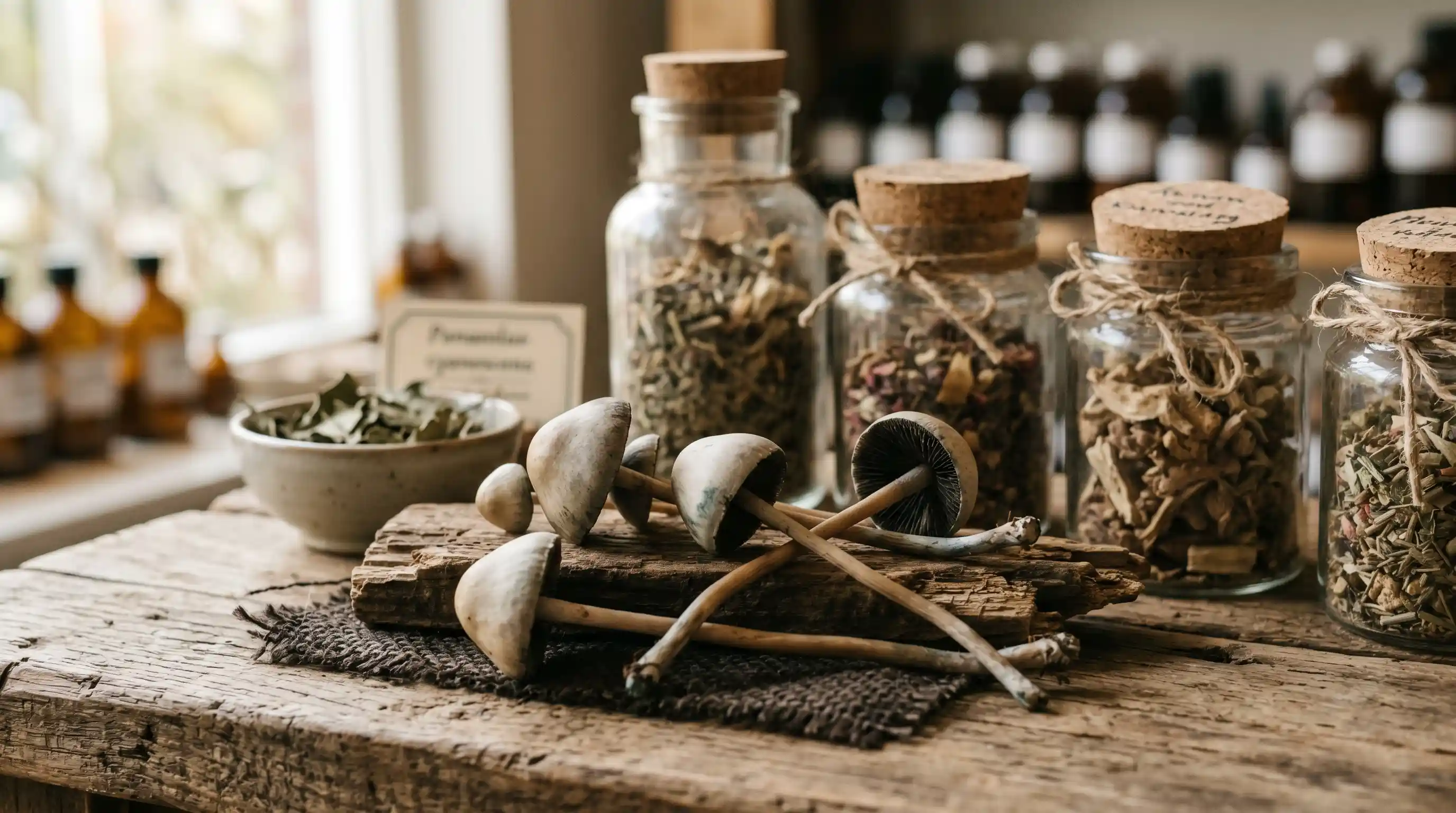
Panaeolus cyanescens

Definition
A potent psilocybin-containing mushroom species also known as "Blue Meanies" or "Copelandia cyanescens." While not commonly sold as sclerotia in Dutch smartshops, dried specimens of this species are sometimes available and are known for their high psilocybin content and intense visual effects.
In Depth
Panaeolus cyanescens is a highly potent psilocybin-containing mushroom species that has gained significant recognition in the psychedelic community for its exceptional psychoactive properties. Also known by the common names "Blue Meanies" or "Copelandia cyanescens" (its former taxonomic classification), this species belongs to the Panaeolus genus and is distinguished by its characteristic blue bruising when handled or damaged, indicating the presence of psilocybin and psilocin compounds. Unlike the more commonly available psilocybin truffles (sclerotia) found in Dutch smartshops, Panaeolus cyanescens produces traditional mushroom fruiting bodies with caps and stems. The species is native to tropical and subtropical regions, particularly thriving in areas with high humidity and organic matter such as dung-rich grasslands. What sets Panaeolus cyanescens apart from other psilocybin-containing species is its remarkably high concentration of psychoactive compounds, often containing 2-3 times more psilocybin than common Psilocybe cubensis varieties. This potency translates to intense visual experiences, profound alterations in consciousness, and strong euphoric effects that can last 4-6 hours. In the context of Dutch smartshops, while fresh cultivation and sale of psilocybin mushrooms has been prohibited since 2008, dried specimens of Panaeolus cyanescens occasionally appear in certain establishments, though this exists in a legal grey area. The species requires specific growing conditions including high humidity, proper substrate preparation, and careful temperature control, making it more challenging to cultivate than standard psilocybin truffles. Users report that Panaeolus cyanescens produces particularly vivid closed-eye visuals, enhanced pattern recognition, and intense color saturation compared to other psilocybin species. The mushrooms typically have a distinctive appearance with dark spores, slender stems, and caps that range from light brown to darker hues. Due to their potency, experienced psychonauts often recommend starting with significantly smaller doses than one might use with other psilocybin varieties. The species has become increasingly popular in online mycological communities and represents an important part of the broader psilocybin research renaissance, though its legal status varies significantly across different jurisdictions.
Etymology
The name 'Panaeolus' derives from the Greek word 'panailos' meaning 'variegated' or 'all-spotted,' referring to the mottled appearance of the mushroom's spore print. The species epithet 'cyanescens' comes from the Latin 'cyaneus' meaning 'blue,' describing the characteristic blue bruising that occurs when the mushroom tissue is damaged.
Examples
“The experienced mycologist identified the specimen as Panaeolus cyanescens based on its distinctive blue bruising and dark spore print.”
“Due to the high potency of Panaeolus cyanescens, she decided to start with just 0.5 grams for her first experience with this species.”
“The smartshop owner explained that while they couldn't sell fresh Panaeolus cyanescens, they had detailed information about legal alternatives like psilocybin truffles.”
“Online forums frequently discuss the cultivation techniques specific to Panaeolus cyanescens, noting its preference for dung-based substrates.”
“The research paper compared psilocybin concentrations across species, highlighting Panaeolus cyanescens as one of the most potent naturally occurring varieties.”
Common Misconceptions
That Panaeolus cyanescens and Copelandia cyanescens are different species, when they are actually the same mushroom with updated taxonomy.
That all blue-bruising mushrooms are Panaeolus cyanescens, when many psilocybin species exhibit similar bruising patterns.
That dried Panaeolus cyanescens is completely legal in the Netherlands, when the legal status remains complex and unclear.
That the dosage for Panaeolus cyanescens is the same as other psilocybin mushrooms, despite its significantly higher potency.
Practical Tips
Always start with a much smaller dose than you would use with other psilocybin species, as Panaeolus cyanescens is 2-3 times more potent.
Verify the legal status in your specific location before purchasing, as laws regarding dried psilocybin mushrooms vary significantly.
Store any dried specimens in a cool, dry place away from light to preserve potency and prevent degradation.
Consider psilocybin truffles as a legal alternative available in Dutch smartshops if Panaeolus cyanescens is not accessible.
Research proper identification techniques if foraging, as misidentification of mushroom species can be dangerous.
Frequently Asked Questions
Is Panaeolus cyanescens legal in Dutch smartshops?▾
The legal status is complex - while fresh psilocybin mushrooms have been prohibited in the Netherlands since 2008, dried specimens exist in a grey area. Most Dutch smartshops focus on legal alternatives like psilocybin truffles instead.
How potent is Panaeolus cyanescens compared to other magic mushrooms?▾
Panaeolus cyanescens is significantly more potent than most other psilocybin species, containing 2-3 times higher concentrations of psilocybin. This means much smaller doses are needed for the same effects.
What's the difference between Panaeolus cyanescens and Copelandia cyanescens?▾
They are the same species - Copelandia cyanescens was the former scientific name that has been reclassified as Panaeolus cyanescens. Both names refer to the same mushroom commonly called 'Blue Meanies.'
Can you grow Panaeolus cyanescens at home in the Netherlands?▾
While cultivation for personal use exists in a legal grey area, growing psilocybin mushrooms carries legal risks. Many people opt for legal alternatives like psilocybin truffle grow kits available in smartshops.
What effects can I expect from Panaeolus cyanescens?▾
Users report intense visual experiences, enhanced colors, profound alterations in consciousness, and strong euphoric effects lasting 4-6 hours. The high potency means effects can be overwhelming for inexperienced users.
How do you identify authentic Panaeolus cyanescens?▾
Key identifying features include dark spores, characteristic blue bruising when damaged, slender stems, and light to dark brown caps. However, proper identification requires mycological expertise and should not be attempted by beginners.
What's a safe starting dose for Panaeolus cyanescens?▾
Due to its high potency, experienced users recommend starting with 0.5-1 gram of dried material, which is significantly less than typical doses of other psilocybin species. Always start low and go slow.
Are there legal alternatives to Panaeolus cyanescens in Dutch smartshops?▾
Yes, psilocybin truffles (sclerotia) are legal and widely available in Dutch smartshops. They contain the same active compounds and provide similar psychedelic experiences while remaining within legal boundaries.