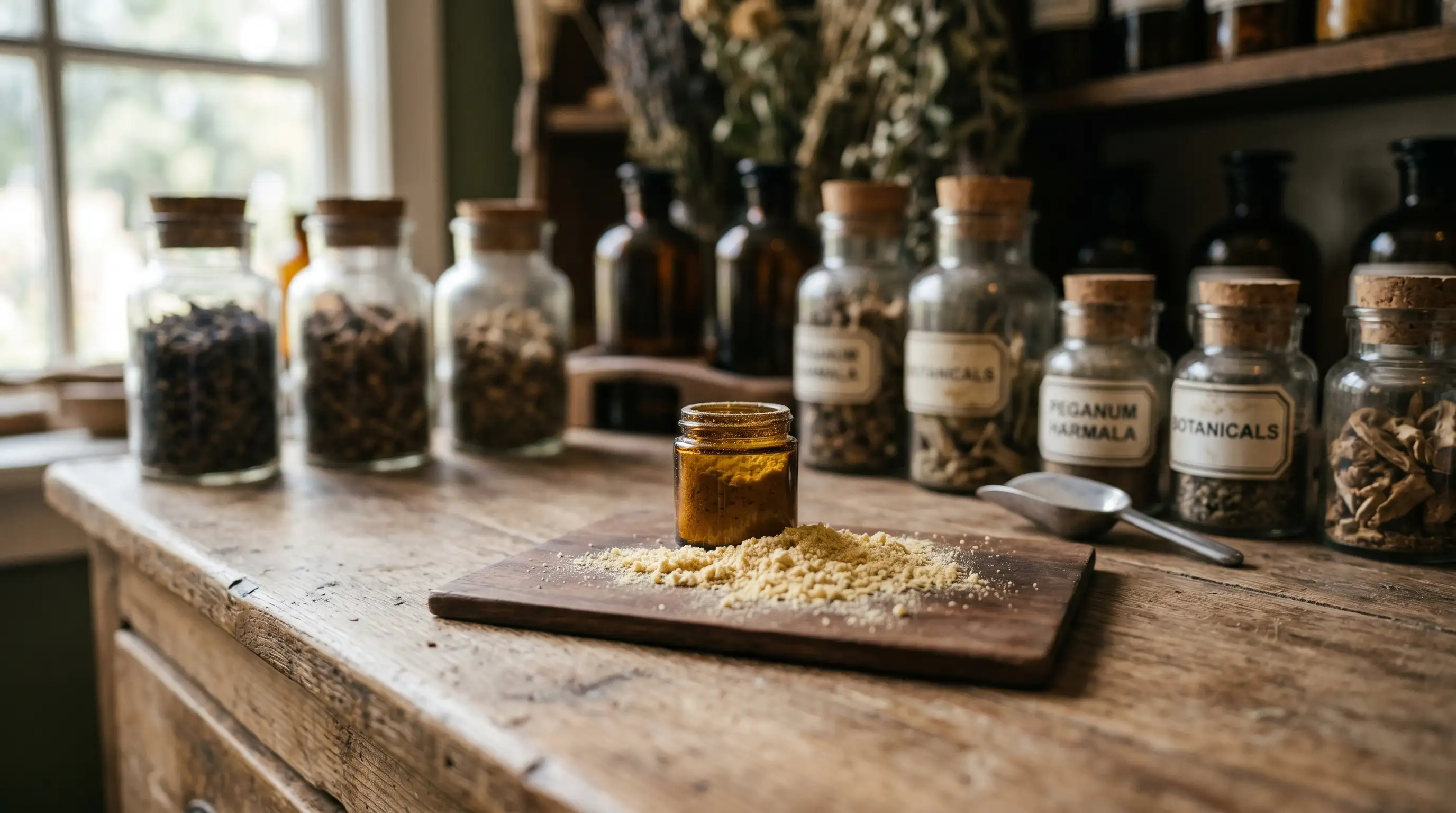
Harmaline

Definition
A beta-carboline alkaloid found in Syrian rue and Banisteriopsis caapi that acts as a reversible MAO inhibitor. Often used in combination with DMT-containing plants to create ayahuasca-like brews. Available in Dutch smartshops as an extracted compound for experienced psychonauts.
In Depth
Harmaline is a naturally occurring beta-carboline alkaloid primarily found in the seeds of Peganum harmala (Syrian rue) and the bark of Banisteriopsis caapi, a key ingredient in traditional ayahuasca preparations. This compound functions as a reversible monoamine oxidase inhibitor (MAOI), specifically targeting the MAO-A enzyme that normally breaks down tryptamine compounds like DMT, psilocin, and serotonin in the human body. In the Dutch smartshop context, harmaline represents one of the most significant ethnobotanical compounds available to experienced psychonauts seeking to explore traditional plant medicine combinations. The substance's primary appeal lies in its ability to potentiate and extend the effects of naturally occurring psychedelics, particularly when combined with DMT-containing plants to create ayahuasca-analogues or 'pharmahuasca' preparations. Dutch smartshops typically offer harmaline as a purified extract, often alongside its closely related alkaloid harmine, allowing customers to create their own plant medicine combinations with greater precision than using whole plant materials. The compound's MAOI properties mean it requires careful consideration of dietary restrictions and potential drug interactions, making it suitable primarily for experienced users who understand the complexities of monoamine oxidase inhibition. Beyond its psychoactive applications, harmaline has been studied for various pharmacological properties, including potential neuroprotective effects and antimicrobial activity. In traditional contexts, harmaline-containing plants have been used for centuries in Middle Eastern and South American cultures for both medicinal and spiritual purposes. The availability of harmaline in Dutch smartshops reflects the Netherlands' relatively progressive approach to ethnobotanical substances, though users must navigate the legal and safety considerations carefully. The compound's bitter taste and potential for nausea, particularly when combined with other substances, means proper preparation and dosing protocols are essential. Many experienced users in the Dutch psychonaut community view harmaline as a tool for deeper exploration of consciousness, often incorporating it into structured ceremonial or therapeutic contexts rather than casual recreational use.
Etymology
The name 'harmaline' derives from 'harmal,' the Arabic name for Peganum harmala (Syrian rue), combined with the chemical suffix '-ine' indicating an alkaloid compound. The term was first coined by German chemist Louis Lewin in the late 19th century when he isolated the alkaloid from Syrian rue seeds.
Examples
“The experienced psychonaut carefully measured 150mg of harmaline before combining it with acacia bark for his pharmahuasca preparation.”
“Dutch smartshops often stock harmaline alongside harmine, allowing customers to create custom MAOI blends for their ethnobotanical experiments.”
“After taking harmaline, she waited the full 45 minutes before consuming any tryptamine-containing substances to ensure proper MAO inhibition.”
“The smartshop owner explained that harmaline requires strict dietary precautions due to its powerful MAOI properties.”
“Many Amsterdam psychonauts prefer harmaline over pharmaceutical MAOIs for creating ayahuasca-analogues due to its traditional use and shorter duration.”
Common Misconceptions
Harmaline is the same as harmine - while closely related, they have different potencies and slightly different effects
Harmaline is safe to combine with any other substance - it requires careful attention to drug interactions and dietary restrictions
All Syrian rue extracts contain the same amount of harmaline - concentrations vary significantly between products and extraction methods
Harmaline effects last as long as ayahuasca - when used alone or with short-acting compounds, effects are typically much shorter than traditional ayahuasca
Practical Tips
Always follow MAOI dietary restrictions for at least 24 hours before and after using harmaline, avoiding tyramine-rich foods and certain medications
Start with lower doses (50-100mg) to assess individual sensitivity before attempting higher doses used in combination preparations
Purchase harmaline from reputable Dutch smartshops that provide detailed product information and purity testing results
Never combine harmaline with antidepressants, stimulants, or other MAOIs without consulting healthcare professionals
Allow at least 45-60 minutes after taking harmaline before consuming any tryptamine compounds to ensure proper enzyme inhibition
Frequently Asked Questions
Is harmaline legal in the Netherlands?▾
Harmaline exists in a legal grey area in the Netherlands. While the pure compound isn't explicitly scheduled, it's often sold as a plant extract or research chemical. Dutch smartshops can legally sell Syrian rue seeds and extracts containing harmaline, but customers should stay informed about current regulations.
How long do harmaline effects last?▾
Harmaline's MAOI effects typically last 4-6 hours, though this can vary based on dosage and individual metabolism. The compound's influence on other substances can extend their duration significantly, which is why it's crucial in ayahuasca preparations.
What foods should I avoid when taking harmaline?▾
Avoid tyramine-rich foods including aged cheeses, cured meats, fermented foods, alcohol, and certain fruits like overripe bananas. Also avoid caffeine, chocolate, and any medications that interact with MAOIs. Follow these restrictions for 24 hours before and after use.
Can I buy harmaline in Dutch smartshops?▾
Many Dutch smartshops sell harmaline as Syrian rue extracts or purified alkaloid preparations. Quality and concentration vary between suppliers, so choose reputable shops that provide detailed product information and third-party testing results.
What's the difference between harmaline and harmine?▾
Both are beta-carboline MAOIs from the same plants, but harmaline is generally considered more potent and has slightly different pharmacological properties. Harmine is often preferred for longer experiences, while harmaline may produce more intense but shorter effects.
Is harmaline safe for beginners?▾
Harmaline is not recommended for beginners due to its complex interactions, dietary restrictions, and potential for serious adverse reactions when combined improperly. It requires extensive research and preferably guidance from experienced practitioners before use.
How much harmaline should I take?▾
Typical doses range from 50-200mg depending on intended use and individual sensitivity. Always start with the lowest effective dose and never exceed recommended amounts. Dosing should be based on body weight, experience level, and intended combination with other substances.
Can harmaline cause side effects?▾
Common side effects include nausea, dizziness, and potential blood pressure changes. More serious risks include dangerous interactions with medications and foods high in tyramine. Always research thoroughly and consider consulting healthcare providers before use.