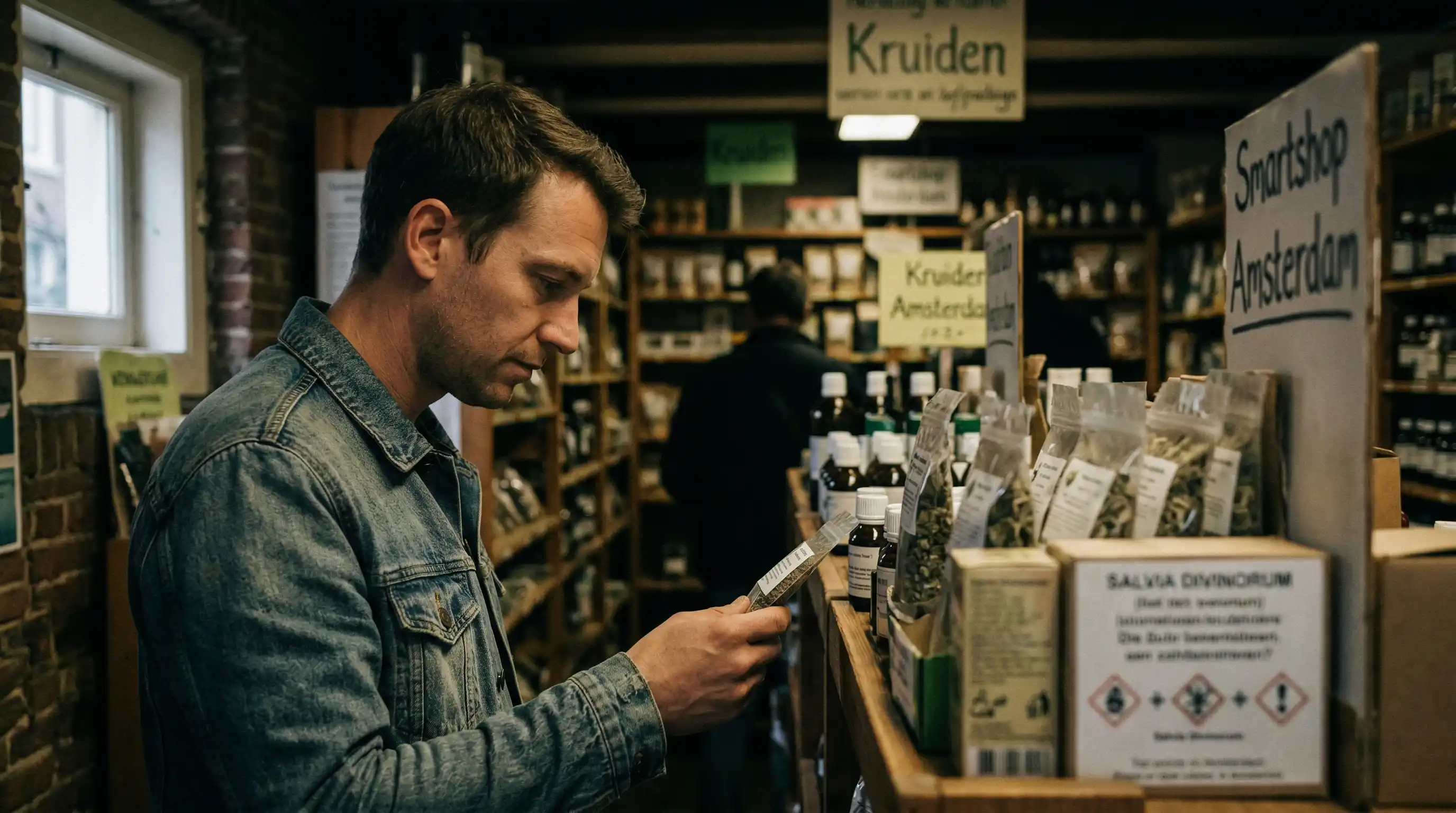
Salvia Divinorum aux Pays-Bas : Guide Complet du Statut Légal, des Effets et de la Disponibilité en Smartshop
Points cles
- ✓La salvia divinorum est légale aux Pays-Bas pour les adultes de plus de 18 ans
- ✓Les effets sont intenses mais de courte durée (15-30 minutes)
- ✓Un gardien sobre est essentiel pour la sécurité
- ✓Les smartshops offrent différentes puissances et préparations
- ✓La salvinorine A agit sur les récepteurs kappa-opioïdes, créant une expérience unique
Introduction
Salvia divinorum stands as one of the most enigmatic and powerful psychoactive plants available in the modern world. In the Netherlands, where progressive drug policies have created a unique landscape for consciousness exploration, salvia occupies a fascinating position within the legal psychedelic ecosystem. This comprehensive guide delves deep into the world of salvia divinorum in Dutch smartshops, providing essential information for both curious newcomers and experienced psychonauts seeking to understand this remarkable plant's place in contemporary Dutch culture.
The Netherlands' pragmatic approach to psychoactive substances has allowed salvia to flourish in a regulated environment, making it one of the few countries where this potent entheogen remains legally accessible. For those interested in exploring altered states of consciousness, understanding salvia's unique properties, legal framework, and availability through Dutch smartshops is crucial for making informed decisions about this powerful plant ally.
Understanding Salvia Divinorum: The Diviner's Sage
Salvia divinorum, scientifically classified as a member of the Lamiaceae family (mint family), represents one of nature's most potent naturally occurring psychoactive compounds. Native to the Sierra Mazateca region of Oaxaca, Mexico, this perennial herb has been revered by indigenous Mazatec shamans for over 500 years as a sacred medicine for divination, healing, and spiritual communion.
The plant's common name, "Diviner's Sage," reflects its traditional use in shamanic practices where it served as a bridge between the physical and spiritual realms. Unlike the more familiar cannabis or psilocybin mushrooms, salvia operates through an entirely different neurochemical pathway, making it a unique addition to the psychoactive plant kingdom.
What sets salvia apart from other psychoactive substances is its primary active compound, salvinorin A. This diterpene molecule is remarkable for being the first naturally occurring non-nitrogenous psychoactive compound discovered by science. Unlike classic psychedelics that primarily affect serotonin receptors, salvinorin A selectively targets kappa-opioid receptors in the brain, creating a completely different type of psychoactive experience.
The concentration of salvinorin A varies significantly between different parts of the plant and different preparations. Fresh leaves typically contain lower concentrations, while dried leaves and especially concentrated extracts can contain dramatically higher levels of the active compound. This variability is crucial for users to understand, as it directly impacts the intensity and nature of the experience.
The Unique Pharmacology of Salvia Divinorum
The pharmacological profile of salvia divinorum is unlike any other psychoactive substance commonly available in Dutch smartshops. Salvinorin A's interaction with kappa-opioid receptors creates a dissociative experience that can be profoundly different from the euphoric or enlightening experiences associated with classic psychedelics.
When consumed, salvinorin A rapidly crosses the blood-brain barrier and binds to kappa-opioid receptors distributed throughout the brain, particularly in areas associated with perception, consciousness, and sensory processing. This binding action can produce intense alterations in consciousness that may include complete dissociation from one's body and environment, vivid hallucinations, and experiences of becoming inanimate objects or merging with the surrounding environment.
The onset of effects is remarkably rapid when smoked, typically beginning within 30 seconds and reaching peak intensity within 2-5 minutes. The entire experience usually concludes within 15-30 minutes, making salvia one of the shortest-acting psychoactive substances available. This brief duration, while intense, makes it more manageable for many users compared to longer-lasting psychedelics.
Research into salvinorin A has revealed its potential therapeutic applications, particularly in treating depression, addiction, and chronic pain. However, these studies are still in early stages, and the recreational use of salvia should not be confused with therapeutic applications under medical supervision.
Legal Framework in the Netherlands
The Netherlands' approach to salvia divinorum regulation exemplifies the country's pragmatic drug policy philosophy. Unlike many nations that have banned salvia outright, the Dutch government has maintained its legal status while implementing age restrictions and quality controls through the smartshop system.
Currently, salvia divinorum remains completely legal for adults over 18 to purchase, possess, and consume in the Netherlands. This legal status is maintained under the country's drug scheduling system, where salvia is not classified as a controlled substance. The decision to keep salvia legal reflects the Dutch government's evidence-based approach to drug policy, recognizing that prohibition often creates more harm than the substances themselves.
However, the legal framework includes important restrictions. Licensed smartshops are prohibited from selling salvia products to anyone under 18 years of age, and shops must provide appropriate information about the substance's effects and potential risks. This regulatory approach ensures that salvia remains accessible to informed adult consumers while protecting minors and promoting responsible use.
The legal status also extends to cultivation, meaning individuals can legally grow salvia divinorum plants for personal use. This has led to a small but dedicated community of Dutch cultivators who appreciate the plant's unique properties and traditional significance.
Effects and Experience Profiles
The effects of salvia divinorum are notoriously difficult to describe due to their highly subjective and often ineffable nature. Users frequently report experiences that challenge conventional understanding of reality, consciousness, and identity. Understanding these potential effects is crucial for anyone considering exploring salvia in the Dutch smartshop context.
Common effects include intense visual and auditory hallucinations, complete dissociation from one's physical body, experiences of becoming inanimate objects or geometric patterns, time distortion where minutes can feel like hours or vice versa, and profound alterations in the perception of space and dimension. Many users report feeling as though they've entered entirely different realities or dimensions, often populated by entities or beings that feel completely real during the experience.
The intensity of effects varies dramatically based on dosage, preparation method, individual sensitivity, and set and setting. Low doses might produce mild alterations in perception and mood, while higher doses can result in complete ego dissolution and reality replacement experiences that can be overwhelming for unprepared users.
Unlike many other psychoactive substances, salvia experiences are rarely described as euphoric or pleasurable in conventional terms. Instead, users often report feelings of confusion, disorientation, and sometimes fear or anxiety during the peak effects. This unique profile makes salvia unsuitable for recreational party settings and more appropriate for serious consciousness exploration in controlled environments.
Availability in Dutch Smartshops
Dutch smartshops serve as the primary legal distribution network for salvia divinorum products throughout the Netherlands. These specialized retailers offer various forms and potencies of salvia, catering to different experience levels and preferences. The smartshop system provides a regulated environment where consumers can access quality-controlled products along with educational resources and harm reduction information.
Most Dutch smartshops stock multiple forms of salvia divinorum, including dried leaves for smoking or chewing, standardized extracts with known concentrations of salvinorin A, and sometimes fresh or live plants for cultivation enthusiasts. The extract concentrations typically range from 5x to 40x or higher, indicating the concentration factor compared to plain dried leaves.
Quality control in Dutch smartshops is generally excellent, with reputable retailers sourcing their salvia products from established suppliers who test for potency and purity. This quality assurance is crucial given salvia's potency and the importance of accurate dosing for safe experiences.
Pricing varies depending on the form and potency, with plain dried leaves being the most affordable option and high-concentration extracts commanding premium prices. Most smartshops also provide detailed information about proper usage, dosing guidelines, and safety precautions, making them valuable resources for both newcomers and experienced users.
Harm Reduction and Safety Considerations
The intense and unpredictable nature of salvia experiences makes harm reduction practices absolutely essential for safe use. Dutch smartshops typically provide comprehensive safety information, but users must take personal responsibility for implementing these guidelines.
The most critical safety consideration is the use of a sober, trusted sitter during any salvia experience. The dissociative effects can cause users to lose awareness of their physical surroundings completely, potentially leading to accidents or injuries if proper precautions aren't taken. A sitter should remain completely sober, be familiar with salvia's effects, and be prepared to provide physical safety without interfering with the experience unless absolutely necessary.
Set and setting considerations are equally important. Salvia should only be used in safe, comfortable, familiar environments free from potential hazards. The experience space should be cleared of breakable objects, sharp edges, or anything that could cause injury during periods of disorientation. Many experienced users recommend using soft surfaces like beds or couches and ensuring adequate space to move safely.
Dosage control is particularly challenging with salvia due to the dramatic differences in potency between preparations. Starting with the smallest possible dose and gradually increasing over separate sessions is the safest approach. This is especially important with extracts, where even tiny amounts can produce overwhelming experiences.
Traditional and Modern Contexts
Understanding salvia's traditional context provides important perspective for modern users in Dutch smartshops. In Mazatec culture, salvia was never used recreationally but served specific ceremonial and healing purposes under the guidance of experienced shamans. These traditional practices emphasized respect, intention, and spiritual preparation – principles that remain relevant for contemporary users.
Modern research into salvia's traditional uses has revealed sophisticated indigenous knowledge about the plant's properties and appropriate applications. Mazatec shamans typically used fresh leaves in specific quantities, often combined with other plants and administered in carefully controlled ceremonial contexts. This traditional wisdom offers valuable insights for developing respectful and safe modern practices.
The transition from traditional ceremonial use to availability in Dutch smartshops represents both opportunities and challenges. While legal access allows for scientific research and personal exploration, it also removes the cultural safeguards and guidance systems that traditionally surrounded salvia use. Modern users must therefore develop their own frameworks for responsible use based on available scientific knowledge and harm reduction principles.
Research and Future Perspectives
Scientific interest in salvia divinorum has grown significantly in recent years, driven by its unique pharmacological properties and potential therapeutic applications. Research conducted in various countries, including studies by Dutch institutions, has begun to unlock the mysteries of salvinorin A's effects on consciousness and its potential medical benefits.
Current research focuses on several areas, including salvia's potential as a treatment for depression, particularly treatment-resistant forms that don't respond to conventional medications. The kappa-opioid receptor system targeted by salvinorin A plays important roles in mood regulation, making it a promising target for novel antidepressant development.
Addiction research represents another promising avenue, with studies suggesting that salvinorin A might help interrupt addictive patterns and reduce cravings for various substances. This research is particularly relevant in the Netherlands, where innovative addiction treatment approaches are actively explored and implemented.
The legal status of salvia in the Netherlands positions the country as an important location for continued research into this remarkable plant. Dutch research institutions have the opportunity to conduct studies that would be impossible in countries where salvia is prohibited, potentially contributing valuable knowledge to the global understanding of consciousness and psychoactive plant medicines.
Conclusion
Salvia divinorum's presence in Dutch smartshops represents a unique intersection of traditional plant wisdom, modern scientific inquiry, and progressive drug policy. For those interested in exploring this powerful entheogen, the Netherlands offers a legal, regulated environment where quality products and harm reduction information are readily available.
The key to safe and meaningful salvia experiences lies in approaching this plant with appropriate respect, preparation, and caution. Understanding its unique effects, implementing proper safety measures, and sourcing products from reputable Dutch smartshops creates the foundation for responsible exploration of one of nature's most powerful consciousness-altering plants.
As research continues and our understanding of salvia deepens, its role in both therapeutic and exploratory contexts will likely evolve. The Netherlands' continued commitment to evidence-based drug policy ensures that this remarkable plant remains accessible to those who approach it with the seriousness and respect it deserves.
Tags
Questions Fréquentes
La salvia divinorum est-elle légale à acheter dans les smartshops néerlandais ?▾
Oui, la salvia divinorum est complètement légale pour les adultes de plus de 18 ans aux Pays-Bas. Les smartshops agréés peuvent légalement vendre des produits à base de salvia mais sont interdits de vendre aux mineurs de moins de 18 ans.
Combien de temps durent les effets de la salvia et quelle est leur intensité ?▾
Les effets de la salvia durent généralement 15-30 minutes lorsqu'elle est fumée, avec un début dans les 30 secondes et une intensité maximale dans les 2-5 minutes. Les effets peuvent être extrêmement intenses, incluant une dissociation complète de la réalité et des hallucinations vives.
Quelle est la différence entre les feuilles de salvia séchées et les extraits ?▾
Les feuilles de salvia séchées contiennent des niveaux naturels de salvinorine A, tandis que les extraits sont des préparations concentrées (5x, 10x, 20x, etc.) contenant des puissances beaucoup plus élevées. Les extraits nécessitent des doses beaucoup plus petites et produisent des effets plus intenses.