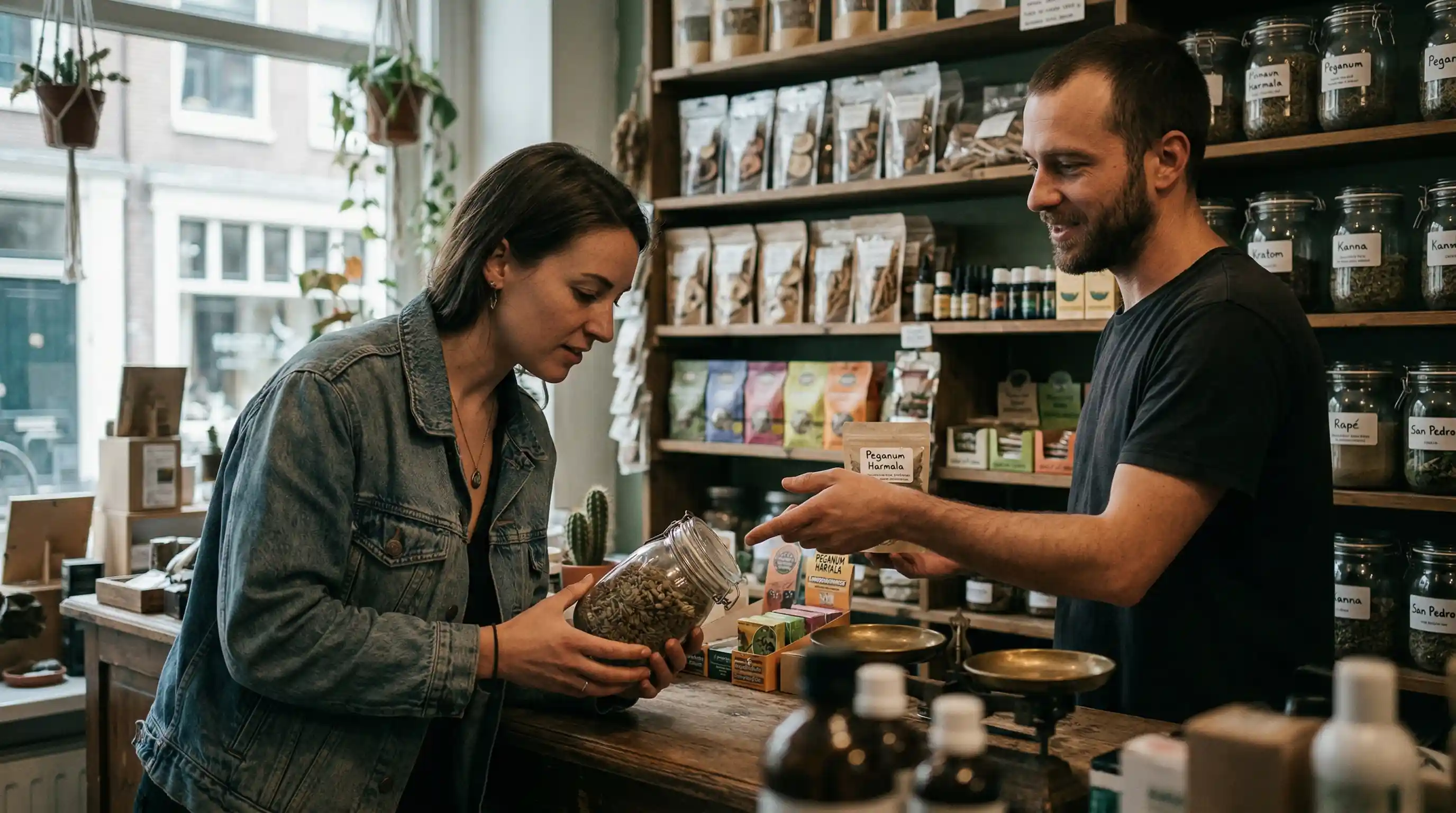
Guide Complet des Analogues d'Ayahuasca et Alternatives DMT Légales dans les Smartshops Néerlandais
Points cles
- ✓Les smartshops néerlandais offrent légalement les composants pour créer des analogues d'ayahuasca
- ✓Mimosa Hostilis et rue syrienne sont les sources les plus populaires de DMT et d'IMAO
- ✓Les interactions d'IMAO nécessitent une préparation diététique stricte et des précautions médicales
- ✓La préparation appropriée et la réduction des risques sont essentielles pour la sécurité
- ✓Les Pays-Bas démontrent un modèle réussi d'exploration psychédélique légale et responsable
Introduction
The Netherlands has long been a pioneer in progressive drug policy and harm reduction, making it one of the most accessible places in Europe to explore consciousness-expanding substances legally. Dutch smartshops, particularly in cities like Amsterdam, Rotterdam, and Utrecht, offer a unique selection of ayahuasca analogues and legal DMT alternatives that provide profound psychedelic experiences within the bounds of Dutch law.
For those seeking transformative experiences through plant medicine, understanding the landscape of legal alternatives available in Dutch smartshops is essential. This comprehensive guide explores the world of ayahuasca analogues, their legal status, preparation methods, and the harm reduction practices that make the Netherlands a global leader in responsible psychedelic exploration.
Understanding Ayahuasca and Its Legal Status in the Netherlands
Traditional ayahuasca, a brew combining DMT-containing plants with MAO inhibitors, occupies a complex legal position in the Netherlands. While DMT itself is a controlled substance under the Opium Act, the individual plant components used to create ayahuasca analogues remain legal when sold separately. This legal nuance has allowed Dutch smartshops to offer customers the components needed to create their own consciousness-expanding brews.
The key to understanding ayahuasca analogues lies in the combination of two types of plants: those containing DMT or similar tryptamines, and those containing monoamine oxidase inhibitors (MAOIs) that allow these compounds to become orally active. Dutch smartshops have perfected the art of providing these components separately, allowing customers to research and prepare their own experiences.
This legal framework reflects the Netherlands' broader approach to drug policy, which emphasises harm reduction over prohibition. The Dutch government recognises that people will seek consciousness-altering experiences regardless of legal restrictions, and by providing legal alternatives and education, they can minimise the risks associated with these explorations.
Popular DMT-Containing Plants Available in Dutch Smartshops
Mimosa Hostilis root bark remains one of the most sought-after DMT sources in Dutch smartshops. This Brazilian plant contains significant concentrations of N,N-DMT and has been used traditionally by indigenous communities for centuries. Amsterdam's smartshops often stock high-quality Mimosa Hostilis, with many shops in the Nieuwmarkt and Jordaan districts offering detailed information about its traditional uses and preparation methods.
The inner root bark of Mimosa Hostilis typically contains between 0.31% to 0.57% DMT by dry weight, making it one of the most potent natural sources available legally. Dutch suppliers often provide detailed certificates of analysis, ensuring customers receive authentic, high-quality material. The bark appears as purple-red shredded material with a distinctive earthy aroma.
Acacia Confusa is another popular option, containing both DMT and NMT (N-methyltryptamine). This Australian native tree's root bark has gained popularity among Dutch psychonauts for its reliable alkaloid content and relatively straightforward extraction process. The bark typically contains 0.5% to 1.15% DMT, along with smaller amounts of other tryptamines that may contribute to the overall experience profile.
Psychotria Viridis, known as chacruna in traditional ayahuasca preparation, represents the classic DMT-containing leaf used by Amazonian shamans. While less potent than root barks, containing approximately 0.1% to 0.61% DMT, these leaves are prized for their traditional significance and gentler alkaloid profile. Dutch smartshops often stock dried Psychotria Viridis leaves sourced from sustainable cultivation projects in South America.
Chaliponga (Diplopterys Cabrerana) offers another traditional option, containing DMT alongside 5-MeO-DMT and other related compounds. This climbing vine from the Amazon basin provides a more complex alkaloid profile that many users report as producing distinct experiential qualities compared to single-compound sources.
MAOI Plants and Their Role in Ayahuasca Analogues
The second crucial component of any ayahuasca analogue is a source of monoamine oxidase inhibitors (MAOIs). These compounds prevent the breakdown of DMT in the digestive system, allowing it to become orally active and produce the characteristic long-duration psychedelic experience.
Banisteriopsis Caapi, the traditional ayahuasca vine, remains the gold standard for MAOI sources. Dutch smartshops typically offer both the vine itself and concentrated extracts. The vine contains harmine, harmaline, and tetrahydroharmine – reversible MAOIs that create the foundation for the ayahuasca experience. Quality Banisteriopsis Caapi should have a bitter taste and produce a yellow-brown brew when prepared properly.
Peganum Harmala, commonly known as Syrian rue, provides an alternative MAOI source that's often more readily available and affordable. These small seeds contain high concentrations of harmine and harmaline, making them particularly potent. Dutch smartshops often recommend starting with smaller doses of Syrian rue compared to Banisteriopsis Caapi due to its higher alkaloid concentration.
Passiflora incarnata (passion flower) offers a milder MAOI option that some users prefer for its gentler effects and reduced potential for dietary interactions. While less potent than other options, passion flower can still provide sufficient MAOI activity for ayahuasca analogues, particularly for those seeking a more subtle experience.
Preparation Methods and Traditional Techniques
Preparing ayahuasca analogues requires careful attention to traditional brewing methods adapted for modern safety standards. The process typically involves creating separate decoctions of the DMT-containing plant and the MAOI source, then combining them in appropriate ratios.
The traditional method begins with preparing the MAOI component first. Banisteriopsis Caapi vine is typically crushed or shredded, then boiled in acidulated water (often with lemon juice or vinegar) for several hours. The liquid is strained and reduced through gentle heating, concentrating the active compounds. This process may be repeated multiple times to extract maximum alkaloids.
For the DMT-containing component, similar extraction principles apply. Mimosa Hostilis root bark is often prepared by creating multiple acidic extractions, combining the resulting liquids, and reducing them to a concentrated form. The acidic environment helps extract the DMT alkaloids while maintaining their stability.
Modern practitioners often employ pH adjustment techniques to optimise extraction efficiency. Starting with acidic conditions (pH 3-4) helps extract the alkaloids, while some advanced techniques involve basifying and re-acidifying to purify the final product.
Safety Considerations and Harm Reduction Practices
Engaging with ayahuasca analogues requires serious consideration of safety protocols and harm reduction practices. Dutch smartshops typically provide comprehensive information about potential risks and safety measures, reflecting the country's commitment to responsible psychedelic use.
MAOI interactions represent the most significant safety concern when working with ayahuasca analogues. These compounds can interact dangerously with certain medications, foods, and other substances. The traditional ayahuasca diet, which restricts tyramine-rich foods, aged cheeses, fermented products, and certain medications, becomes crucial when working with MAOI-containing plants.
Set and setting considerations are paramount for safe ayahuasca analogue experiences. The Dutch harm reduction community emphasises the importance of proper mental preparation, supportive environments, and experienced trip sitters. Many Amsterdam-based integration circles and harm reduction organisations provide resources for those preparing for these experiences.
Dosage considerations require careful attention, as individual sensitivity can vary significantly. Dutch smartshops often recommend starting with lower doses and gradually increasing based on individual response. The delayed onset of oral DMT (typically 30-90 minutes) means patience is essential to avoid accidental overdosing.
Legal Considerations and Responsible Sourcing
While the individual plant components remain legal in the Netherlands, the legal landscape surrounding psychedelics continues to evolve. Dutch smartshops operate within carefully defined legal boundaries, selling plants for research and educational purposes rather than explicitly for consumption.
Sustainable sourcing has become increasingly important as demand for these plants grows globally. Reputable Dutch smartshops work with suppliers who prioritise sustainable harvesting practices and support indigenous communities who have traditionally stewarded these plants. This ethical approach ensures that increased Western interest in plant medicines doesn't harm the ecosystems and cultures from which they originate.
The Netherlands' approach to regulation emphasises education and harm reduction over prohibition. This framework allows for open discussion of preparation methods, safety considerations, and experiential reports that help users make informed decisions about their consciousness exploration.
Integration and Community Support
The Dutch psychedelic community has developed robust support networks for those working with ayahuasca analogues and other consciousness-expanding substances. Integration circles, harm reduction organisations, and educational workshops provide ongoing support for individuals navigating these experiences.
Amsterdam hosts numerous integration groups that meet regularly to discuss experiences, share insights, and provide mutual support. These communities emphasise the importance of processing and integrating insights gained from psychedelic experiences into daily life. Many participants report that the community aspect is as valuable as the experiences themselves.
Online forums and resources complement in-person support networks, providing platforms for sharing preparation techniques, safety information, and experiential reports. The Dutch harm reduction community has pioneered many of the safety protocols and integration practices now adopted globally.
The Future of Ayahuasca Analogues in the Netherlands
As research into psychedelics continues to expand globally, the Netherlands remains at the forefront of responsible exploration and harm reduction. The country's pragmatic approach to drug policy, combined with its strong tradition of individual freedom and scientific inquiry, positions it as a leader in the emerging field of psychedelic medicine.
Recent developments in psychedelic research, including studies on psilocybin, MDMA, and ayahuasca, are influencing policy discussions throughout Europe. The Netherlands' experience with legal ayahuasca analogues provides valuable data on the effects of regulated access to consciousness-expanding substances.
The Dutch smartshop industry continues to evolve, with increasing emphasis on education, quality control, and sustainable sourcing. Many shops now offer workshops, educational materials, and ongoing support for customers interested in exploring these substances responsibly.
Conclusion
The Netherlands' approach to ayahuasca analogues and legal DMT alternatives represents a unique model for responsible psychedelic exploration. By maintaining legal access to plant components while emphasising education, harm reduction, and community support, Dutch smartshops provide a framework that other countries are beginning to examine and potentially adopt.
For those interested in exploring consciousness through plant medicines, the Dutch smartshop scene offers unparalleled access to high-quality materials, educational resources, and community support. However, this access comes with the responsibility to approach these powerful substances with respect, preparation, and commitment to safety.
The future of psychedelic exploration likely lies in models similar to what the Netherlands has developed – combining legal access with robust education, harm reduction practices, and community support. As global attitudes toward psychedelics continue to shift, the Dutch experience provides valuable insights into how societies can integrate these powerful tools for consciousness exploration while minimising risks and maximising benefits.
Tags
Questions Fréquentes
Les analogues d'ayahuasca sont-ils légaux aux Pays-Bas ?▾
Les composants végétaux individuels utilisés pour fabriquer des analogues d'ayahuasca sont légaux aux Pays-Bas lorsqu'ils sont vendus séparément. Cependant, le DMT lui-même est une substance contrôlée, donc le breuvage préparé se trouve dans une zone grise légale. Les smartshops néerlandais vendent les plantes à des fins de recherche et éducatives.
Quelle est la différence entre l'ayahuasca traditionnel et les analogues d'ayahuasca ?▾
L'ayahuasca traditionnel utilise des plantes amazoniennes spécifiques (liane Banisteriopsis Caapi et feuilles Psychotria Viridis), tandis que les analogues combinent n'importe quelle plante contenant du DMT avec n'importe quelle source d'IMAO pour obtenir des effets similaires. Les analogues peuvent utiliser des plantes comme Mimosa Hostilis ou rue syrienne qui ne sont pas traditionnellement utilisées dans l'ayahuasca.
Quels sont les risques des interactions d'IMAO ?▾
Les interactions d'IMAO peuvent être sérieuses et potentiellement mortelles lorsqu'elles sont combinées avec certains médicaments, aliments ou substances. Les utilisateurs doivent suivre des restrictions diététiques strictes et éviter les médicaments comme les ISRS, stimulants et aliments riches en tyramine.