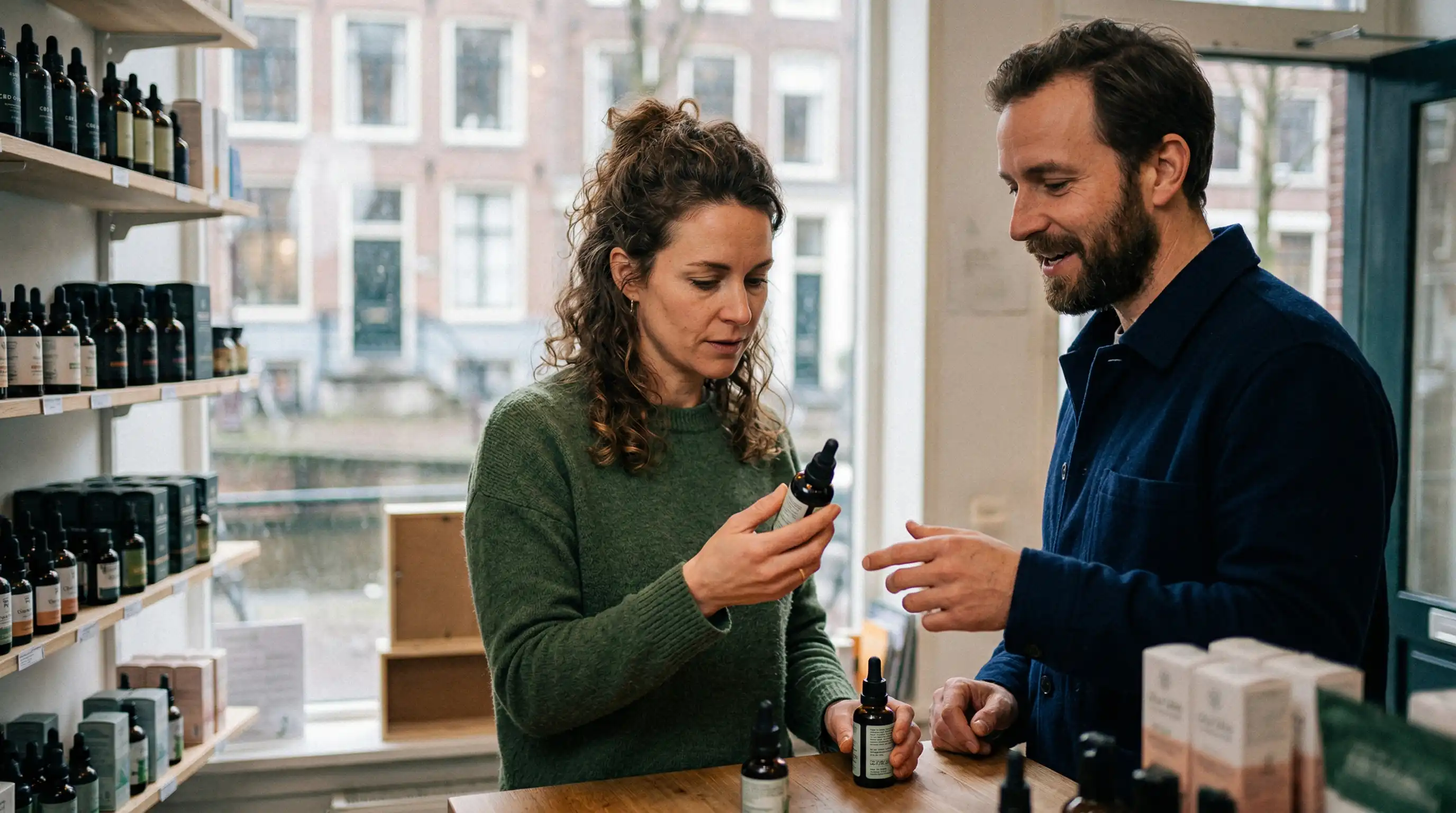
Guide d'Achat de l'Huile de CBD : Qualité, Dosage et Pièges à Éviter aux Pays-Bas
Points cles
- ✓La limite légale de THC aux Pays-Bas est de 0,05%, plus stricte que l'UE
- ✓Commencer avec 5-10mg de CBD par jour et augmenter progressivement
- ✓Privilégier les produits avec certificats d'analyse de laboratoires tiers
- ✓L'extraction CO2 préserve mieux les composés bénéfiques
- ✓Le stockage au frais et à l'abri de la lumière préserve la qualité
Introduction
CBD oil has emerged as one of the most sought-after wellness products in the Netherlands, with an estimated market value exceeding €50 million annually. As cannabis legislation continues to evolve and public awareness grows, more Dutch consumers are turning to CBD oil for its potential therapeutic benefits. However, the rapid expansion of the CBD market has created a complex landscape filled with varying product qualities, confusing marketing claims, and inconsistent pricing structures.
Navigating this marketplace requires more than casual browsing. The difference between high-quality CBD oil and inferior products can significantly impact both your health outcomes and financial investment. This comprehensive guide provides the essential knowledge needed to make informed purchasing decisions in the Dutch CBD market, covering everything from quality assessment to dosage protocols and legal considerations.
Understanding the Dutch CBD Market Landscape
The Netherlands occupies a unique position in European cannabis policy, with a relatively progressive approach to CBD regulation. Under current Dutch law, CBD products containing less than 0.05% THC are legal for sale and consumption. This threshold is actually stricter than the EU standard of 0.2% THC, reflecting the Netherlands' commitment to ensuring consumer safety while maintaining clear legal boundaries.
The Dutch CBD market encompasses various retail channels, from specialized CBD shops and smartshops to pharmacies and online retailers. Each channel offers different advantages: physical stores provide personal consultation and product examination opportunities, while online retailers often offer broader selections and competitive pricing. Understanding these distribution channels helps consumers identify the most suitable purchasing options for their specific needs.
Regulatory oversight in the Netherlands involves multiple agencies, including the Nederlandse Voedsel- en Warenautoriteit (NVWA), which monitors product safety and labeling compliance. This regulatory framework provides consumers with additional protection compared to less regulated markets, though it's essential to verify that products meet these standards.
Comprehensive Quality Assessment Framework
Evaluating CBD oil quality requires a systematic approach that examines multiple factors beyond basic cannabinoid content. The foundation of quality begins with hemp cultivation practices, where organic farming methods significantly impact the final product's purity and potency. Premium CBD oils originate from hemp grown without synthetic pesticides, herbicides, or chemical fertilizers, reducing the risk of harmful residue contamination.
Extraction methodology represents another critical quality indicator. CO2 extraction, while more expensive, preserves the full spectrum of beneficial compounds while avoiding potentially harmful solvents. This supercritical CO2 process operates at low temperatures, preventing the degradation of heat-sensitive terpenes and cannabinoids. Alternative extraction methods using ethanol can also produce high-quality results when properly executed, though they require careful purification to remove all solvent residues.
The distinction between full-spectrum, broad-spectrum, and CBD isolate products significantly affects therapeutic potential. Full-spectrum oils contain the complete cannabinoid profile, including trace amounts of THC (below legal limits), terpenes, and other phytocompounds that work synergistically in what researchers term the 'entourage effect.' Broad-spectrum products offer similar benefits while completely removing THC, making them suitable for individuals subject to drug testing. CBD isolate products contain pure CBD without other cannabis compounds, providing predictable dosing but potentially limiting therapeutic benefits.
Third-party laboratory testing serves as the gold standard for quality verification. Comprehensive certificates of analysis (COAs) should confirm cannabinoid potency, verify the absence of pesticides, heavy metals, residual solvents, and microbial contaminants, and ensure THC compliance. Reputable manufacturers make these test results easily accessible, often through QR codes on product packaging or downloadable PDFs on their websites.
Advanced Dosage Strategies and Protocols
Determining optimal CBD dosage involves understanding individual factors that influence cannabinoid metabolism and response. Body weight provides a general starting point, with many practitioners recommending 0.25-0.5mg of CBD per kilogram of body weight for beginners. However, this calculation represents only the foundation, as factors including metabolism speed, endocannabinoid system sensitivity, and the specific condition being addressed all influence optimal dosing.
The 'start low and go slow' principle remains the safest approach for CBD newcomers. Beginning with 5-10mg daily, divided into morning and evening doses, allows for careful monitoring of individual response patterns. This initial period should last at least one week, as CBD's effects can be subtle and may require time to become apparent. Gradual increases of 5mg every few days help identify the minimum effective dose while avoiding unnecessary overconsumption.
Timing and administration methods significantly impact CBD bioavailability and duration of effects. Sublingual administration, where oil is held under the tongue for 60-90 seconds before swallowing, provides faster onset and higher bioavailability compared to direct ingestion. Taking CBD with fatty foods can enhance absorption, as cannabinoids are lipophilic compounds that bind readily to dietary fats.
For specific wellness goals, dosage strategies may vary considerably. Sleep support often benefits from higher evening doses (10-25mg), while daily stress management might require smaller, more frequent doses throughout the day. Individuals using CBD for exercise recovery may find pre and post-workout timing most effective, while those addressing chronic discomfort might benefit from consistent, evenly spaced dosing.
Critical Red Flags and Products to Avoid
The unregulated nature of many CBD markets has led to numerous problematic products that consumers should actively avoid. Products making specific medical claims represent immediate red flags, as legitimate CBD companies cannot legally claim their products treat, cure, or prevent specific diseases. Be particularly wary of products marketed as 'miracle cures' or those making exaggerated therapeutic promises.
Pricing anomalies often indicate quality issues. Extremely cheap CBD oils may contain minimal active compounds, synthetic additives, or contaminated source material. Conversely, excessively expensive products don't guarantee superior quality and may simply reflect inflated marketing costs. Research typical market pricing to identify reasonable price ranges for different product categories.
Lack of transparency regarding sourcing, extraction methods, or testing protocols should raise immediate concerns. Legitimate manufacturers proudly share information about their processes and readily provide third-party test results. Companies that refuse to disclose basic product information or make test results difficult to access likely have something to hide.
Products sold through unverified online marketplaces or social media platforms carry additional risks. These channels often lack quality control measures and may feature counterfeit or contaminated products. Stick to established retailers with verifiable business credentials and customer service capabilities.
Legal Considerations and Compliance in the Netherlands
Understanding Dutch CBD regulations helps consumers make compliant purchases while avoiding legal complications. The 0.05% THC limit applies to all CBD products sold in the Netherlands, making it stricter than many neighboring countries. This threshold ensures that CBD products cannot produce psychoactive effects while maintaining legal compliance.
Importing CBD products from other EU countries requires careful attention to THC content, as products legal in other jurisdictions may exceed Dutch limits. When traveling with CBD oil, carry original packaging and certificates of analysis to demonstrate compliance with local regulations. Some countries maintain stricter CBD policies than the Netherlands, making international travel with CBD products potentially problematic.
Workplace drug testing policies may affect CBD use decisions, even when products comply with legal THC limits. While properly manufactured full-spectrum CBD oils shouldn't trigger positive drug tests, individual metabolism variations and testing sensitivity can create unexpected results. Employees subject to regular drug testing might consider broad-spectrum or isolate products to eliminate THC exposure entirely.
Optimizing Your CBD Experience
Maximizing CBD benefits requires attention to factors beyond product selection and dosage. Consistency in timing and administration helps maintain stable cannabinoid levels and allows for accurate assessment of effects. Keeping a simple log of dosage, timing, and observed effects can help identify optimal protocols for individual needs.
Lifestyle factors significantly influence CBD effectiveness. Adequate sleep, regular exercise, and stress management practices can enhance the endocannabinoid system's natural function, potentially amplifying CBD benefits. Conversely, excessive alcohol consumption, chronic stress, or poor sleep quality may diminish CBD effectiveness.
Interaction considerations become important for individuals taking prescription medications. While CBD is generally well-tolerated, it can affect the metabolism of certain drugs through cytochrome P450 enzyme inhibition. Consult healthcare providers before combining CBD with prescription medications, particularly blood thinners, seizure medications, or drugs with narrow therapeutic windows.
Future Trends and Market Evolution
The Dutch CBD market continues evolving rapidly, with new product formats, delivery methods, and quality standards emerging regularly. Water-soluble CBD formulations promise improved bioavailability, while nano-encapsulation technologies may enhance absorption and reduce required dosages. These innovations could significantly impact future purchasing decisions and dosage protocols.
Regulatory developments at both national and EU levels may affect product availability and quality standards. The European Food Safety Authority continues evaluating CBD as a novel food ingredient, potentially leading to more standardized regulations across member states. Staying informed about regulatory changes helps consumers anticipate market shifts and make strategic purchasing decisions.
Sustainability considerations are becoming increasingly important to environmentally conscious consumers. Look for companies implementing sustainable cultivation practices, eco-friendly packaging, and carbon-neutral shipping options. These factors may become significant differentiators as the market matures and environmental awareness grows.
Making Informed Purchase Decisions
Successful CBD oil purchasing requires balancing multiple factors including quality, price, legal compliance, and individual needs. Start by identifying reputable retailers with transparent business practices and comprehensive product information. Verify third-party testing availability and review certificates of analysis before making purchase decisions.
Consider starting with smaller bottle sizes when trying new brands or formulations, allowing for quality assessment without significant financial commitment. Many reputable companies offer satisfaction guarantees or return policies that provide additional consumer protection.
Building relationships with knowledgeable retailers can provide ongoing support and product recommendations as your needs evolve. Quality CBD shops employ staff trained in cannabinoid science and can offer personalized guidance based on individual circumstances and goals.
The investment in high-quality CBD oil pays dividends through improved effectiveness, safety, and overall experience. By following these comprehensive guidelines, Dutch consumers can navigate the CBD market confidently and make purchases that support their wellness goals while ensuring legal compliance and product safety.
Tags
Questions Fréquentes
Quelle est la limite légale de THC pour l'huile de CBD aux Pays-Bas ?▾
Les produits CBD aux Pays-Bas doivent contenir moins de 0,05% de THC, ce qui est plus strict que la norme européenne de 0,2%. Cela garantit que les produits ne peuvent pas produire d'effets psychoactifs tout en maintenant la conformité légale.
Combien d'huile de CBD dois-je prendre en tant que débutant ?▾
Les débutants devraient commencer avec 5-10mg de CBD par jour, divisés en deux doses. Surveillez votre réponse pendant au moins une semaine avant d'augmenter graduellement par incréments de 5mg pour trouver votre dose optimale.
Quelle est la différence entre le CBD à spectre complet et l'isolat de CBD ?▾
Le CBD à spectre complet contient tous les cannabinoïdes, terpènes et traces de THC (sous les limites légales), créant l'"effet d'entourage". L'isolat de CBD contient uniquement du CBD pur, offrant un dosage prévisible mais limitant potentiellement les bénéfices thérapeutiques.
Comment vérifier la qualité d'une huile de CBD ?▾
Recherchez les certificats d'analyse (COA) de laboratoires tiers qui vérifient le contenu en cannabinoïdes, confirment l'absence de contaminants et assurent la conformité THC. Ces documents doivent être récents et facilement accessibles.