Comment le Gedoogbeleid Néerlandais Façonne l'Industrie des Smartshops
Points cles
- ✓Le gedoogbeleid néerlandais privilégie la réduction des risques sur la prohibition stricte
- ✓Cette politique de tolérance a permis l'émergence et le développement des smartshops
- ✓Les smartshops contribuent significativement à la santé publique et à la réduction des risques
- ✓L'approche néerlandaise influence les discussions mondiales sur la réforme des politiques de drogues
- ✓L'industrie continue d'évoluer face aux défis réglementaires et technologiques
The Netherlands has long been recognized for its pragmatic approach to drug policy, embodied in the concept of 'gedoogbeleid' – a policy of tolerance that has profoundly shaped the country's smartshop industry. This unique regulatory framework has created an environment where legal psychoactive substances can be sold openly, making the Netherlands a global leader in harm reduction and responsible drug policy.
Understanding Gedoogbeleid: The Foundation of Dutch Drug Policy
Gedoogbeleid, literally meaning 'tolerance policy,' represents a distinctly Dutch approach to managing substances that exist in legal gray areas. Rather than strictly prohibiting all psychoactive substances, Dutch authorities have chosen to tolerate certain activities under specific conditions. This policy emerged in the 1970s as a response to the growing drug problem and has since become a cornerstone of Dutch pragmatism.
The philosophy behind gedoogbeleid is rooted in the principle that prohibition alone cannot solve drug-related problems. Instead, the focus shifts to minimizing harm, protecting public health, and maintaining social order. This approach recognizes that people will continue to seek altered states of consciousness regardless of legal restrictions, making regulation and education more effective than outright bans.
This tolerance policy operates on multiple levels within Dutch society. At its core, gedoogbeleid allows authorities to exercise discretion in enforcement, choosing when to prosecute and when to turn a blind eye. This flexibility has proven essential in managing the complex landscape of psychoactive substances, where new compounds and preparations constantly emerge that may not fit neatly into existing legal categories.
Historical Context and Development
The roots of gedoogbeleid can be traced back to the social upheavals of the 1960s and 1970s, when traditional approaches to drug control proved inadequate in addressing widespread cannabis use among young people. Dutch policymakers recognized that criminalizing large portions of the population for relatively harmless activities was counterproductive and potentially damaging to social cohesion.
The Baan Commission, established in 1968, played a crucial role in shaping this new approach. Their recommendations emphasized the distinction between 'hard' and 'soft' drugs, arguing that cannabis posed significantly less risk than substances like heroin or cocaine. This nuanced understanding laid the groundwork for the differential treatment of various substances that characterizes Dutch drug policy today.
By the 1980s, gedoogbeleid had evolved into a comprehensive framework that extended beyond cannabis to encompass various other substances and activities. This evolution coincided with growing international recognition of harm reduction as a legitimate public health strategy, positioning the Netherlands as a pioneer in evidence-based drug policy.
The Birth and Evolution of Smartshops
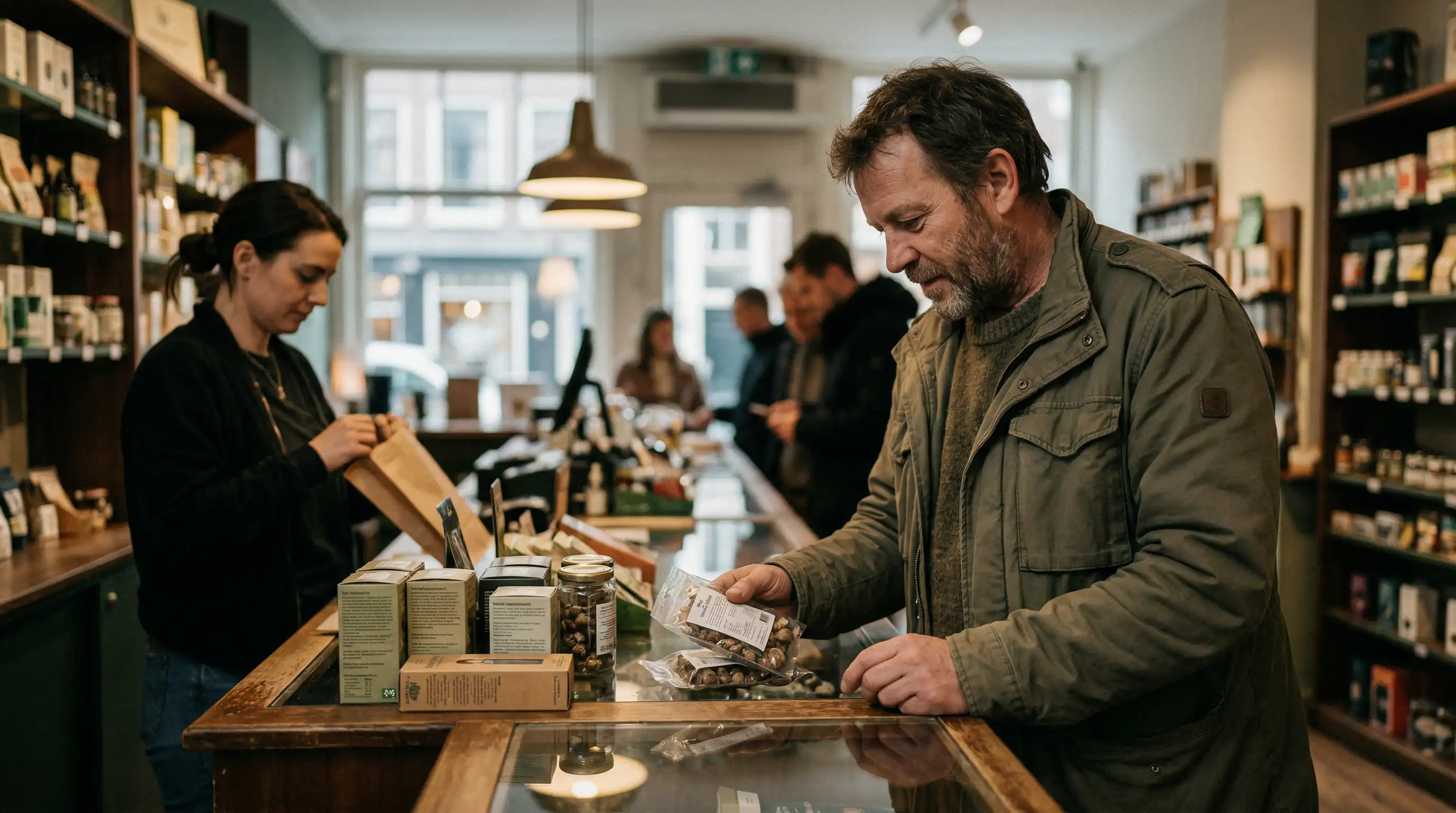
Smart shops emerged in the Netherlands during the 1990s as a direct result of gedoogbeleid. These establishments began selling legal alternatives to prohibited substances, including magic mushrooms, herbal highs, and various natural psychoactives. The term 'smart' reflected both the intelligent approach to drug policy and the cognitive-enhancing properties of many products sold.
Initially, smartshops operated in a relatively unregulated environment, with entrepreneurs testing the boundaries of what was legally permissible. The industry grew rapidly, attracting both domestic customers and international visitors seeking legal access to psychoactive substances. This growth was facilitated by the Dutch legal principle that substances are legal until specifically prohibited, creating opportunities for innovative retailers to offer novel products.
The early smartshop scene was characterized by experimentation and education. Shop owners often served as informal harm reduction counselors, providing customers with information about dosages, effects, and safety precautions. This educational role became a defining feature of the smartshop industry, distinguishing it from traditional drug markets where such information was rarely available.
As the industry matured, smartshops began to professionalize their operations. Many established relationships with suppliers, developed quality control procedures, and invested in staff training. This evolution was driven partly by competition but also by a genuine commitment to customer safety and satisfaction.
Legal Framework and Regulatory Challenges
The legal status of smartshop products exists within a complex web of national and international regulations. While gedoogbeleid provides the philosophical foundation for tolerance, specific substances must still navigate various legal hurdles. The Dutch Opium Act serves as the primary legislation governing controlled substances, but its application to naturally occurring compounds and novel preparations often requires careful interpretation.
One of the most significant challenges facing the smartshop industry has been the periodic prohibition of previously legal substances. The ban on psilocybin mushrooms in 2008 exemplifies this dynamic, forcing the industry to adapt by focusing on legal alternatives like psilocybin truffles. This adaptability has become a hallmark of the Dutch smartshop sector, demonstrating the resilience that gedoogbeleid can foster.
The European Union's influence on Dutch drug policy has also created tensions within the gedoogbeleid framework. EU directives and international treaties sometimes conflict with the Netherlands' tolerant approach, forcing policymakers to balance domestic preferences with international obligations. This balancing act has led to some restrictions on smartshop products, but the core principle of tolerance remains intact.
Regulatory oversight of smartshops involves multiple agencies, including local municipalities, health authorities, and law enforcement. This multi-layered approach ensures that shops operate within legal boundaries while maintaining the flexibility that gedoogbeleid requires. Regular inspections and licensing requirements help maintain standards while preserving the industry's innovative character.
Impact on Harm Reduction and Public Health
The smartshop industry has made significant contributions to harm reduction efforts in the Netherlands and beyond. By providing legal access to psychoactive substances in a controlled environment, smartshops have helped reduce the risks associated with black market purchases. Customers can obtain products of known quality and purity, along with accurate information about effects and dosages.
Education remains a cornerstone of the smartshop approach to harm reduction. Many shops provide detailed information about their products, including potential risks and contraindications. This educational function extends beyond individual transactions to include workshops, online resources, and collaboration with harm reduction organizations.
The availability of legal alternatives through smartshops has also contributed to reducing demand for more dangerous illegal substances. Research suggests that access to legal psychoactives can serve as a substitute for riskier drugs, potentially reducing overall harm within the drug-using population.
Public health data from the Netherlands supports the effectiveness of this approach. The country consistently reports lower rates of drug-related deaths and HIV infections compared to nations with more punitive drug policies. While multiple factors contribute to these outcomes, the role of gedoogbeleid and the smartshop industry in promoting safer drug use cannot be overlooked.
Economic and Cultural Significance
The smartshop industry has evolved into a significant economic sector within the Netherlands, generating substantial revenue and employment opportunities. Major cities like Amsterdam, Rotterdam, and Utrecht host numerous smartshops that serve both local residents and international tourists. This economic activity extends beyond direct sales to include related services such as testing facilities, educational programs, and tourism packages.
Culturally, smartshops have become symbols of Dutch tolerance and pragmatism. They represent a society willing to challenge conventional approaches to drug control in favor of evidence-based policies. This cultural significance extends internationally, with the Dutch model serving as inspiration for drug policy reform movements worldwide.
The industry has also fostered innovation in product development and harm reduction techniques. Dutch companies have pioneered new extraction methods, developed novel preparations, and created educational materials that have influenced practices globally. This innovation is directly attributable to the permissive environment created by gedoogbeleid.
Tourism represents another significant economic dimension of the smartshop industry. Visitors from countries with restrictive drug policies often travel to the Netherlands specifically to experience legal psychoactives. This 'psychedelic tourism' generates substantial revenue for the hospitality sector while spreading awareness of alternative approaches to drug policy.
International Influence and Future Prospects
The Dutch model of gedoogbeleid and its impact on the smartshop industry has influenced drug policy discussions worldwide. Countries grappling with the failures of prohibition increasingly look to the Netherlands for guidance on implementing more pragmatic approaches. This international attention has elevated the Netherlands' profile as a leader in progressive drug policy.
Recent developments in psychedelic research and therapy have renewed interest in the Dutch approach. As studies demonstrate the therapeutic potential of substances like psilocybin and MDMA, the Netherlands' experience with legal access becomes increasingly relevant. The smartshop industry's role in normalizing these substances and promoting safe use practices provides valuable insights for other jurisdictions considering similar policies.
However, the future of gedoogbeleid and the smartshop industry faces several challenges. Political pressure from conservative parties and international partners continues to threaten the tolerant approach. Economic pressures and changing social attitudes also influence policy decisions, creating uncertainty about long-term sustainability.
Climate change and environmental concerns are also shaping the industry's future. Many smartshop products depend on natural resources that may become scarce or expensive due to environmental degradation. This challenge is driving innovation in sustainable cultivation and synthetic alternatives.
Lessons for Global Drug Policy Reform
The Dutch experience with gedoogbeleid offers valuable lessons for countries considering drug policy reform. The importance of political will, public support, and institutional flexibility cannot be overstated. Successful implementation of tolerant policies requires careful attention to public health outcomes and ongoing adaptation to changing circumstances.
The smartshop industry demonstrates that legal markets for psychoactive substances can operate safely and effectively when properly regulated. The emphasis on education, quality control, and harm reduction provides a model for other jurisdictions seeking alternatives to prohibition.
Perhaps most importantly, the Dutch experience shows that drug policy can be both pragmatic and principled. Gedoogbeleid represents a commitment to evidence-based policymaking that prioritizes public health over moral posturing. This approach has created space for innovation and experimentation that benefits not only the Netherlands but the global community interested in more effective drug policies.
The ongoing evolution of gedoogbeleid and its impact on the smartshop industry continues to provide insights into the possibilities and challenges of progressive drug policy. As the international conversation about drug reform intensifies, the Dutch model remains a crucial reference point for understanding how tolerance and regulation can work together to create safer, more effective approaches to managing psychoactive substances.
Tags
Questions Fréquentes
Qu'est-ce que le gedoogbeleid et comment fonctionne-t-il en pratique ?▾
Le gedoogbeleid est une 'politique de tolérance' néerlandaise qui permet aux autorités d'exercer leur discrétion dans l'application des lois sur les drogues, choisissant quand poursuivre et quand tolérer certaines activités. En pratique, cela signifie que les substances et activités évoluant dans des zones grises légales peuvent être tolérées sous des conditions spécifiques, en se concentrant sur la réduction des risques plutôt que sur l'interdiction stricte.
Comment le gedoogbeleid a-t-il mené à la création des smartshops ?▾
Le gedoogbeleid a créé un environnement légal où les substances sont autorisées jusqu'à ce qu'elles soient spécifiquement interdites, permettant aux entrepreneurs dans les années 1990 d'établir des smartshops vendant des alternatives psychoactives légales. Cette politique de tolérance a fourni l'espace réglementaire nécessaire pour que l'industrie se développe et prospère.
Quel rôle jouent les smartshops dans la réduction des risques ?▾
Les smartshops servent de centres de réduction des risques en fournissant un accès légal à des substances contrôlées en qualité, des ressources éducatives sur l'usage sûr, et des conseils professionnels sur les dosages et les interactions. Ils fonctionnent comme des points d'accès importants pour l'information sur la sécurité et peuvent diriger les utilisateurs vers des services de soutien appropriés.