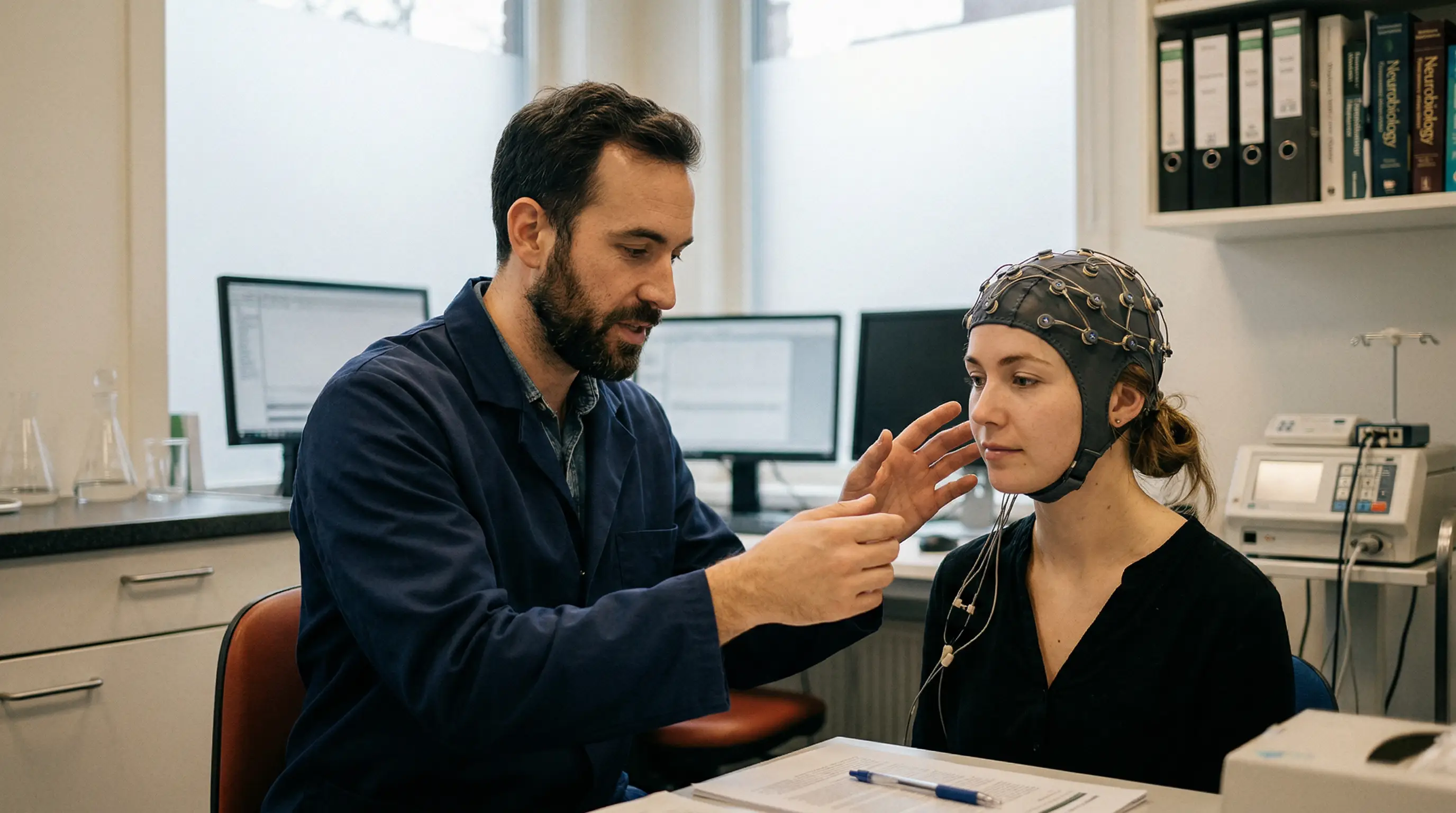
De Wetenschap Achter Psilocybine: Wat Onderzoek Zegt in 2026
Belangrijkste Punten
- ✓Psilocybine toont 60%+ responspercentages bij behandelresistente depressie
- ✓Werkt via neuroplasticiteit en hersenconnectiviteitsveranderingen
- ✓Uitstekend veiligheidsprofiel in gecontroleerde therapeutische settings
- ✓Effecten kunnen 6-12 maanden aanhouden na behandeling
- ✓Meer dan 200 klinische studies wereldwijd voltooid of lopende
Introduction
Psilocybin, the active compound found in magic mushrooms, has emerged from the shadows of counterculture to become one of the most promising therapeutic compounds in modern neuroscience. As we progress through 2026, the scientific understanding of psilocybin has reached unprecedented levels, with groundbreaking research reshaping how we view mental health treatment and consciousness itself.
The transformation of psilocybin from a Schedule I controlled substance to a legitimate therapeutic tool represents one of the most remarkable shifts in modern medicine. This compound, which has been used ceremonially for thousands of years by indigenous cultures, is now being studied in some of the world's most prestigious research institutions, offering hope to millions suffering from treatment-resistant mental health conditions.
The Current State of Psilocybin Research
The past five years have witnessed an explosion in psilocybin research, with over 200 clinical trials completed or ongoing worldwide. Major institutions including Johns Hopkins, Imperial College London, and the University of Amsterdam have published landmark studies demonstrating psilocybin's efficacy in treating depression, PTSD, addiction, and end-of-life anxiety.
Recent meta-analyses show that psilocybin-assisted therapy produces significant improvements in treatment-resistant depression, with response rates exceeding 60% in clinical trials. These results far surpass traditional antidepressants, which typically show response rates of 30-40% in similar populations. The COMPASS Pathways COMP360 trials, completed in 2025, demonstrated that a single high-dose psilocybin session, combined with psychological support, produced sustained antidepressant effects lasting up to six months.
The research landscape has expanded beyond depression to encompass a wide range of mental health conditions. Studies on psilocybin's effectiveness in treating obsessive-compulsive disorder, eating disorders, and substance use disorders have shown equally promising results. The University of California San Francisco's groundbreaking study on psilocybin for alcohol use disorder reported a 70% reduction in heavy drinking days among participants, with effects persisting for over a year post-treatment.
How Psilocybin Works in the Brain
Psilocybin functions as a prodrug, converting to psilocin in the body, which then activates serotonin 2A receptors throughout the brain. This activation triggers a cascade of neurobiological changes that researchers are only beginning to understand. The compound's mechanism of action is fundamentally different from traditional psychiatric medications, which typically work by blocking or enhancing specific neurotransmitter systems.
Neuroimaging studies using fMRI and PET scans reveal that psilocybin dramatically alters brain connectivity patterns. The compound appears to reduce activity in the default mode network (DMN), a brain network associated with self-referential thinking and rumination. Simultaneously, it increases communication between brain regions that typically don't interact, creating novel neural pathways.
This neuroplasticity effect, termed "psychoplasticity" by researchers, may explain psilocybin's therapeutic benefits. The compound appears to create a window of enhanced brain plasticity, allowing patients to break free from rigid thought patterns and develop new, healthier ways of thinking. Dr. Robin Carhart-Harris from Imperial College London describes this as the brain entering a more "flexible" state, similar to the heightened plasticity observed during critical developmental periods.
The Neuroplasticity Revolution
One of the most exciting discoveries in recent psilocybin research is its profound impact on neuroplasticity. Studies conducted at Yale University in 2025 demonstrated that psilocybin promotes the growth of dendritic spines, the small protrusions on neurons that form synaptic connections. This structural remodeling of neural circuits may explain why the therapeutic effects of psilocybin can persist long after the acute effects have worn off.
The concept of "critical periods" in brain development has been revolutionized by psilocybin research. These are windows of time when the brain is particularly malleable and capable of forming new connections. While these periods typically close in early adulthood, psilocybin appears to temporarily reopen them, allowing for rapid therapeutic change that would normally take months or years of traditional therapy to achieve.
Researchers at the Netherlands Institute for Neuroscience have identified specific molecular pathways involved in psilocybin-induced neuroplasticity. The compound activates the mTOR signaling pathway, which is crucial for protein synthesis and synaptic plasticity. This activation leads to increased production of brain-derived neurotrophic factor (BDNF), a protein that promotes the survival and growth of neurons.
Clinical Applications and Therapeutic Protocols
The clinical application of psilocybin has evolved significantly since early research began. Modern psilocybin-assisted therapy follows a structured protocol consisting of three phases: preparation, dosing sessions, and integration. This framework ensures patient safety while maximizing therapeutic outcomes.
During the preparation phase, patients undergo extensive screening and multiple sessions with trained therapists to establish trust and set appropriate intentions for the experience. The dosing sessions take place in carefully controlled clinical environments, with patients typically receiving doses ranging from 10-25mg of synthetic psilocybin. Throughout the 6-8 hour session, patients are supported by trained facilitators who provide guidance and ensure safety.
The integration phase, which can last several weeks or months, involves processing the insights and experiences gained during the psilocybin session. This phase is crucial for translating the acute effects into lasting therapeutic change. Research has shown that patients who receive adequate integration support maintain their therapeutic gains significantly longer than those who don't.
Safety Profile and Risk Assessment
Extensive clinical research has established psilocybin as remarkably safe when used in controlled therapeutic settings. The compound has an excellent safety profile, with no known cases of fatal overdose and minimal risk of addiction or dependence. The most common adverse effects are psychological in nature, including anxiety, confusion, or challenging emotional experiences during the acute phase.
Large-scale safety studies involving over 5,000 participants have reported serious adverse events in less than 1% of cases. These events were primarily related to pre-existing psychiatric conditions or inadequate screening procedures. The development of comprehensive screening protocols and contraindication guidelines has further reduced these risks.
Physiological effects of psilocybin are generally mild and transient, including temporary increases in blood pressure and heart rate. However, these effects are typically well-tolerated by healthy individuals. Patients with cardiovascular conditions require additional monitoring and may not be suitable candidates for psilocybin therapy.
Regulatory Landscape and Legal Developments
The regulatory landscape for psilocybin has undergone dramatic changes in recent years. In 2024, the European Medicines Agency granted breakthrough therapy designation to psilocybin for treatment-resistant depression, accelerating the approval process. Several countries, including the Netherlands, Switzerland, and Canada, have implemented compassionate use programs allowing access to psilocybin therapy for patients with serious mental health conditions.
The Netherlands has emerged as a leader in psilocybin research and regulation. The Dutch government's progressive approach to psychedelic research has attracted international attention and investment. The country's existing infrastructure for legal psilocybin truffle sales has provided valuable real-world data on safety and usage patterns, informing regulatory decisions worldwide.
In the United States, Oregon became the first state to legalize psilocybin therapy in 2023, with licensed treatment centers now operating throughout the state. Other states, including California, Colorado, and Washington, have followed suit with their own psilocybin therapy programs. This patchwork of state-level legalization is creating a natural laboratory for studying different regulatory approaches.
Future Directions and Emerging Research
The future of psilocybin research extends far beyond its current therapeutic applications. Researchers are exploring the compound's potential in treating neurodegenerative diseases, chronic pain, and even enhancing creativity and problem-solving abilities in healthy individuals. Preliminary studies suggest that psilocybin may promote neurogenesis and protect against age-related cognitive decline.
Personalized medicine approaches are being developed to optimize psilocybin therapy for individual patients. Genetic testing for serotonin receptor variants, neuroimaging to assess brain connectivity patterns, and psychological profiling are being combined to predict treatment response and customize dosing protocols.
The development of novel psilocybin analogs and delivery methods represents another frontier in research. Scientists are working on compounds that retain psilocybin's therapeutic benefits while reducing the duration of acute effects or eliminating visual distortions that some patients find distressing.
Implications for Mental Healthcare
The integration of psilocybin into mainstream mental healthcare represents a paradigm shift in how we approach psychiatric treatment. Traditional models focused on symptom management through long-term medication use are being challenged by psilocybin's ability to produce rapid, lasting changes with minimal treatment sessions.
This shift has profound implications for healthcare economics. While psilocybin therapy requires significant upfront investment in specialized facilities and trained staff, the long-term cost savings from reduced medication use and fewer therapy sessions could be substantial. Economic analyses suggest that psilocybin therapy could be cost-effective for treatment-resistant depression within five years of implementation.
The success of psilocybin research has also catalyzed interest in other psychedelic compounds, creating a renaissance in consciousness research. This broader movement is challenging fundamental assumptions about the nature of mental illness and the potential for human psychological transformation.
Conclusion
As we advance through 2026, psilocybin stands at the forefront of a revolution in mental healthcare. The convergence of rigorous scientific research, evolving regulatory frameworks, and growing clinical experience has positioned this ancient compound as a powerful tool for healing and transformation. While challenges remain in terms of access, training, and integration into existing healthcare systems, the potential benefits for millions of people suffering from mental health conditions are undeniable.
The journey from counterculture curiosity to legitimate medicine represents more than just the rehabilitation of a single compound—it reflects our evolving understanding of consciousness, mental health, and the remarkable plasticity of the human brain. As research continues to unveil the mysteries of psilocybin's therapeutic mechanisms, we stand on the threshold of a new era in psychiatry, one that offers hope where traditional treatments have failed and opens new possibilities for human flourishing.
Tags
Veelgestelde Vragen
Hoe verschilt psilocybine van traditionele antidepressiva?▾
Psilocybine werkt door tijdelijk hersenconnectiviteit te veranderen en neuroplasticiteit te bevorderen, terwijl traditionele antidepressiva doorgaans neurotransmitterniveaus aanpassen. Psilocybine-therapie omvat enkele begeleide sessies in plaats van dagelijkse medicatie, en toont hogere responspercentages (60%+) vergeleken met conventionele behandelingen (30-40%).
Is psilocybine-therapie veilig voor geestelijke gezondheidsbehandeling?▾
Klinisch onderzoek toont aan dat psilocybine een uitstekend veiligheidsprofiel heeft wanneer gebruikt in gecontroleerde therapeutische settings. Ernstige bijwerkingen komen voor in minder dan 1% van de gevallen, zonder bekende fatale overdoses. De meest voorkomende bijwerkingen zijn tijdelijke psychologische ongemakken tijdens sessies.
Hoe lang houden de therapeutische effecten van psilocybine aan?▾
Studies tonen aan dat therapeutische voordelen van psilocybine-ondersteunde therapie 6-12 maanden of langer kunnen aanhouden na behandeling. De duurzaamheid van effecten lijkt gekoppeld aan juiste voorbereiding en integratieondersteuning, waarbij sommige patiënten langdurige verbeteringen ervaren.