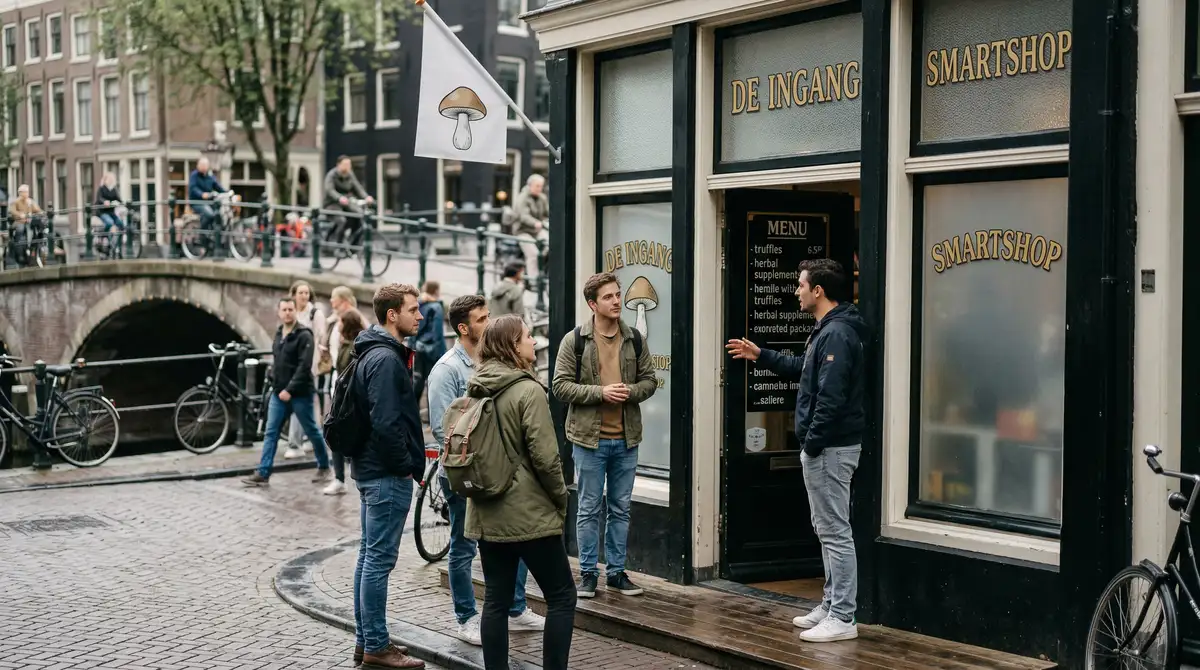
Niederländische Drogenpolitik erklärt: Gedoogbeleid und der rechtliche Status von Smartshops verstehen
Wichtigste Erkenntnisse
- ✓Gedoogbeleid ist eine einzigartige niederländische Toleranzpolitik, die bewusste Nicht-Durchsetzung bestimmter Gesetze beinhaltet
- ✓Das niederländische Opiumgesetz kategorisiert Substanzen in zwei Listen mit unterschiedlichen rechtlichen Behandlungen
- ✓Smartshops verkaufen legal verschiedene psychoaktive Substanzen, die nicht unter das Opiumgesetz fallen
- ✓Psilocybin-Trüffel bleiben legal, während Psilocybin-Pilze seit 2008 verboten sind
- ✓Was in den Niederlanden legal ist, kann in anderen Ländern illegal sein - internationale Reisende sollten vorsichtig sein
The Netherlands has long been recognized for its progressive and pragmatic approach to drug policy, setting it apart from many other countries worldwide. At the heart of this unique system lies the concept of 'gedoogbeleid' – a Dutch policy of tolerance that has shaped how the country handles various substances, including those sold in smartshops.
Understanding this complex legal landscape is crucial for anyone interested in the Dutch approach to harm reduction, personal freedom, and public health. Whether you're a visitor to the Netherlands or a resident curious about the legal framework surrounding smartshops, this comprehensive guide will help you navigate the intricacies of Dutch drug policy.
The Origins and Philosophy of Gedoogbeleid
Gedoogbeleid, literally translated as 'tolerance policy,' is a uniquely Dutch approach to law enforcement that involves the deliberate non-enforcement of certain laws under specific circumstances. This policy doesn't make illegal activities legal; rather, it creates a framework where authorities choose not to prosecute certain offenses when they meet predetermined criteria.
The concept emerged in the 1970s as Dutch policymakers recognized that strict prohibition wasn't effectively addressing drug-related issues. The Netherlands faced rising drug use, particularly among young people, and traditional punitive approaches were proving counterproductive. Instead of criminalizing users and small-scale activities, the Netherlands chose a path of regulated tolerance, focusing law enforcement resources on serious crimes while allowing controlled access to certain substances.
This pragmatic approach was revolutionary for its time and reflected broader Dutch cultural values of tolerance, pragmatism, and individual responsibility. The policy acknowledges that complete prohibition is often impossible to enforce effectively and can create more problems than it solves. By creating space for regulated activities, authorities can better monitor and control potentially harmful behaviors while reducing the criminalization of otherwise law-abiding citizens.
The success of gedoogbeleid has been measured not just in terms of drug use statistics, but also in public health outcomes, crime reduction, and social cohesion. This approach has influenced drug policy discussions worldwide and continues to serve as a model for harm reduction strategies.
Understanding the Dutch Opium Act
The legal framework governing substances in the Netherlands is primarily defined by the Dutch Opium Act (Opiumwet), which was first enacted in 1928 and has been amended multiple times to reflect changing understanding of drug policy and public health needs. This legislation categorizes controlled substances into two distinct lists, each with different legal implications and enforcement priorities.
List I contains what are classified as 'hard drugs' – substances considered to pose significant health risks and having high potential for dependency. This includes drugs like heroin, cocaine, MDMA, LSD, and amphetamines. The possession, sale, and distribution of List I substances are strictly prohibited and actively prosecuted, with significant penalties for violations.
List II encompasses 'soft drugs,' primarily cannabis and cannabis products. While technically illegal, these substances are subject to the tolerance policy under specific conditions. This distinction reflects the Dutch recognition that not all illegal substances pose the same level of risk to individuals and society.
Crucially for smartshop operations, many substances sold in these establishments fall outside the scope of the Opium Act entirely. This includes various natural products, herbs, and compounds that have not been specifically scheduled under Dutch law. However, this doesn't mean these substances exist in a completely unregulated environment – other legislation, including consumer protection laws and health regulations, still apply.
The Legal Status of Smartshops in the Netherlands
Smartshops in the Netherlands operate within a carefully defined legal framework that distinguishes between different types of substances and business practices. These establishments are legitimate retail businesses that must comply with standard commercial regulations, including business licensing, taxation, and consumer protection laws.
The key to smartshop legality lies in the substances they sell. Most products available in Dutch smartshops are either completely legal or exist in regulatory grey areas where they haven't been specifically prohibited. This includes a wide range of natural psychoactive substances, herbal preparations, and synthetic compounds that haven't been scheduled under the Opium Act.
However, the legal landscape is dynamic and subject to change. Dutch authorities regularly review new substances and can quickly schedule them if they're deemed to pose public health risks. This has happened with various synthetic drugs and some natural substances over the years, requiring smartshops to adapt their product offerings accordingly.
Smartshops must also comply with age restrictions, typically prohibiting sales to individuals under 18 years old. Many shops implement additional safeguards, such as providing information about proper use, potential risks, and harm reduction practices. This self-regulation helps maintain the industry's legitimacy and supports the broader harm reduction goals of Dutch drug policy.
Specific Substances and Their Legal Status
The legal status of specific substances sold in smartshops varies considerably, and understanding these distinctions is crucial for both consumers and business operators. Some of the most commonly available substances include psilocybin truffles, which occupy a unique legal position in the Netherlands.
Psilocybin mushrooms were banned in 2008 following several high-profile incidents involving tourists, but psilocybin-containing truffles (technically sclerotia) remain legal because they weren't specifically included in the ban. This legal distinction allows smartshops to continue selling these psychoactive fungi, making the Netherlands one of the few countries where psilocybin products are legally available.
Other popular substances include various cacti containing mescaline, such as San Pedro and Peyote, which remain legal to possess and sell as ornamental plants, though their preparation for consumption exists in a grey area. Salvia divinorum, kratom, and kanna are other examples of substances that remain legal and are commonly found in smartshops.
The legal status of these substances can change, and smartshop operators must stay informed about regulatory developments. The Dutch government has shown willingness to quickly ban substances that prove problematic, as seen with various synthetic drugs and some herbal preparations over the years.
Harm Reduction and Public Health Considerations
The Dutch approach to drug policy, including the regulation of smartshops, is fundamentally grounded in harm reduction principles. Rather than focusing solely on preventing drug use, this approach prioritizes minimizing the negative consequences associated with substance use for both individuals and society.
Harm reduction in the context of smartshops involves several key elements. First, legal access to certain substances reduces the risks associated with black market purchases, including unknown purity, dangerous adulterants, and criminal involvement. When people can purchase substances from legitimate businesses, they're more likely to receive accurate information about dosage, effects, and potential risks.
Second, smartshops often serve as informal education centers where staff can provide guidance on safe use practices, potential interactions, and harm reduction strategies. Many shops provide detailed information sheets, dosage guidelines, and safety recommendations with their products. This educational role is crucial in promoting responsible use and preventing adverse outcomes.
The Dutch system also facilitates better monitoring of substance use patterns and emerging trends. When sales occur through legitimate channels, authorities can better track which substances are being used and identify potential public health concerns before they become widespread problems.
International Perspectives and Comparisons
The Dutch approach to drug policy, including the operation of smartshops, stands in stark contrast to the prohibitionist policies adopted by most other countries. This difference has made the Netherlands a focal point for international drug policy debates and a destination for drug tourism.
Many countries maintain strict prohibition policies that criminalize not only the sale but also the possession of psychoactive substances. In these jurisdictions, substances commonly sold in Dutch smartshops would be completely illegal, and their sale could result in serious criminal penalties. This creates a unique situation where activities that are legal or tolerated in the Netherlands may be serious crimes elsewhere.
The Dutch model has influenced policy discussions in various countries, particularly as evidence accumulates about the limitations of purely prohibitionist approaches. Some jurisdictions have begun exploring harm reduction strategies, decriminalization policies, or regulated access to certain substances, often looking to the Netherlands as a reference point.
However, the Dutch approach also faces criticism and challenges. Some argue that tolerance policies can normalize drug use or create problems with drug tourism. The Netherlands has had to balance its liberal domestic policies with international pressure and treaty obligations, sometimes leading to policy adjustments or restrictions.
Current Challenges and Future Developments
The Dutch drug policy landscape continues to evolve in response to new challenges and changing circumstances. One significant challenge is the emergence of new psychoactive substances (NPS) that don't fit neatly into existing legal categories. These substances can appear on the market faster than regulators can assess and potentially ban them, creating ongoing challenges for both authorities and smartshop operators.
Drug tourism presents another ongoing challenge. The liberal Dutch approach attracts visitors from countries with stricter policies, sometimes leading to problems with inexperienced users or overcrowding in certain areas. This has prompted discussions about potential restrictions or additional regulations to manage tourism-related issues.
The Netherlands also faces pressure from international partners and treaty obligations. As a signatory to various international drug control treaties, the country must balance its domestic policies with international commitments. This sometimes creates tension between local harm reduction goals and international prohibition requirements.
Technological developments and changing consumption patterns also influence policy considerations. The rise of online sales, new delivery methods, and evolving user demographics all present challenges for existing regulatory frameworks.
Practical Implications for Consumers and Visitors
For individuals interested in visiting smartshops or understanding their legal status, several practical considerations are important. First, while many substances are legal to purchase and possess in the Netherlands, this doesn't extend to other countries. Travelers should be aware that taking substances purchased in Dutch smartshops to other countries could result in serious legal consequences.
Age restrictions apply to smartshop purchases, typically requiring customers to be at least 18 years old. Valid identification is usually required, and shops may refuse service to individuals who appear intoxicated or unable to make informed decisions.
Consumers should also understand that legal doesn't necessarily mean safe. Even legal substances can have significant effects and potential risks, particularly when used inappropriately or in combination with other substances. Responsible use involves understanding dosage, effects, contraindications, and safety precautions.
Many smartshops provide educational materials and staff guidance, but consumers should also conduct their own research and consider consulting healthcare providers, especially if they have medical conditions or take medications that might interact with psychoactive substances.
The Role of Education and Information
Education plays a crucial role in the Dutch approach to drug policy and smartshop regulation. Rather than relying solely on prohibition to prevent harm, the system emphasizes providing accurate information that enables individuals to make informed decisions about substance use.
Smartshops often serve as important sources of drug education, providing information about effects, dosages, safety precautions, and harm reduction strategies. This educational role helps fill gaps that might exist in formal education systems or healthcare settings, where discussion of psychoactive substances may be limited or focused primarily on abstinence.
The availability of accurate information is particularly important given the prevalence of misinformation about psychoactive substances. When people have access to reliable, science-based information, they're better equipped to make safe decisions and avoid potentially dangerous practices.
This educational approach extends beyond individual smartshops to include government health agencies, non-profit organizations, and research institutions that contribute to public understanding of substance use and harm reduction. The result is a more informed public discourse about drugs and their effects, which supports better policy decisions and individual choices.
Tags
Häufig Gestellte Fragen
Ist es legal, psychedelische Substanzen in niederländischen Smartshops zu kaufen?▾
Viele psychoaktive Substanzen, die in niederländischen Smartshops verkauft werden, sind legal, einschließlich Psilocybin-Trüffel und verschiedener natürlicher Produkte wie Mescalin-haltige Kakteen. Der rechtliche Status variiert jedoch je nach Substanz, und was in den Niederlanden legal ist, kann in anderen Ländern illegal sein.
Was ist der Unterschied zwischen Gedoogbeleid und Legalisierung?▾
Gedoogbeleid ist eine Toleranzpolitik, bei der Behörden sich entscheiden, bestimmte Gesetze unter spezifischen Bedingungen nicht durchzusetzen, aber die Aktivitäten bleiben technisch illegal. Legalisierung würde diese Aktivitäten vollständig legal machen, was sich vom niederländischen Ansatz der regulierten Toleranz unterscheidet.
Können Touristen legal Substanzen aus niederländischen Smartshops kaufen?▾
Ja, Touristen können legal Substanzen aus niederländischen Smartshops kaufen, wenn sie die Altersanforderungen erfüllen (typischerweise 18+) und gültige Ausweise haben. Das Mitnehmen dieser Substanzen in andere Länder könnte jedoch zu schwerwiegenden rechtlichen Konsequenzen führen, da sie anderswo illegal sein könnten.