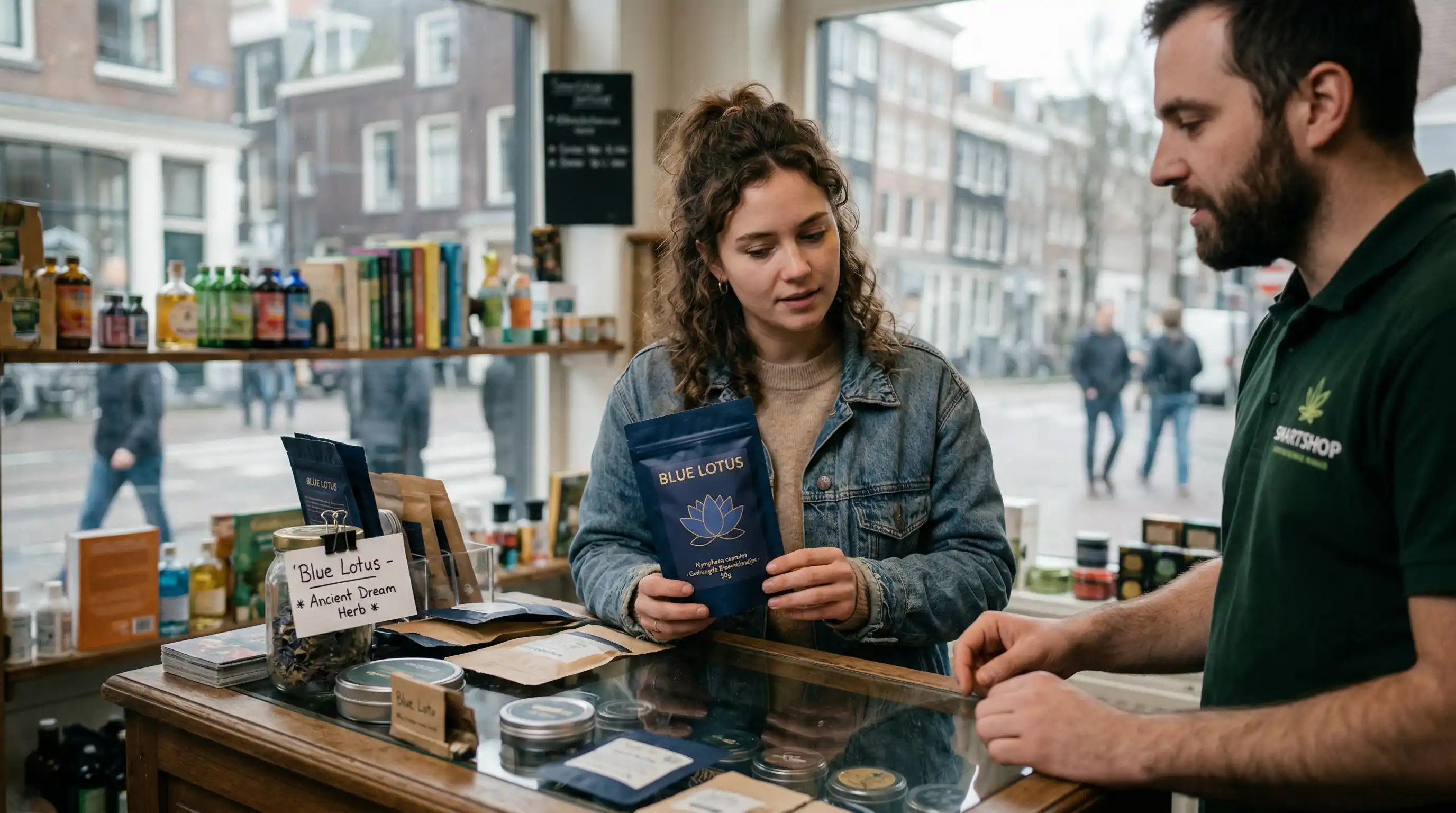
Blaue Lotusblume: Das antike Traumkraut feiert Comeback in holländischen Smartshops
Wichtigste Erkenntnisse
- ✓Blaue Lotusblume ist völlig legal in den Niederlanden
- ✓Bietet sanfte Entspannung und Traumverstärkung
- ✓Kann geraucht, verdampft oder als Tee konsumiert werden
- ✓Hat über 3000 Jahre dokumentierte Verwendungsgeschichte
- ✓Beliebte natürliche Alternative in holländischen Smartshops
Introduction
Blue Lotus (Nymphaea caerulea), also known as Blue Water Lily, is experiencing a remarkable renaissance in Dutch smartshops across Amsterdam, Rotterdam, Utrecht, and beyond. This ancient Egyptian herb, once reserved for pharaohs and spiritual ceremonies, has found its way into the modern Dutch cannabis culture as a legal, natural alternative for relaxation and dream enhancement.
The resurgence of this sacred flower represents more than just a trend—it reflects a broader shift towards natural wellness solutions and ancient wisdom in contemporary Dutch society. As consumers become increasingly conscious of what they put into their bodies and seek alternatives to synthetic substances, Blue Lotus has emerged as a compelling option that bridges the gap between traditional herbal medicine and modern recreational use.
Historical Background and Cultural Significance
Blue Lotus holds a revered place in ancient Egyptian culture, with archaeological evidence dating its use back over 3,000 years. The flower appears prominently in tomb paintings, papyrus scrolls, and religious artifacts, often depicted alongside gods and pharaohs. Ancient Egyptians believed Blue Lotus possessed divine properties, associating it with rebirth, the sun god Ra, and the journey through the afterlife.
The herb was commonly used in religious ceremonies, funerary rites, and social gatherings. Egyptian nobility would often consume Blue Lotus in wine or smoke it during banquets and spiritual rituals. The flower's association with the sun's daily cycle—opening at dawn and closing at dusk—made it a powerful symbol of resurrection and eternal life in Egyptian mythology.
Archaeological discoveries have revealed Blue Lotus petals in the tomb of Tutankhamun and other royal burial sites, highlighting its importance in ancient Egyptian society. The flower was so valued that it was often included among the grave goods meant to accompany the deceased into the afterlife.
Chemical Composition and Active Compounds
Blue Lotus contains several bioactive compounds that contribute to its psychoactive and therapeutic properties. The primary alkaloids include nuciferine and aporphine, both of which interact with the central nervous system to produce the herb's characteristic effects.
Nuciferine, the most abundant alkaloid in Blue Lotus, acts as a dopamine receptor antagonist and has been shown to possess sedative and anti-anxiety properties. This compound is responsible for much of the herb's calming effects and its ability to promote relaxation without causing significant impairment.
Aporphine, another key alkaloid, functions as a dopamine agonist and contributes to the mild euphoric sensations associated with Blue Lotus use. This compound also has potential nootropic properties and may enhance dream recall and lucid dreaming experiences.
Additionally, Blue Lotus contains various flavonoids, including quercetin and kaempferol, which provide antioxidant benefits and may contribute to the herb's overall therapeutic profile. These compounds work synergistically to create the unique effects that have made Blue Lotus popular among modern users.
The Dutch Smartshop Scene and Blue Lotus
The Netherlands' progressive approach to drug policy and harm reduction has created a unique environment where natural psychoactive substances can be legally sold and consumed. This liberal stance has made Dutch smartshops the epicenter of legal psychoactive exploration in Europe, attracting both locals and tourists seeking alternatives to traditional recreational drugs.
Blue Lotus has found particular success in this market due to its legal status and gentle effects. Unlike many other psychoactive substances that exist in legal grey areas, Blue Lotus remains completely unregulated in the Netherlands, making it an attractive option for both shop owners and consumers.
Dutch smartshops have embraced Blue Lotus as part of their diverse product offerings, often positioning it alongside other legal herbs like Kanna and Kratom. The herb is typically sold in various forms, including dried petals, extracts, and pre-made smoking blends, catering to different consumption preferences and experience levels.
Effects and Benefits of Blue Lotus
Blue Lotus is prized for its gentle, multifaceted effects that make it suitable for various applications. Users typically report a mild sense of euphoria accompanied by deep relaxation and mental clarity. Unlike more potent psychoactive substances, Blue Lotus produces subtle effects that allow users to remain functional while experiencing its benefits.
The herb's primary effects include stress relief, anxiety reduction, and mood enhancement. Many users find that Blue Lotus helps them unwind after a stressful day, providing a natural alternative to alcohol or pharmaceutical anxiolytics. The calming properties make it particularly popular among individuals dealing with work-related stress or general anxiety.
One of Blue Lotus's most celebrated effects is its ability to enhance dreams and promote lucid dreaming. Users often report more vivid, memorable dreams when consuming the herb before sleep. This dream-enhancing property has made it popular among individuals interested in dream work, meditation, and spiritual exploration.
The herb also possesses mild aphrodisiac qualities, which were recognized by ancient Egyptians and continue to be appreciated by modern users. Some individuals use Blue Lotus to enhance intimacy and connection, though these effects are generally subtle and vary between individuals.
Consumption Methods and Preparation
Blue Lotus can be consumed in several ways, each offering different onset times and duration of effects. The most traditional method involves smoking the dried petals, either alone or mixed with other herbs. This method provides relatively quick onset, typically within 5-10 minutes, with effects lasting 1-2 hours.
Vaporizing Blue Lotus has become increasingly popular as it offers a cleaner consumption method while preserving the herb's active compounds. Vaporization occurs at lower temperatures than combustion, potentially reducing harmful byproducts while maintaining effectiveness.
Tea preparation is another common method, involving steeping dried Blue Lotus petals in hot water for 10-15 minutes. This method produces longer-lasting effects, typically 2-4 hours, but with a slower onset time of 30-60 minutes. Many users prefer tea consumption for its gentle, sustained effects.
Some Dutch smartshops offer Blue Lotus extracts and tinctures, which provide more concentrated effects and precise dosing. These products are particularly popular among experienced users seeking stronger effects or those who prefer not to smoke or drink tea.
Safety Profile and Harm Reduction
Blue Lotus is generally considered safe for most adults when used responsibly. The herb has a long history of human use without significant adverse effects reported in historical or modern literature. However, as with any psychoactive substance, certain precautions should be observed.
Pregnant and breastfeeding women should avoid Blue Lotus, as insufficient research exists regarding its safety during pregnancy. Individuals taking prescription medications, particularly those affecting the central nervous system, should consult healthcare providers before using Blue Lotus.
The herb may cause drowsiness, so users should avoid driving or operating machinery after consumption. Starting with small amounts is recommended, especially for first-time users, to assess individual sensitivity and response.
Some users may experience mild side effects such as nausea, dizziness, or headaches, particularly with higher doses. These effects are typically short-lived and resolve without intervention.
Legal Status and Regulation
Blue Lotus enjoys completely legal status in the Netherlands and most other countries worldwide. It is not controlled under international drug conventions and faces no restrictions on cultivation, sale, or possession. This legal clarity has contributed significantly to its popularity in Dutch smartshops.
The herb's legal status stems from its classification as a botanical product rather than a controlled substance. Unlike synthetic drugs or scheduled plants, Blue Lotus has maintained its legal status due to its traditional use and relatively mild effects.
This legal framework allows Dutch smartshops to openly market and sell Blue Lotus products without regulatory concerns, contributing to the transparency and safety of the market.
Market Trends and Consumer Demographics
The Blue Lotus market in Dutch smartshops has experienced steady growth over the past several years. This growth reflects broader trends towards natural wellness products and alternative medicine. Urban areas like Amsterdam, Rotterdam, and Utrecht have seen particularly strong demand, driven by diverse, health-conscious populations.
Consumer demographics span various age groups, though the herb is particularly popular among millennials and Gen Z individuals interested in natural alternatives to synthetic substances. The wellness and spiritual communities have also embraced Blue Lotus as part of holistic health practices.
Tourism plays a significant role in Blue Lotus sales, with international visitors often purchasing the herb as a legal souvenir or alternative to cannabis products. The herb's legal status makes it an attractive option for tourists who want to experience something unique without legal concerns.
Future Outlook and Potential Developments
The future of Blue Lotus in Dutch smartshops appears promising, with continued growth expected as awareness increases and new products enter the market. Research into the herb's therapeutic potential may lead to more targeted applications and standardized preparations.
Innovation in product development is likely to continue, with smartshops exploring new extraction methods, combination products, and consumption formats. The integration of Blue Lotus into wellness products and lifestyle brands may further expand its market reach.
As the global trend towards natural health solutions continues, Blue Lotus is well-positioned to maintain its place in the Dutch smartshop ecosystem. Its combination of historical significance, legal status, and gentle effects makes it an ideal bridge between traditional herbal medicine and modern recreational use.
Conclusion
Blue Lotus represents a fascinating intersection of ancient wisdom and modern wellness culture in Dutch smartshops. Its journey from sacred Egyptian flower to contemporary relaxation aid demonstrates the enduring appeal of natural psychoactive substances and the Netherlands' unique position as a hub for legal exploration of consciousness-altering plants.
As consumers continue to seek natural alternatives to synthetic substances, Blue Lotus offers a compelling option that combines historical significance with practical benefits. Its legal status, gentle effects, and versatile applications make it an ideal introduction to the world of natural psychoactives for many users.
The herb's success in Dutch smartshops reflects broader cultural shifts towards holistic health, natural wellness, and the rediscovery of traditional plant medicines. As this trend continues, Blue Lotus is likely to maintain its position as a popular and accessible option for those seeking natural relaxation and dream enhancement.
Tags
Häufig Gestellte Fragen
Ist die Blaue Lotusblume in den Niederlanden legal?▾
Ja, die Blaue Lotusblume ist in den Niederlanden völlig legal und unterliegt keinen Beschränkungen bezüglich Anbau, Verkauf oder Besitz. Sie wird als botanisches Produkt und nicht als kontrollierte Substanz klassifiziert, wodurch holländische Smartshops Blaue Lotusblume-Produkte offen vermarkten und verkaufen können.
Welche Effekte hat die Blaue Lotusblume?▾
Die Blaue Lotusblume erzeugt sanfte Effekte wie milde Euphorie, tiefe Entspannung, Stressabbau und verstärkte Traumerfahrungen. Nutzer berichten oft von verbesserter Stimmung, reduzierter Angst und lebendigeren Träumen beim Konsum des Krauts vor dem Schlaf.
Wie konsumiert man Blaue Lotusblume?▾
Blaue Lotusblume kann geraucht, verdampft oder als Tee zubereitet werden. Das Rauchen bietet schnellen Wirkungseintritt innerhalb von 5-10 Minuten, während die Teezubereitung länger anhaltende Effekte über 2-4 Stunden bietet. Viele holländische Smartshops bieten auch konzentrierte Extrakte und Tinkturen an.
Ist die Blaue Lotusblume sicher zu verwenden?▾
Die Blaue Lotusblume gilt allgemein als sicher für die meisten Erwachsenen bei verantwortungsvollem Gebrauch, mit über 3000 Jahren dokumentierter Verwendung. Neue Nutzer sollten mit niedrigen Dosen beginnen, und Personen mit medizinischen Zuständen sollten vor der Verwendung einen Arzt konsultieren.